ETH Zurich Chemists Halve the Heat Needed for Acrylic Glass Recycling
ETH Zurich chemists use one cheap reagent and no solvent to make acrylic glass recycling work at just over 200C, recovering up to 98 per cent of the monomer.

ETH Zurich chemists use one cheap reagent and no solvent to make acrylic glass recycling work at just over 200C, recovering up to 98 per cent of the monomer.
Chinese Academy of Sciences researchers used Prussian blue to lift perovskite solar cell efficiency to 26.9 per cent, with a certified 22.9 per cent submodule.
University of Delaware and RepAir researchers ran an electrochemical direct air capture cell for 5,000 hours and scaled the design to a nine-cell stack.
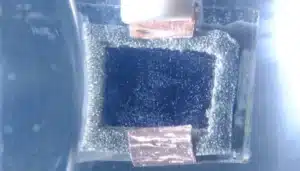
NTU researchers have built a solar artificial leaf that makes hydrogen from seawater while destroying hydrazine, with steady output for over 72 hours.

The Earthshot Prize and the University of Exeter have mapped 51 positive tipping points across nature, air, oceans, waste and climate, led by cheap clean power.

Carbon to Sea has opened two funding calls worth up to $6m, pushing ocean alkalinity enhancement out of the...
Explore Google's 2026 R&D awards supporting carbon dioxide removal and methane reduction with over $6 million in funding.

Critical shifts are affecting climate tech, balancing funding with the need for commercial readiness, says Net Zero Insights 2025 report.

Innovative self-healing batteries developed at Zhengzhou University promise to reshape the performance of portable and wearable devices.

Explore how researchers synthesize ammonia from air using plasma and electricity, revolutionizing green ammonia production.

AI may transform the fight against climate breakdown and reduce emissions in key sectors. Report author Mattia Romani explains.

Kelly Wanser, Silver Lining, explains how cuts in US and UK atmospheric science could hinder climate monitoring and disaster preparedness.

Delve into the mechanics behind how water generates electrical charges on surfaces as revealed by Australian researchers.

Discover how self-healing asphalt could potentially solve Britain's pothole crisis, more cheaply and sustainably.

Find out more about the potential of circular retrofitting in the built environment to unlock a global market valued at $3.9 trillion.

Get the scoop on Climate Tech's 2024 investment landscape. Dive into the findings of Net Zero Insights' State of Climate Tech 2024 report.

Brilliant minds honoured by Balzan Prize for their contributions in humanities and natural sciences include an environmental scientist.

RMIT University is working on a novel method for seabed soil characterization in shallow waters and its application in offshore construction.

A weakening ocean overturning circulation can impact atmospheric carbon levels interactions, new MIT research has found.