Carbon to Sea has opened two funding calls worth up to $6m, pushing ocean alkalinity enhancement out of the laboratory and into coordinated field trials. Pre-proposals close on 30 September.
Carbon to Sea Initiative has opened two calls for proposals on ocean alkalinity enhancement, the technique of adjusting seawater chemistry so the sea takes up more carbon dioxide. One call funds field research sites around the world. The other pays for narrower work on two technical questions that still unsettle the field.
Researchers have until 30 September 2026 to file a pre-proposal, and selected applicants will be asked for full proposals in October, according to reporting by Carbon Herald. The sums involved are modest by climate finance standards. Still, they arrive at the moment when OAE has to prove itself outside the laboratory.
How the chemistry works
The ocean already holds far more carbon than the atmosphere does. Adding alkaline material to seawater, such as ground rock or lime, shifts dissolved carbon towards bicarbonate. That leaves room for more CO2 to cross from the air into the water. Because the carbon then sits in a stable dissolved form, it can stay put for thousands of years.
Weathering rock does this naturally, although it takes geological time. OAE is an attempt to speed the same process up. So the appeal is scale, since the oceans cover most of the planet and their storage capacity dwarfs anything built on land. Measurement, however, is the difficulty. Once alkalinity disperses into moving water, tracking the fate of any given tonne of CO2 becomes hard.
What the field research network would fund
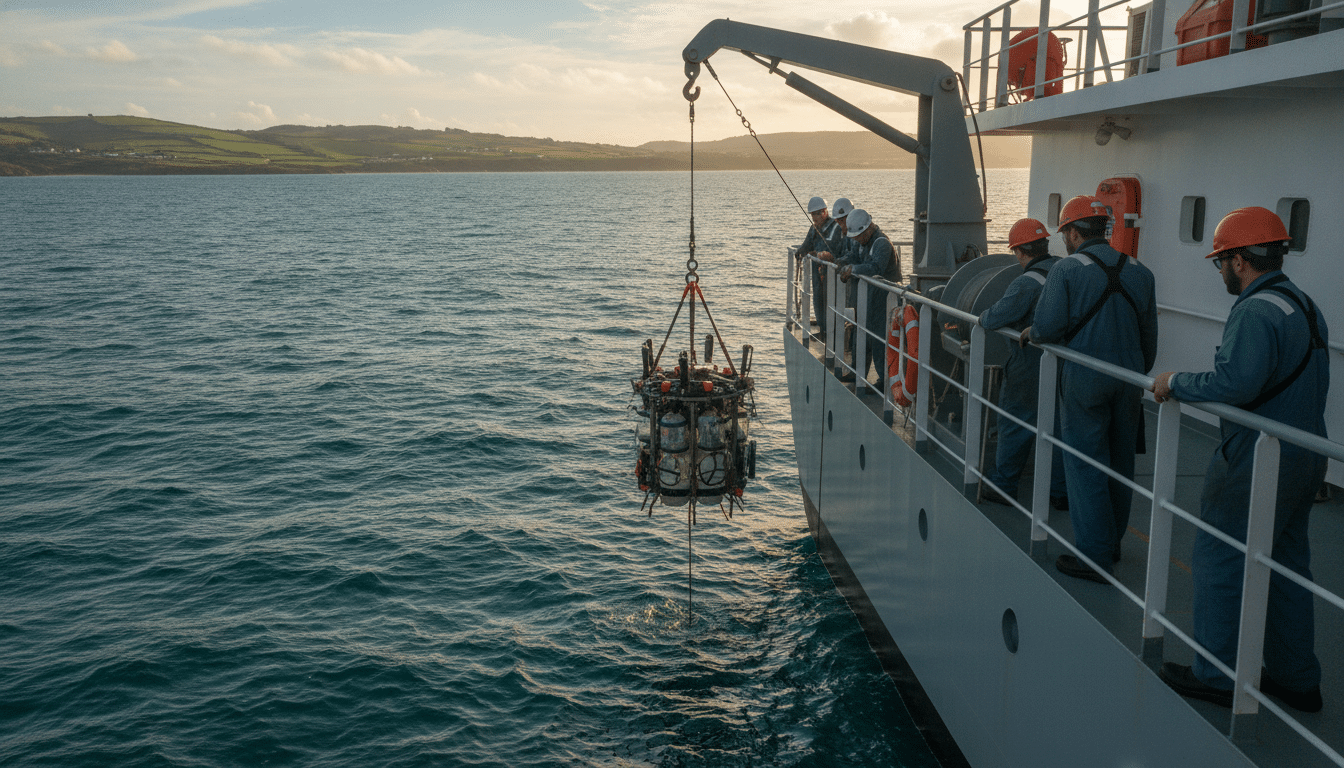
The first call, the Global OAE Field Research Network, covers four grant types. These pay for exploring, developing and coordinating field research sites, with the intention of linking them into one network. Carbon to Sea has put up to $5m behind it, and applications are open worldwide.
The questions on the list are practical. Teams will examine environmental impacts as trials grow larger, how well different deployment methods work, and whether outcomes can be measured reliably. Cost trajectories over time are in scope too, as is sector-specific demonstration. Therefore the network is about method and monitoring as much as about chemistry.
Coordination matters because OAE trials have so far been scattered and small. Different teams use different alkaline feedstocks, different water depths and different monitoring kit. As a result, comparing one result with another is awkward. A shared network would make the outputs add up.
The narrower second call
Targeted Research and Innovation, the second opportunity, funds two priority topics. One concerns natural sediment alkalinity flux and its influence on additionality claims. In plain terms, seabed sediments release alkalinity on their own, so any project selling carbon credits has to show its own effect is genuinely extra.
Meanwhile the second topic is alkalinity sourcing and production. Rock must be quarried, ground and shipped, and every step carries emissions and costs of its own. Carbon to Sea will fund a portfolio of awards worth up to $1m here, using a two-stage application process.
Both topics bear on credibility rather than headline capacity. Buyers of ocean carbon removal want assurance that the tonnes are real, and that the supply chain isn’t cancelling out the gains.
From tanks to open water
Grants from the initiative over the past four years went largely to laboratory work, mesocosm experiments and small-scale trials, alongside modelling of global potential. Because laboratory conditions are controlled, those studies could test whether the underlying mechanism holds up. Broadly, it does.
What remains unsettled is whether OAE can be verified and scaled responsibly in open water. Field trials draw scrutiny from regulators, fishing fleets and coastal communities, and reasonably so. Because these calls fund coordination as well as individual sites, they push towards shared methods rather than a scatter of one-off experiments. Whether $6m across both calls buys enough evidence is another question entirely.