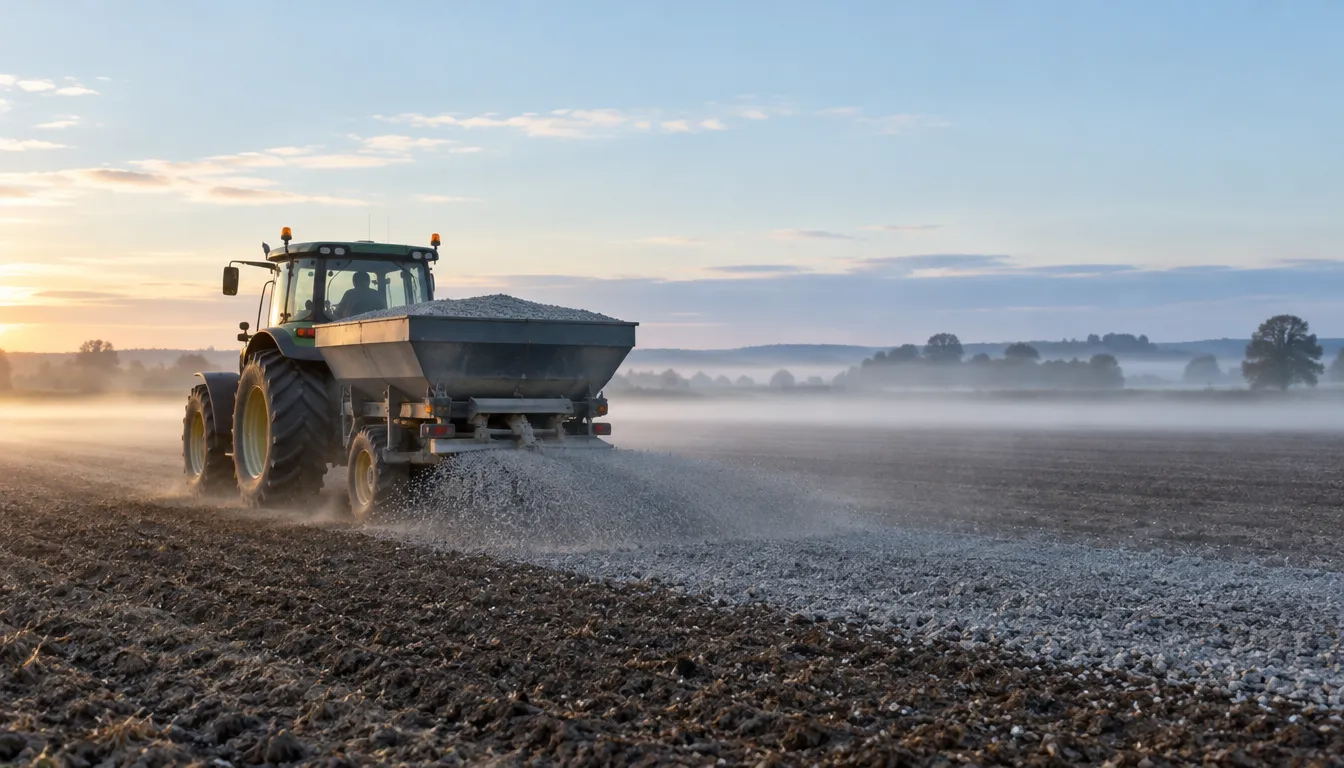
The loan, supported by carbon delivery insurance and fixed-price offtake from Frontier buyers, will help fund the spreading of about 1 million tonnes of crushed rock across farmland in the US and Brazil.
Terradot has secured $34m in debt financing for its enhanced rock weathering projects in the US and Brazil. The lender is HA Sustainable Infrastructure Capital, known as HASI. Marsh arranged the deal, and CFC provides insurance on the delivery of carbon removals.
The structure is notable. Insurance and contracted demand give a lender two protections against the risk that removals fall short.
How the method works
Enhanced rock weathering spreads finely crushed rock, often basalt, on farmland. Rain and soil chemistry slowly break the rock down. That reaction draws carbon dioxide from the air and turns it into dissolved bicarbonate, which can wash into rivers and the sea.
Measurement is the main challenge. In Brazil, Terradot sources basalt from local quarries and spreads it on nearby farms. It samples soil before and after spreading, and it measures the chemistry of soil, water and gases.
The rock itself is cheap and widely available. The hard part is showing, field by field, how much carbon it locks away. That is why Terradot spends so much effort on sampling and monitoring.
What the money will fund
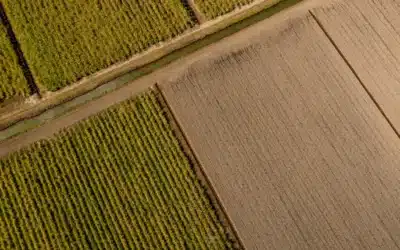
Terradot plans to spread about 1 million tonnes of crushed rock across 60,000 hectares of farmland in 2026 and 2027. That’s roughly 150,000 acres across the two countries.
Its current projects already have buyers. Frontier, a coalition of companies that commit to buy carbon removal in advance, has signed fixed-price deals that run for several years. Frontier’s members include Google, Salesforce, JPMorgan, Shopify and Stripe, among others. In December 2024, Frontier buyers agreed to pay Terradot $27m for 90,000 tons of removal, delivered between 2025 and 2029.
Julia Sekula, chief financial officer and co-founder of Terradot, pointed to that position. Sekula cited “contracted demand and years of field data that let us bound risks and forecast delivery” as the basis for the financing. In practice, those contracts give a lender visible future income.
Why lenders are paying attention
Annmarie Reynolds, co-chief investment officer at HASI, said Terradot “combines contracted demand, rigorous field data, a repeatable deployment model, and a thoughtful approach to risk”. Hannah Bebbington Valori, head of Frontier, said the coalition provides “predictable demand through large, multi-year offtake agreements”.
Together, those comments set out the case for lending. Buyers fix the income, while field data cuts the guesswork. Insurance then covers the gap.
This kind of cover pays out if a project removes less carbon than it promised. That shifts part of the risk away from the lender. As a result, HASI can treat the loan more like other infrastructure debt.
For a young company, debt can also cost less than selling shares. It lets founders keep more of the business as it grows. So a loan of this size gives Terradot room to expand without heavy dilution.
A busy year for Terradot
Terradot acquired Eion earlier this year and combined the two brands into a single enhanced rock weathering platform. It also works with Microsoft to validate the method at Sentinel, a soil-to-stream research site in Brazil. A monitoring network there tracks carbon dioxide retention across each stage of the process.
In September, Terradot and Google announced what they called the world’s largest enhanced rock weathering project, in southern Brazil. It covers more than 200,000 hectares of rice farmland, and Google will buy 1 million tonnes of carbon removal by 2040. The HASI loan now adds debt to a business that already has large corporate buyers.
Proof is still the sector’s hardest problem. Rock breaks down slowly, and open fields are hard to measure. Still, the deal shows a lender will back enhanced rock weathering when insurance and contracts absorb part of the risk. For other start-ups, the HASI structure gives a template to test.