The voluntary goal asks governments, investors and companies to help raise geothermal supply for power and heat twelvefold from 2025 levels, which would mean adding about 7 GW of capacity a year.
Türkiye’s COP31 Presidency and the International Renewable Energy Agency (IRENA) have announced the Global Geothermal Ambition 2050. The goal is to raise geothermal energy supply twelvefold by the middle of the century. It covers both power and heat, and any country can sign up.
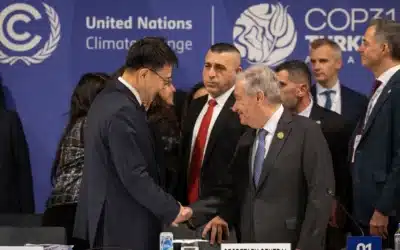
The two bodies planned to launch the goal at a meeting of ministers in Antalya on 10 November. Alparslan Bayraktar, Türkiye’s Minister of Energy and Natural Resources, and Francesco La Camera, Director-General of IRENA, were due to open it.
Gurbuz Gonul, Director of Country Engagement and Partnerships at IRENA, was due to present the goal. He was also set to chair the panel of ministers.
What the targets mean
Under the plan, total geothermal supply would rise from about 2.5 exajoules in 2025 to about 31 exajoules by 2050. Geothermal power capacity would grow from 15.6 GW to 193 GW over the same period.
Those figures come from IRENA’s pathway for limiting warming to 1.5C. The agency set out that pathway in its World Energy Transition Outlook 2026.
To get there, the world would need to add about 7 GW of geothermal power a year on average until 2050. By contrast, recent annual additions have been about 200 to 400 MW. So the Global Geothermal Ambition implies building new plants many times faster than today. Put simply, the world would need to build more in one year than it now builds in a decade.
A voluntary pledge with four commitments
Signing up is voluntary. Governments, banks, companies and global bodies can all back the goal. In doing so, they state that they intend to work “collaboratively and expeditiously” towards it.
Each one keeps full control over its own energy policies and plans. However, all of them commit to four areas of action.
First, they’ll strengthen national rules, including faster permits, stable conditions for investors and joined-up planning of power grids and heat networks. Second, they’ll support public and private investment. For instance, that could include measures that reduce the risk of exploration and make finance cheaper.
Third, those who sign commit to respecting the rights of affected communities, including Indigenous Peoples. Finally, they’ll agree on a way to check progress together. That check would use existing reports, such as IRENA’s own.
How the goal fits COP31’s wider agenda
The geothermal plan sits alongside the Presidency’s 35-by-35 Global Electrification Pledge. That pledge sets a goal of raising electricity’s share of the world’s final energy use to 35% by 2035.
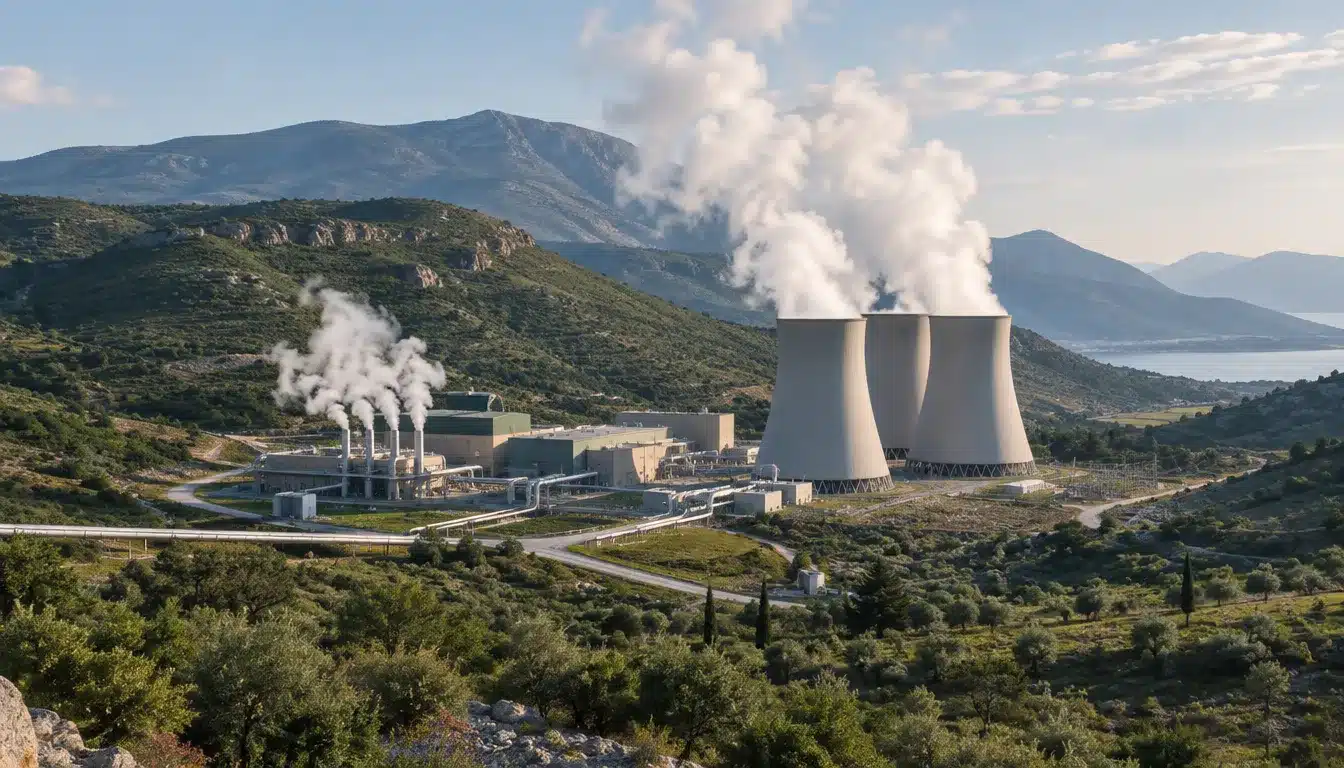
Geothermal can help with that aim. It uses the heat stored in rock deep below the ground. It produces power around the clock, and it can also supply heat directly to homes, offices and factories.
Türkiye has a clear interest in the sector, because it runs one of the world’s largest geothermal power fleets. Most of its plants sit in the west of the country.
A second meeting on 13 November will turn to delivery. It runs through IRENA’s Global Geothermal Alliance under the title “From Ambition to Delivery: Industry Partnerships to Scale Geothermal Power and Heat”.
Early signs of faster growth
Some recent projects show how the sector could speed up. Two examples come from the United States. There, Fervo Energy plans a 396 MW plant for Google in Utah. The two firms signed a geothermal deal earlier this year.
Meanwhile, the US Department of Energy has awarded $99m to 21 geothermal projects. Both show that big buyers and governments are putting money into the sector.
Still, single projects of a few hundred megawatts are small next to a goal of 193 GW. The Global Geothermal Ambition will rely on how many countries sign up. It will also depend on how fast they turn the four commitments into permits, grids and finance.