Great British Energy has released £30m for community energy projects across the UK, the first instalment of a pledge worth up to £1bn that targets more than 1,000 local schemes.
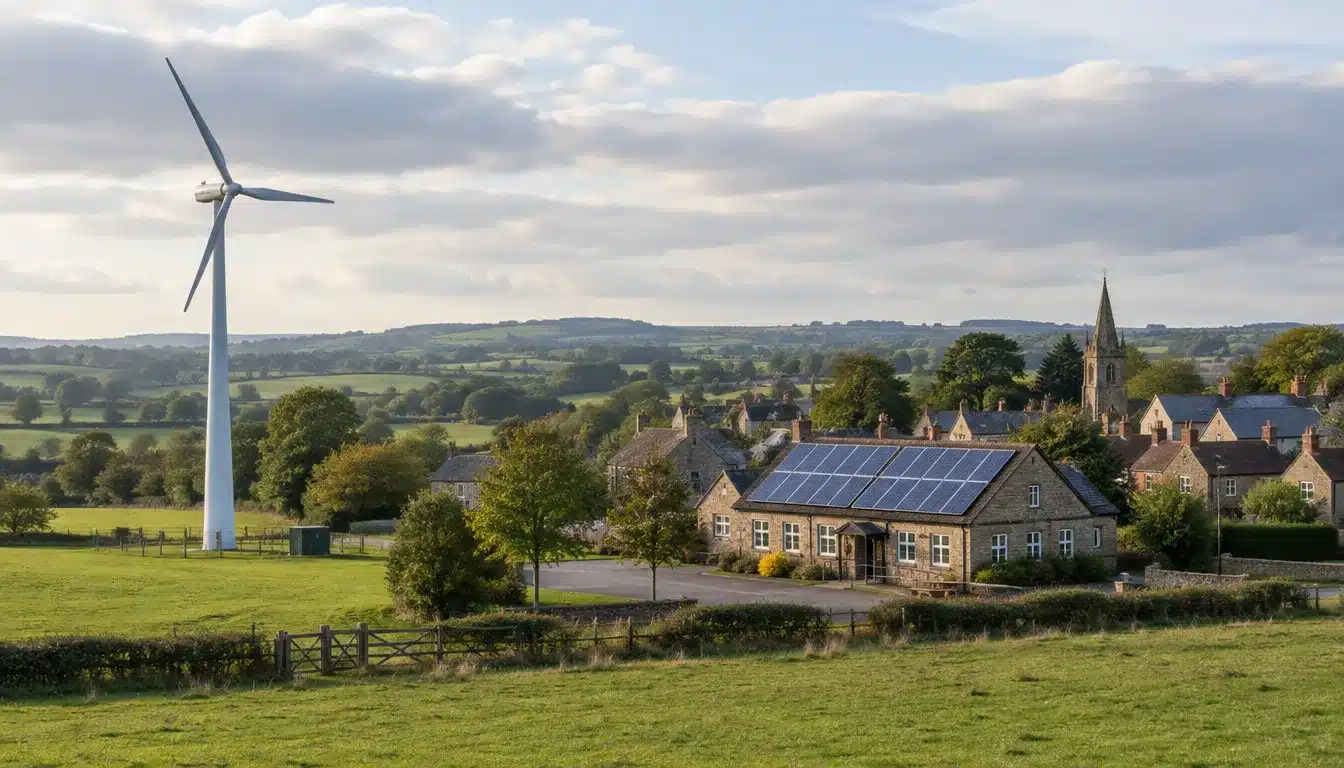
The UK government announced on 17 September that Great British Energy will make £30m available for community energy projects. Local authorities and community groups can now progress plans for their own clean power. These range from solar panels on local buildings to village-owned wind farms and small hydro schemes.
The money is the first down payment on a pledge of up to £1bn. With it, ministers want to support more than 1,000 local and community-led clean energy projects. Community groups or local authorities will own the resulting assets, so profits and bill savings stay in the area.
How the first £30m splits
Most of the money sits in a £20m Community Fund. It gives grants to community organisations in England, Wales and Northern Ireland to test, develop and build clean energy assets. Meanwhile, a separate £5m Partnerships Grant helps local authorities in England work with community energy partners on joint projects.
Scotland receives £1.8m for its existing community energy support programme. In addition, £2.9m will pay for advice services across England, Wales and Northern Ireland. These services help volunteer-led groups work through planning, grid connections and finance, which often stall early projects.
Great British Energy, the state-owned investment vehicle created in 2025, runs the scheme. Dan McGrail, its chief executive, set out the ambition. “Our vision is that every community should have the chance to build and own its own renewable energy,” he said.
Politics of local power
The announcement leans heavily on the summer’s extreme heat. Ministers linked the fund to the record temperatures the UK saw this year. Energy Secretary Miatta Fahnbulleh said the government was “putting power in the hands of people and places, so more communities can take action”.
“Everyone deserves a stake in our energy future and through these local power projects, communities can reap the full benefits of clean energy,” she said. She added that this meant reducing emissions, cutting bills and reinvesting profits locally. She also timed the announcement to land just before New York Climate Week.
The policy also fits Prime Minister Andy Burnham’s emphasis on localism. Burnham, the former mayor of Greater Manchester, took office this summer. He has made devolved control a theme across several policy areas, including energy.
Ownership stakes to follow
Grants are only one part of the plan. The government says it will publish further details this autumn on offering community energy groups an ownership stake in commercial renewable projects. That would create partnerships between communities and developers, with a share of revenues flowing back to local areas.
Ministers pointed to Germany and Denmark, where community ownership of wind and solar is already widespread. Supporters argue that local stakes help win public backing for new wind and solar farms. By contrast, community ownership in Britain has stayed small, partly because volunteer groups struggle with upfront costs and grid access.
The fund builds on earlier work by regional authorities across England. More than 150 renewable projects have already switched on for public buildings in England’s Mayoral Combined Authorities. Together, they could deliver up to £50m in energy bill savings for local services.
Scale remains the question
Sector groups welcomed the move. Dr Matt Vickers of Community Energy England said it would let community enterprises deliver projects that cut bills. Still, £30m spread across four nations won’t go far on its own. A single community wind turbine can cost several million pounds to build.
The bigger test is whether the rest of the £1bn follows on schedule, and whether grid queues let small schemes connect. Recent changes such as legal plug-in solar in Great Britain show the government pushing power generation closer to households. For community energy, the next funding rounds will show how far that ambition reaches.