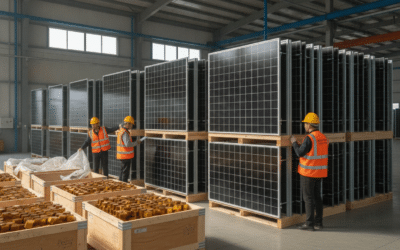
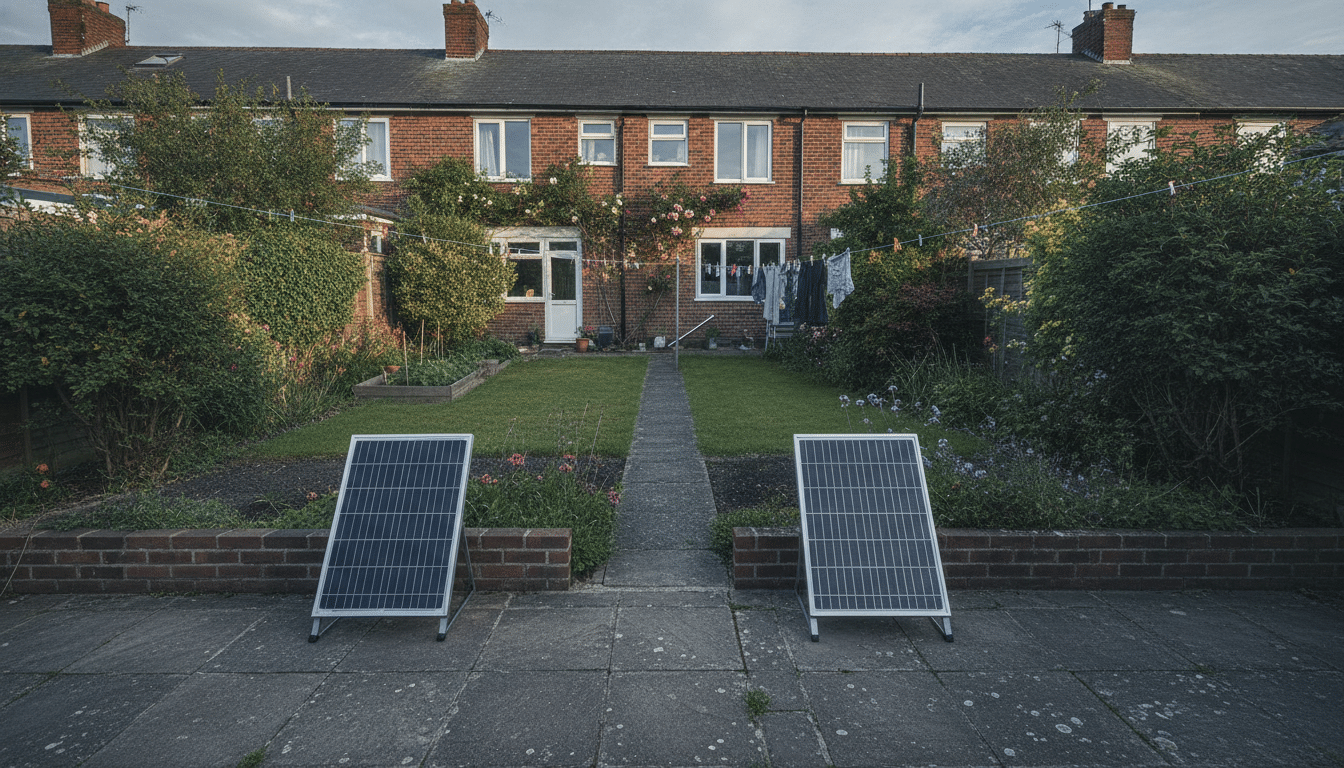
Plug-in solar panels became legal across Great Britain on 27 August, opening rooftop-style generation to renters and flat-dwellers. Currys, B&Q, Screwfix and Amazon will stock them within weeks.
Households in Great Britain can now plug solar panels straight into a domestic socket. The change took effect on 27 August, after the government amended the rules governing small-scale generation. Each kit produces up to 800W, enough for roughly a fifth of an average home’s electricity use. The Department for Energy Security and Net Zero puts the saving at up to £110 a year, with no installation cost.
The panels sit in gardens, on patios or on some balconies. Because they need no roof and no electrician, they reach a group that rooftop solar has largely missed. Renters and flat-owners can therefore generate their own power for the first time.
What the safety testing found
The legal change followed independent testing across all the main electrical elements. Officials say the resulting UK specification is stricter than Germany’s, where around half a million plug-in devices were connected last year. Compliant panels are safe and compatible with British wiring, according to the department.
Buyers still need to check permissions before installing. That may mean approval from a landlord, a freeholder or a building owner, and in some cases planning permission or listed building consent. Decisions rest with those bodies, though the government has encouraged them to judge each case on its merits.
David Boyer, director of electricity systems at the Energy Networks Association, said the change was “a major step forward for incorporating micro generation safely and efficiently onto the UK’s energy grid”.
Retailers move first
Currys, B&Q, Screwfix and Amazon worked with the government on the rollout and will sell the panels in stores and online. Argos and Wickes have also committed to stocking them, as has British Gas.
Gary Booker, managing director of British Gas, said: “Until now, generating solar power has required the right roof, the right home and significant upfront investment. That’s why innovations like plug-in solar are so important.”
Trevor Hutchings, chief executive of the Renewable Energy Association, put the annual saving at up to £100 and argued the benefit should reach renters and flat-owners. “Our electricity prices are some of the highest because of our exposure to volatile international gas markets,” he said.
Demand for solar is already climbing
Certified solar installations reached almost 150,000 in the first six months of 2026, according to MCS figures. That’s 17 per cent above the previous record start to a year, set in 2025, and works out at one installation every 74 seconds. Battery installations nearly doubled over the same period, reaching 36,000.
Rooftop solar can already save homeowners up to £480 a year. Plug-in kits sit well below that, so the case for them rests on reach rather than scale. Joanna O’Loan, knowledge manager at the Energy Saving Trust, said savings will vary from home to home, and that clear information matters as the products spread.