Minimum import prices on polysilicon, cells and panels take effect on 4 December, protecting American factories while pushing up the cost of building new solar farms across the United States.
Donald Trump signed an order on 6 August imposing far-reaching tariffs on imported polysilicon, solar cells and finished panels. The measure follows a Commerce Department investigation under Section 232 of the Trade Expansion Act of 1962, which lets a president restrict trade on national security grounds. Polysilicon, meanwhile, is the core input for most solar panels as well as computer chips.
So the order pulls in two directions at once. It gives American factories the protection they’ve long asked for, while raising the cost of building solar farms, currently the largest source of new electricity generation in the country. Power bills are already climbing, which sharpens the trade-off.
What the order sets out
From 4 December, the United States will enforce minimum import prices across the silicon supply chain. Polysilicon carries a floor of $21 per kilogram, while ingots and wafers are set at $100 per kilogram. Cells come in at 22 cents per watt and finished modules at 38 cents per watt. A 15 per cent ad valorem duty also applies to polysilicon derivatives, under the White House order.
There is a route out. Companies can win exemptions if the Commerce Department signs off on plans to build factories by 20 January 2029. That clause could soften price rises while domestic ingot, wafer and cell capacity catches up.
Costs facing solar developers
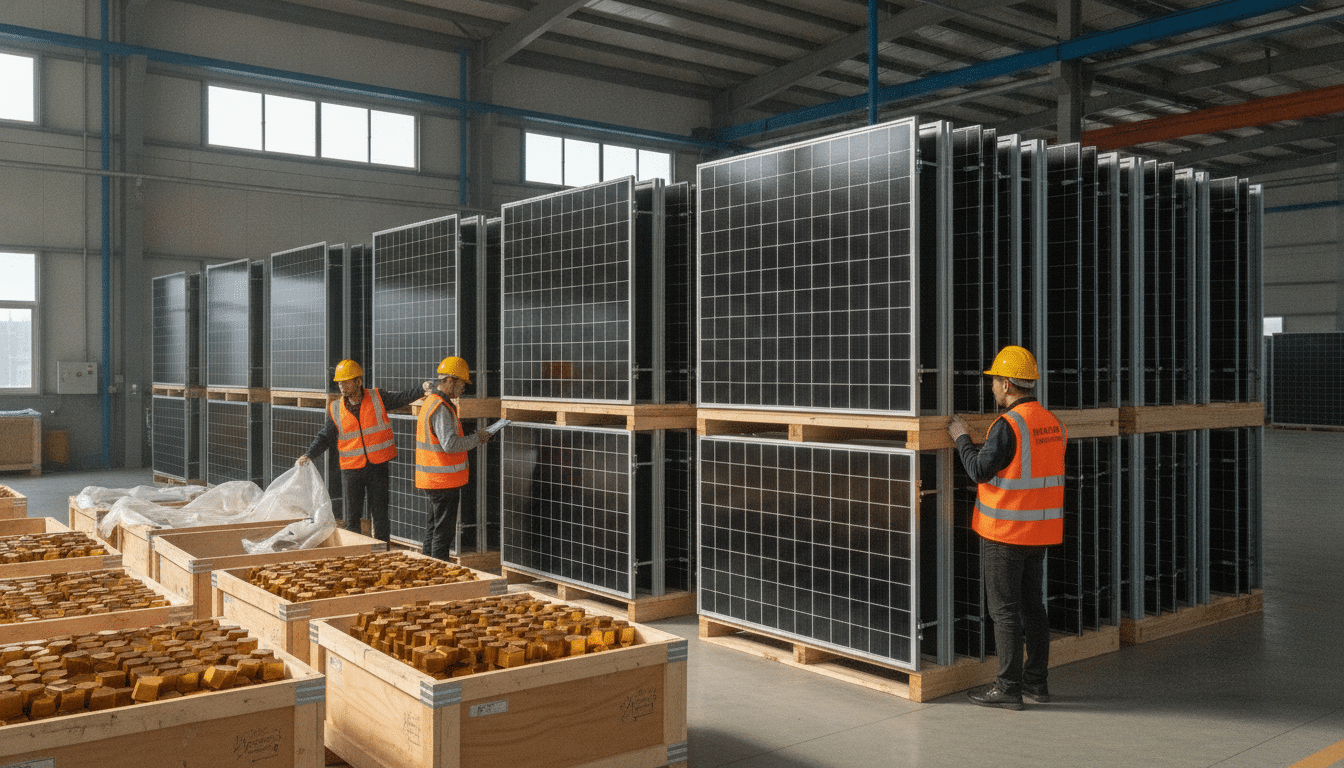
The squeeze is tightest upstream. America can’t produce polysilicon, ingots and wafers anywhere near the volumes its installers need, so those floors bite hardest. Cell supply is also thin. Roughly 10.6 gigawatts of cell capacity was operating this summer, on figures from the Solar Energy Industries Association, spread across Qcells, ES Foundry, Suniva and Silfab.
Prices tell the rest. The median US module price is 27.1 cents per watt, per data compiled by Anza Renewables, so the new import floor sits about 40 per cent above it. Although modules assembled domestically from imported parts cost 30 cents per watt, their cells will now face a 22-cent minimum. Domestic modules built with domestic cells already run to a median of 47 cents.
“The U.S. will remain dependent on importing cells, wafers, ingots, and/or raw polysilicon for the foreseeable future,” said Pavel Molchanov, a cleantech investment analyst at Raymond James. He noted the new floor is nearly five times the global benchmark price. American panels were already among the world’s dearest because of earlier tariffs.
Who gains from the protection
Qcells is well placed. The Hanwha subsidiary spent more than $2 billion on a combined ingot, wafer, cell and module plant in Georgia. Cells began rolling off the line in June, while ingots and wafers are due later this year. Hanwha’s share price jumped 17 per cent after the announcement, though it has eased back since.
First Solar gains too, because its cadmium-telluride thin-film panels sit outside the silicon chain entirely. Mark Widmar, chief executive of First Solar, called the outcome “one of the most strategically significant trade measures in decades”. Still, a group of module makers faces an uncomfortable middle period. Their finished products get protection, while their input costs rise until more cell capacity arrives.
Legal footing and the December delay
Section 232 rests on firmer ground than the April 2025 tariffs, which the Supreme Court found Trump had no authority to impose. Earlier Section 232 duties on steel and aluminium have held up. Because the statute grants broad discretion after a Commerce investigation, legal challenges look harder here.
The four-month lead time, however, worries some backers of the policy. “It gives importers a window to surge product into the U.S. market before duties take effect, which is precisely the kind of behavior our trade laws are designed to prevent,” said Tim Brightbill, a partner at Wiley Rein LLP who has petitioned for solar tariffs for years. As Canary Media reported, he wants strict enforcement against stockpiling. Because the tariff applies globally, it may also close the gap that let Chinese producers shift operations to new countries.