Giraffe Bio has raised $6.4m to make microbe-derived compounds that help mines pull more copper from ore they already process, as forecasts point to a widening supply gap.
Mining biotech start-up Giraffe Bio has raised a $6.4m seed round to improve copper recovery at existing mines. Orion Industrial Ventures led the round. BHP Ventures, Twynam, Air Capital and Baruch Future Ventures also took part.
The company designs compounds for each mine’s mineral content. It says they can help an operation recover up to 5 per cent more copper than it does today.
Why extra copper is in demand
Data centres and wider electrification will need far more copper. A January 2026 study by S&P Global projected that copper supply could fall 25 per cent short of demand by 2040.
Miners usually raise output by opening new mines. However, that’s costly and depends heavily on luck, since typically only 0.3 per cent of prospective mines pan out. So a growing group of start-ups is using biotechnology to get more metal from sites that already operate.
Most of those companies work on heap leaching, where microbes help separate minerals from waste rock. Endolith, Ceibo and Transition Metal Solutions all take versions of that approach. Giraffe Bio has chosen a different route.
Growing the chemistry in a bioreactor
Instead of releasing bacteria onto ore, Giraffe Bio grows engineered microbes in a bioreactor. Those microbes make the compounds, which the mine then adds to its existing process.
As a result, the firm avoids the hard job of keeping live microbes healthy at a mine. Alejandro Buffo Sempé, its co-founder and chief executive, put it this way. “We can leverage all of the biological machinery without having to deal with keeping alive a microbe,” he said.
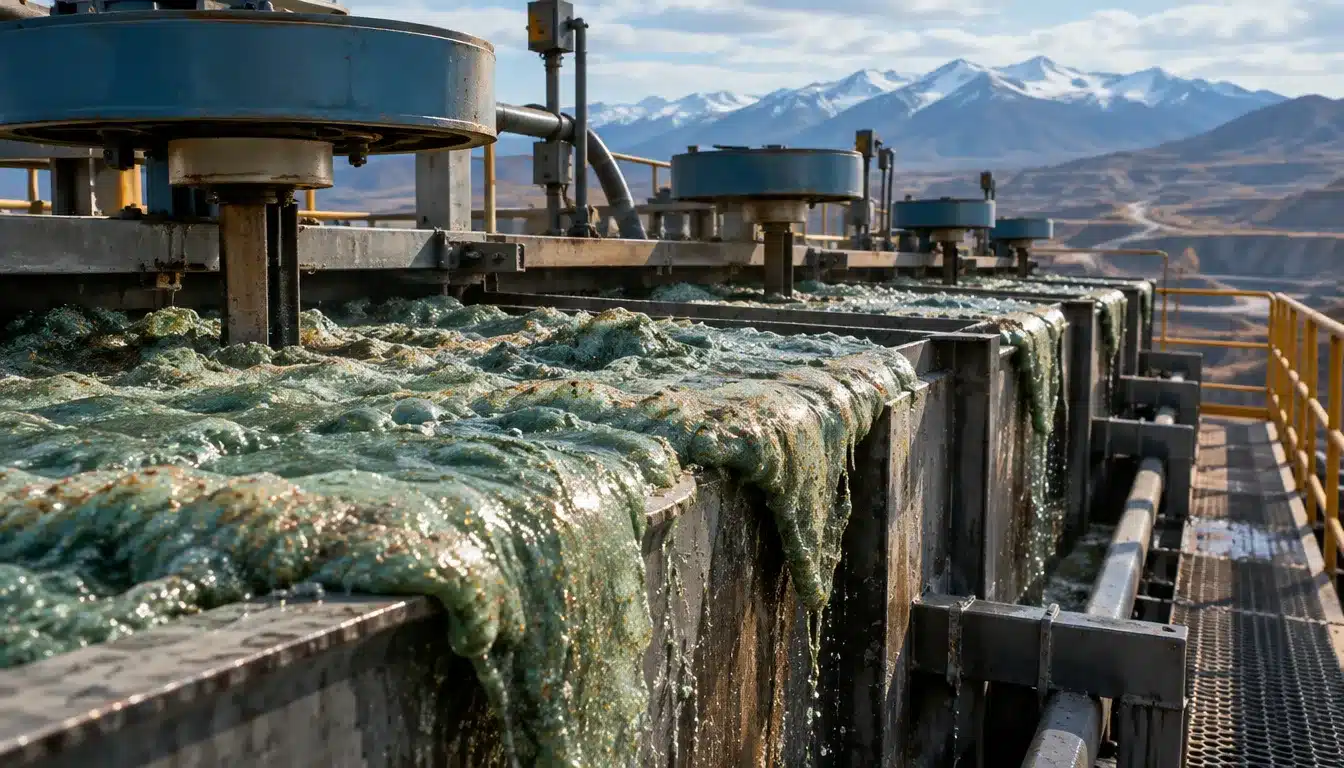
The compounds go to work during flotation. In that step, chemicals make target minerals float while waste sinks. The tighter a chemical binds to the mineral a mine wants, the more of it the plant can recover. “We are extremely good at only picking up the copper,” Buffo Sempé said.
Small gains add up at scale
A 5 per cent gain may sound modest. Yet Buffo Sempé said it “is really very material” for a mine. In fact, he added, most operators would be happy with an extra 1 to 2 per cent.
The extra copper comes from ore that’s already been dug up and crushed. So copper recovery gains of this kind need no new pit. That makes the idea attractive to firms that want more metal without the cost and wait of a new mine. It also means a plant can test the compounds in a process it already runs.
Mines also use chemicals called depressors. These bind to unwanted materials such as arsenic and make them sink. Giraffe Bio is using the same platform to develop depressors as well.
Replacing harsh flotation chemicals
The company also wants to replace some of the toxic chemicals used in flotation today. Its biomolecules would take their place in the same step. So a mine would add them to the process it already runs.
Buffo Sempé contrasted that with the industry habit of “pouring chemicals that are usually very harmful for the environment”. He also summed up the goal. “We’re minimizing the friction towards maximizing the output.”
Copper is the first target, although the company can tailor the platform to other minerals. “The beauty of this is that we can target copper or we can target gold or silver,” Buffo Sempé said.
The raise comes as concern grows over how much mined material reaches clean energy. A recent report on critical minerals found that most never reach clean energy uses. Better copper recovery at the mine is one way to ease that pressure, while the industry waits for new supply.