Indian utility Tata Power will test a Norwegian floating solar design that rests panels on a thin membrane. The 300 kWp trial at a Maharashtra reservoir will measure it against standard pontoon systems.
Tata Power has signed a deal with Norway’s Ocean Sun to build a floating solar pilot in India. The two firms agreed on 7 October to install about 300 kWp of panels at the Mulshi reservoir in Maharashtra. They signed the agreement on the sidelines of the second India and EFTA Prosperity Summit.
The pilot will test how Ocean Sun’s design performs under Indian conditions. The reservoir already belongs to Tata Power, which also runs hydropower stations in the region. If the trial works, the utility could use the design on more of its water bodies. For now, though, the firms have set out a test plan and no wider rollout.
How the membrane design works
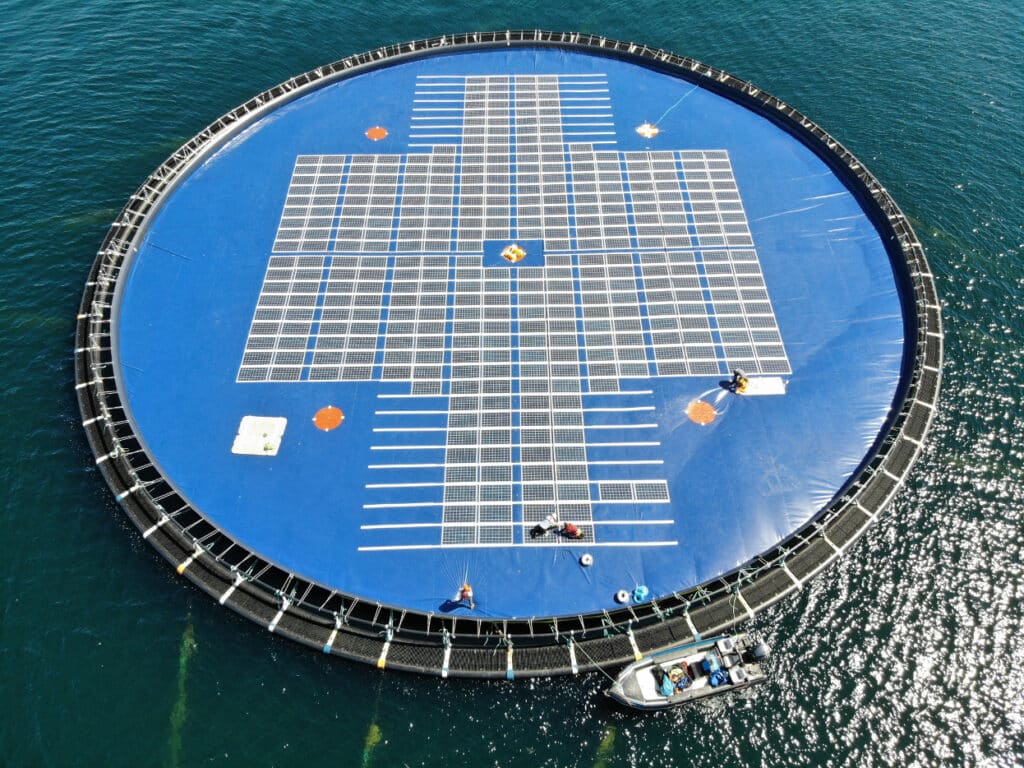
Most floating solar farms sit on rows of plastic floats, known as pontoons. Ocean Sun takes a different route. It lays solar panels on a thin, flexible membrane that rests directly on the water.
The firms say this design brings several gains. The membrane is light, so it should be easier to move and install. It also needs less structure than a pontoon system, which could cut material use.
Because the panels sit close to the water, the water could cool them. Solar panels lose output as they heat up, so a cooler panel can produce more power. The pilot will check whether that effect holds at Mulshi.
What the pilot will measure
Tata Power will compare the membrane system with standard floating solar on several fronts. These include energy output and capacity utilisation factor, a measure of how much power a plant makes against its maximum. In addition, the team will track how long installation takes and how the system copes over time.
The firms will also look at operations and maintenance needs, as well as capital cost. Finally, they will judge whether the design makes commercial sense and could scale up in India.
Dr Praveer Sinha, chief executive and managing director of Tata Power, framed the deal as part of a wider push. “At Tata Power, innovation is central to accelerating India’s clean energy transition,” he said.
A large market on the water
India has plenty of room for floating solar. The National Institute of Solar Energy puts the country’s potential at more than 102 GWp. That estimate covers reservoirs, lakes and other inland waters across the country.
Interest is rising in other markets too. In Britain, for example, floating solar is poised for rapid growth as developers look beyond scarce land. India’s larger estimate, however, points to a far bigger prize.
Floating panels also avoid a common problem with solar farms on land. In a crowded country, ground-mounted plants compete with farms, homes and forests. On a reservoir, by contrast, the same space can host a power plant without taking land from other uses.
Kristian Tørvold, chief executive of Ocean Sun, sees strong demand ahead. “India is one of the world’s most attractive floating solar markets,” he said. Still, a 300 kWp floating solar pilot is small, and the results will shape any next step.
Wider interest in floating designs
Developers elsewhere are also testing new ways to put panels on water. Recently, a start-up launched a floating solar tracker that turns panels to follow the sun. Each design tries to lower cost or raise output compared with fixed pontoons. Together, they show how fast the floating sector is trying new ideas.
For Tata Power, the Mulshi trial is a low-risk way to test the idea. A 300 kWp array is tiny next to the utility’s wider solar business, so a poor result would cost little. The floating solar pilot will give the utility its own data on cost, output and upkeep. That evidence will decide whether the membrane design moves beyond a single reservoir.