Berlin’s plan leans on renewables, electric cars and heat pumps to end fossil fuel use in energy, though campaigners say the 2045 date is too late for Europe’s largest economy.
Germany has published a fossil fuel roadmap to phase out coal, oil and gas from its energy sector by 2045. The government unveiled the plan on 23 September, during the UN General Assembly in New York.
That makes Germany the third European country to publish such a plan, after France and the Netherlands. However, France has set 2050 as its end date, and the Dutch plan has no binding end date at all.
Electrify transport, heat and industry
The plan rests on two moves. First, Germany will electrify transport, heating and industry. Second, it will replace fossil fuel power with renewables.
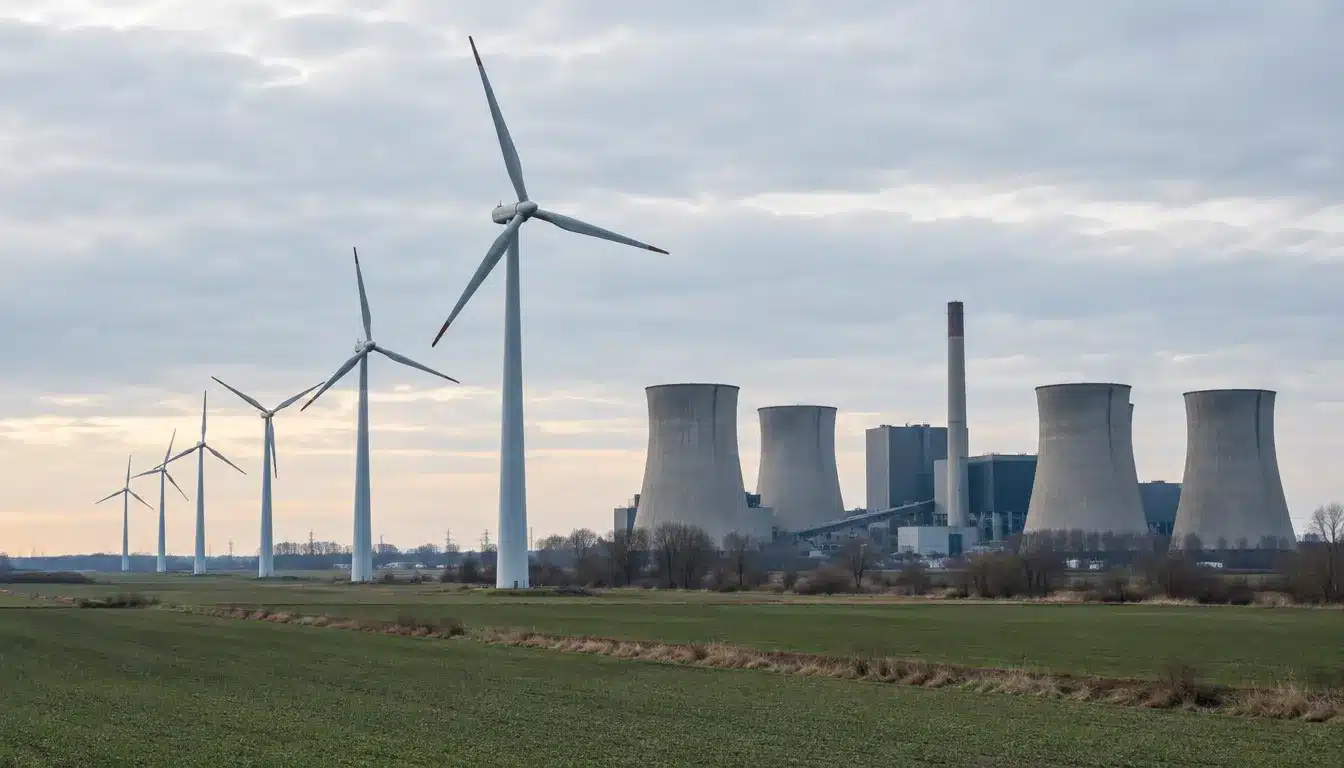
Renewables supplied about 55% of Germany’s electricity last year. The government wants that share to reach at least 80% by 2030. To help get there, Berlin wants to install 2,000 more wind turbines.
Coal still generated almost a quarter of the country’s power in 2025. Under existing law, all coal plants must close by 2038 at the latest. Now the government says it is looking at whether to bring that date forward to 2035.
Meanwhile, new gas plants that receive state funding must be ready to run on hydrogen. They must also run on climate-neutral fuels by 2045, although the roadmap doesn’t say which ones.
Cars and heating
In transport, Germany will offer 2.8 billion euros to help lower and middle income households buy electric cars. Official projections suggest every new car sold in Germany will be electric by 2035.
For homes, the strategy focuses on swapping gas and oil boilers for heat pumps, backed by state subsidies. From 2029, new gas or oil heating systems must use a rising share of climate-neutral fuels. That share reaches 60% by 2040.
Industry, in turn, will switch to electricity and hydrogen and use energy more efficiently. Where emissions can’t be avoided, the plan allows for carbon capture.
Energy security as the selling point
The government framed the plan as an energy security measure. In 2024, Germany spent about 76 billion euros importing fossil fuels, with around two-thirds going on oil and petroleum products.
“The money we currently spend on importing oil and gas will increasingly flow into local value creation,” said Environment Minister Carsten Schneider. He also pointed to the Strait of Hormuz. It is “not a good state of affairs,” he said, if events there decide “whether people can still afford their daily commute to work.”
The plan also answers a wider call. UN Secretary-General António Guterres has urged every country to publish a roadmap with “clear timelines and protection for affected workers and communities.” A push for a global fossil fuel roadmap failed at COP30 in Belém last year, after oil producers blocked it in the final hours.
Campaigners want a faster exit
Jennifer Morgan, Germany’s former climate envoy, welcomed the plan but asked for more. “A roadmap is only the starting line,” she said. “To truly deliver, this strategy must be backed by a faster, more deliberate and just phase-out paired with the rollout of green electrification.”
Oil Change International was blunter. Laurie Van Der Burg leads the group’s work on public finance. “Germany’s 2045 phaseout date is far too late, and is an insult to equity,” she said in a statement.
The group also pointed to Germany’s overseas lending. Germany joined the Clean Energy Transition Partnership, whose members commit to ending public finance for fossil fuels. Since then, it has approved $1.5 billion in such finance, the group said. That makes Germany the second-largest offender after Italy, by the group’s count.
A signal to exporters
Still, analysts see weight in the combined plans. Linda Kalcher, executive director of Strategic Perspectives, noted that France, the Netherlands and Germany make up around 46% of EU GDP. She called their joint move away from fossil fuels “a powerful signal”.
Each fossil fuel roadmap still has gaps. Yet together they give suppliers of oil and gas a clear view of falling European demand. For Germany, the test now is whether the funding and laws follow in time to meet its own dates. Investors are already lining up, as the recent push into German storage and wind shows.