Abu Dhabi’s Masdar has signed a memorandum of understanding with the German asset manager Luxcara, opening the way to more than €5 billion of investment in German battery storage and offshore wind.
Luxcara confirmed the signing on Friday 11 September. The agreement covers more than €5 billion, or about US$5.77 billion, of potential investment. Battery energy storage and offshore wind come first, though the partners left room for other technologies.
Germany is the starting point. The announcement came during a United Arab Emirates state visit to the country, so the timing was political as well as commercial. Masdar is state-owned, which makes the capital behind it unusually patient.
What each side brings
Luxcara has run clean energy assets since 2009. The German manager acquires, structures, finances and operates projects across 12 European countries, spanning generation, integration and storage. Its recent work includes a 520MW/1,040MWh battery project near Dortmund, bought with a grid connection already secured.
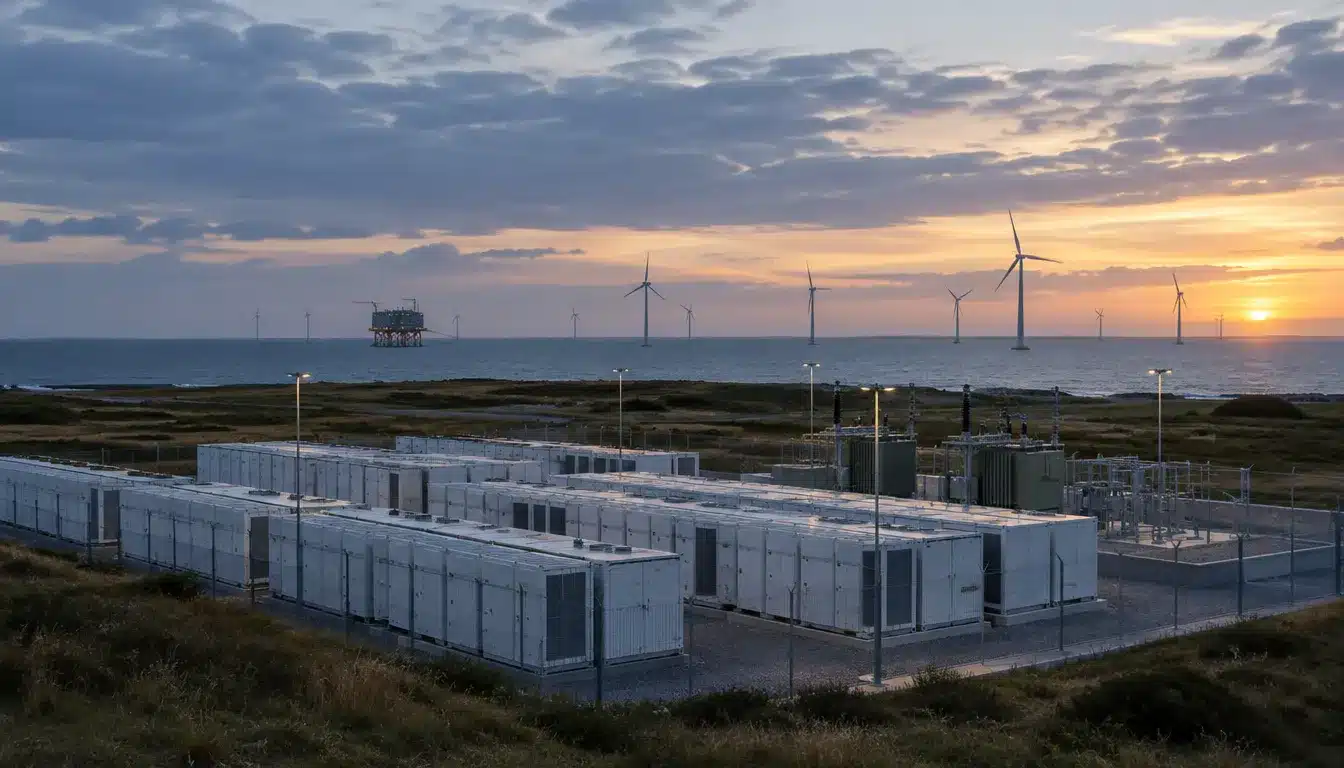
That site sits inside a bigger plan. It forms part of a 900MW/1,800MWh battery park at Waltrop in North Rhine-Westphalia, held with the power firm BKW and the utility group Trianel. Approvals came through in July. Construction therefore starts this autumn, with commissioning due in 2028.
Masdar brings the balance sheet
Masdar operates more than 65GW of renewable capacity worldwide. In the United Arab Emirates it is building the largest round-the-clock solar-plus-storage site yet attempted. That project pairs 5.2GW of solar with 19GWh of batteries to give a continuous 1GW.
Britain shows the pattern. Masdar commissioned its first UK battery project in December 2025. Last month it raised financing for three more totalling 540MWh, and commissioned a further 70MWh site. Germany was already on the list, because in February the company formed a joint venture with RWE targeting 1GW of German battery investment.
Words chosen carefully
Mohamed Jameel Al Ramahi, chief executive of Masdar, described Germany and Europe as “an important strategic market”. He said the company has “built a strong track record across offshore wind and other renewable technologies”.
Alexandra von Bernstorff, managing partner at Luxcara, was similarly measured. She said the partnership “could bring meaningful investment into Germany’s offshore wind and battery storage sector”.
A memorandum of understanding commits neither side to spend. The €5 billion figure is therefore an ambition rather than a budget. Still, the logic of the pairing is clear, because Luxcara holds the development and asset-management platform while Masdar holds the money.