Australia has awarded A$32.6m under the second round of its Carbon Capture Technologies Program, naming six recipients so far and backing enhanced rock weathering, direct air capture and mineral carbonation.
The Department of Climate Change, Energy, Environment and Water announced the funding on 2 September. It described the round as investing an additional A$32.6m in seven projects, and named six of them. The department added that these do not represent the full allocation, and that further projects may be announced as programme processes are finalised.
The technology mix marks the notable part. Round 2 backs carbon capture and utilisation, direct air capture and enhanced rock weathering, so the money runs towards removal and product-making rather than towards capture at conventional point sources.
Where the money goes
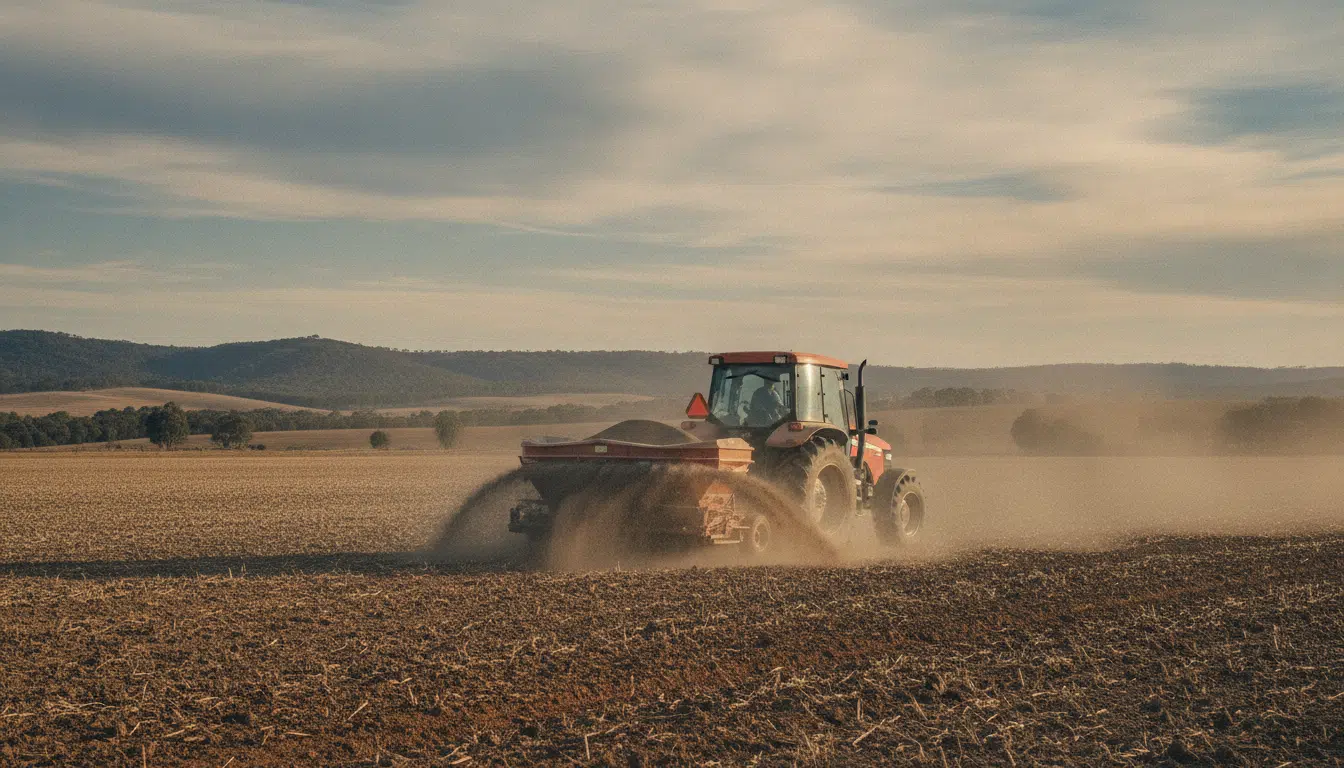
Carbonaught receives A$10m to remove atmospheric carbon dioxide through enhanced rock weathering on agricultural land, with the aim of establishing a route to broader deployment in Australia.
Australian Carbon Vault also receives A$10m, to demonstrate integrated direct air capture and storage while developing the Limestone Creek CCS Hub as a multi-user site for future removal projects.
Karbonix Technologies takes A$4.8m to make low-emissions precast concrete from captured carbon dioxide, which stores the carbon permanently and cuts cement use. MCi Carbon receives A$3.28m to store carbon dioxide through mineral carbonation of steelmaking slag, producing carbon-embedded construction products.
Electralith takes A$1.56m for a lithium refining process that integrates carbon capture to produce battery-grade lithium carbonate. The Australian National University receives A$1m to demonstrate a solar-powered hydrothermal carbonisation process converting biosolids into hydrochar for waste-to-chemicals use.
How round 2 differs from round 1
Round 1 committed A$65m to seven projects in July 2024, weighted towards cement-linked capture and utilisation. Calix took A$15m for methanol from cement emissions, MCi Carbon A$14.5m for building materials, and Airthena A$11.7m for large-scale direct air capture.
Round 2 is half the size and spreads across a wider set of removal approaches. Enhanced rock weathering appears for the first time, and two of the six awards go to carbon removal rather than industrial abatement.
Applications closed on 6 May 2026. The six named awards total A$30.64m, at an average of about A$5.1m, against roughly A$9.2m across the seven projects funded in the first round.
What the mix signals
Australia’s engineered removal spending has been sparse, so the direction of this round carries weight beyond its size. Backing enhanced rock weathering on farmland and a multi-user direct air capture storage hub points to where Canberra expects durable removal capacity to sit.
The department frames the projects around three outcomes: removing, using or permanently storing carbon dioxide, creating low-emissions products, and supporting industrial decarbonisation. Whether any of them reach commercial scale is a separate question, and one the grants are too small to answer.