
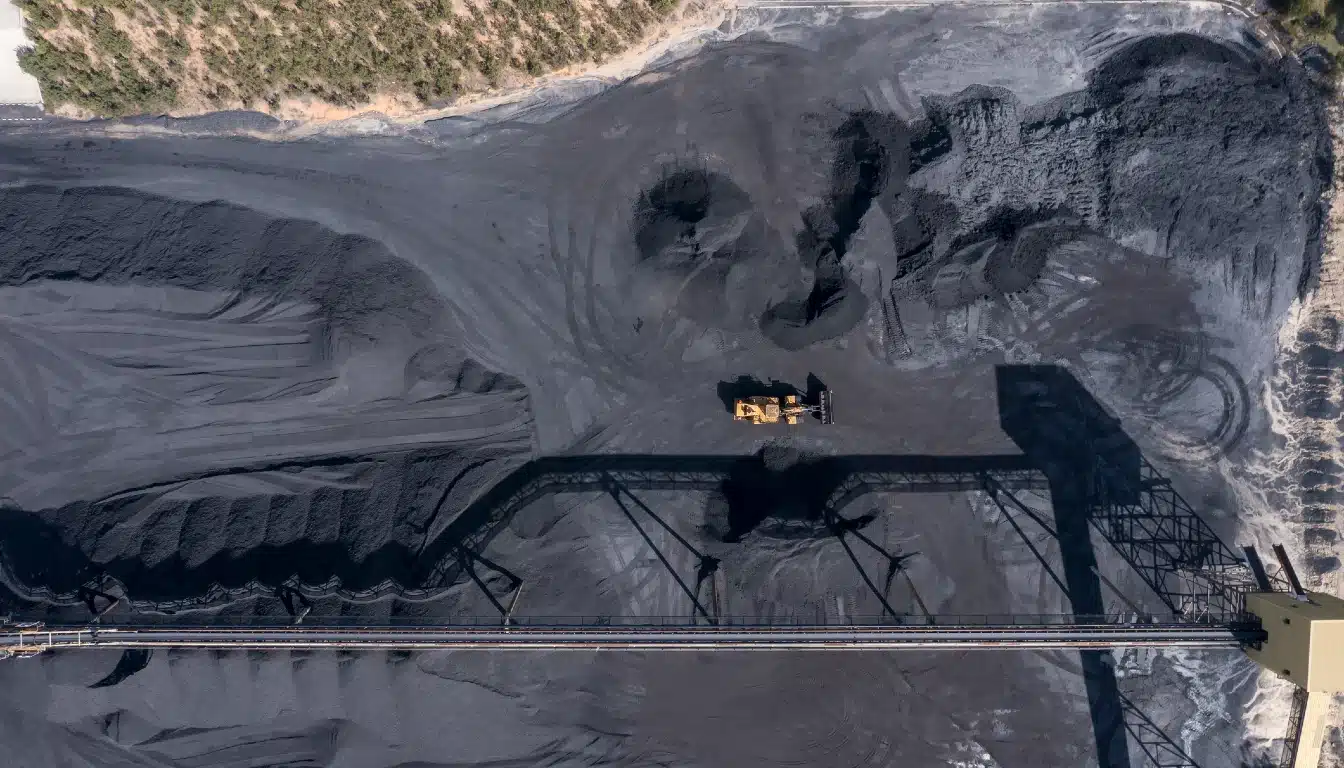
The most ambitious attempt to use climate finance to accelerate coal phase-out in a developing economy has effectively failed, dealing a significant blow to a model that donors and multilateral lenders had hoped to replicate across Asia and Africa. The collapse of the Just Energy Transition Partnership with South Africa exposes deep structural flaws in how wealthy nations design and deliver climate finance, and raises hard questions about whether the JETP framework can survive as a credible instrument.
A Deal Built on Fragile Foundations
South Africa’s JETP was announced at COP26 in Glasgow in November 2021 with considerable fanfare. The United States, the United Kingdom, France, Germany, and the European Union pledged an initial $8.5 billion to help the country shift away from coal, which supplies roughly 80 per cent of its electricity. The ambition was genuine. The execution was not.
The core problem was structural. The $8.5 billion package was composed largely of loans rather than grants, meaning South Africa would take on additional sovereign debt to finance a transition it had not designed and could not fully control. For a country already carrying a heavy debt burden and facing chronic electricity shortages driven partly by the deterioration of its existing coal fleet, the terms were difficult to accept on their own merits.
Governance complications compounded the financing problems. South Africa’s energy sector involves a complex web of state-owned entities, labour unions representing coal workers, and communities dependent on mining. The JETP process did not adequately integrate these stakeholders from the outset. Plans developed in international negotiating rooms struggled to gain traction on the ground.
What the Numbers Reveal
The gap between pledged and disbursed finance tells its own story. Years after the initial announcement, only a fraction of the committed capital had moved. Procedural requirements attached to loans, differing definitions of what counted as climate finance, and mismatches between donor disbursement timelines and South Africa’s planning cycles all contributed to the slowdown.
This pattern is not unique to South Africa. Across climate finance broadly, the distance between headline commitments and actual capital deployment has been a persistent and well-documented problem. The OECD has tracked this gap for years in its climate finance monitoring reports, finding that the composition of flows, how much is public versus private, how much is grants versus loans, matters enormously for recipient countries.
For South Africa, a country with an investment-grade credit rating that has since been downgraded, the loan-heavy structure of the JETP created a dilemma. Accepting the finance meant increasing debt servicing costs. Rejecting or stalling it meant foregoing the transition support the country genuinely needs.
Implications for Climate Finance Architecture
The South Africa experience carries direct implications for the four other countries, Indonesia, Vietnam, India, and Senegal, that have entered or are negotiating JETP arrangements.
Indonesia’s JETP, announced at the G20 in Bali in November 2022, involves a $20 billion package with similar structural characteristics. Vietnam’s deal, also announced in late 2022, has faced comparable implementation difficulties.
The lesson is not that JETPs are inherently unworkable. It is that the current design assumptions are wrong. Treating sovereign developing nations as passive recipients of finance packages designed by donor coalitions produces predictable friction. Countries with complex political economies, significant incumbent energy industries, and legitimate development priorities will not simply absorb externally designed transition plans, however well-intentioned.
Climate finance practitioners and researchers have increasingly argued that grant-based instruments, genuine co-design processes, and longer implementation horizons are prerequisites for success.
The New Collective Quantified Goal on climate finance, agreed at COP29 in Baku in November 2024, set a headline figure of $300 billion per year by 2035 from developed to developing countries. Whether that capital arrives in forms that recipient countries can actually use remains the central unresolved question.
The Path Forward for Coal Transition Finance
Salvaging the JETP concept will require donors to accept a fundamental reorientation. Finance must be structured around recipient country plans, not donor preferences. The ratio of grants to loans must shift materially, particularly for lower-income and high-debt economies. Conditionality frameworks must be simplified and aligned with national regulatory timelines rather than donor fiscal calendars.
Private capital mobilisation, long cited as the mechanism that would multiply public climate finance, has also underperformed in the JETP context. Blended finance structures that were supposed to crowd in institutional investors have moved slowly, partly because the policy risk environment in coal-dependent economies remains uncertain. Addressing that uncertainty requires sustained political commitment from both donor and recipient governments, something that short electoral cycles on both sides make difficult to sustain.
The next genuine test will come in Indonesia, where the scale of the coal sector and the complexity of the political economy dwarf South Africa’s. If the international community applies the lessons from Pretoria, there is a viable path. If it repeats the same design errors at larger scale, the credibility of climate finance as a tool for energy transition will face a far more serious reckoning than any single failed deal.