
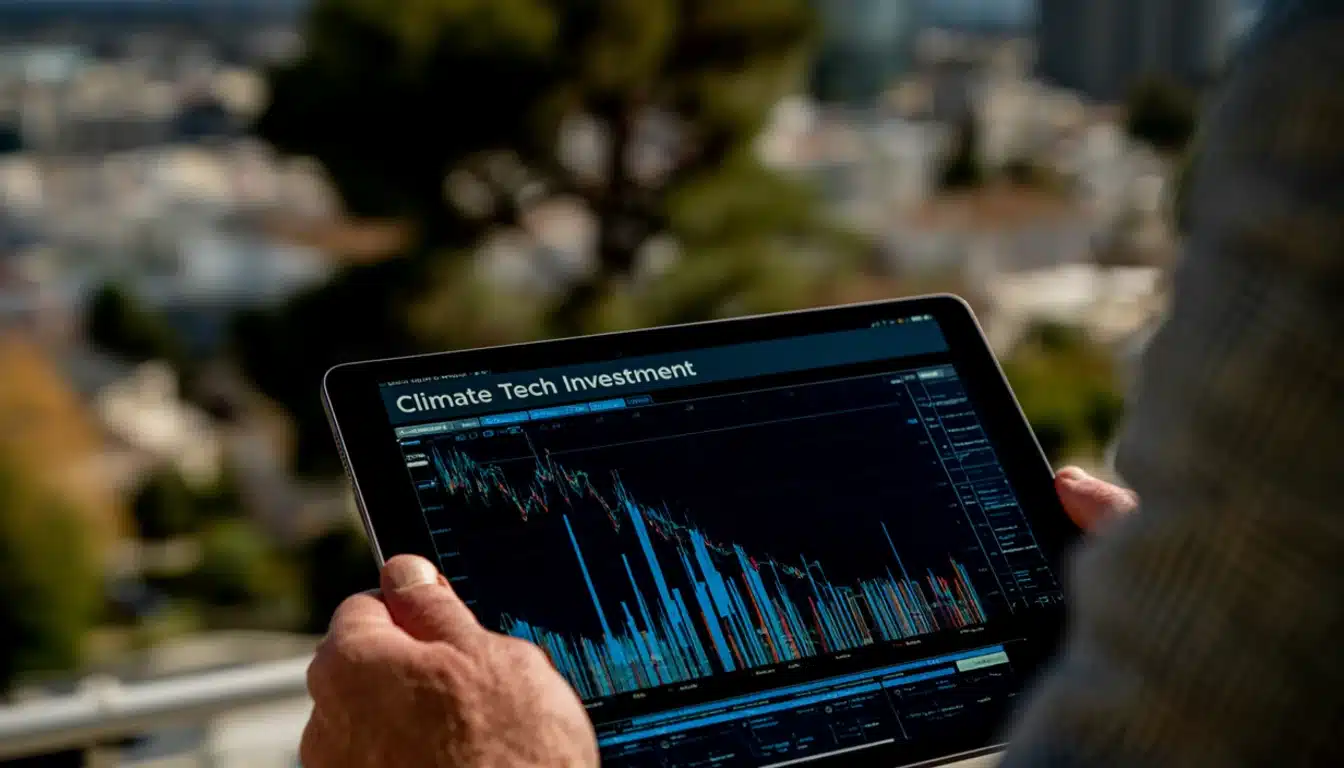
For much of 2025, a consensus formed among clean technology investors: private capital had decoupled from political risk. The Trump administration had reversed course on climate policy, yet US cleantech investment held firm. The UK was recovering. Europe was rebuilding. The thesis seemed to hold. In Q1 2026, that thesis has been torn apart.
The Numbers That Matter
The data across all three major markets tells a story of synchronised contraction. According to Cleantech for Europe’s Q1 2026 briefing, EU venture and growth investment fell to 1.3 billion euros in the first quarter, down from 2 billion in Q4 2025 and well below the 2024 quarterly average of 2.2 billion. Total EU deal volume dropped to 62, the lowest quarterly count since 2017. Early-stage deals fell 25% to 47. Late-stage activity contracted to just 15 Series B and growth equity deals, the lowest in over five years.
In the United States, 3.5 billion euros was raised across 72 deals, the lowest level since at least 2014. A handful of megadeals in nuclear fusion and energy storage prop up that headline figure. Strip those out and the market is thinner than it looks.
The Geopolitical Trigger
The immediate cause is geopolitical. Escalating conflict in the Middle East drove up fossil fuel and transport costs, contributed to persistent inflation, and suppressed investor appetite. By 22 April 2026, the European Commission estimated that the EU had spent 24 billion euros more on fossil fuels since the conflict escalated in March, on top of 340 billion euros in import costs across 2025.
Victor Van Hoorn, Director of Cleantech for Europe, put the fiscal logic bluntly: “every Euro spent on fossil fuel support is one that cannot be spent on education, innovation, defense.” The cruel irony is plain. The same crisis that exposes the cost of fossil fuel dependency is depressing the investment needed to end it.
“The business case for cleantech is a business case for resilience.”
— Victor Van Hoorn, Director, Cleantech for Europe
The briefing notes that capital is rotating toward technologies that decentralise resource systems and localise supply chains, including long-duration storage, battery energy storage, recycling, and geothermal.
Van Hoorn identifies a strategic trap: energy security demands faster electrification in Europe, but without a step-change in industrial policy, that risks deepening dependency on Chinese-manufactured technology.
As he writes, “The EU has a very careful balancing act to perform: reduce a dependence on imported fossil fuels without sleepwalking into a dependency on imported technology.”
The Cleantech for UK coalition states the same challenge with similar directness in its own published position: “Lead the transition or be left behind. The choice is ours.”
The UK’s Structural Problem
In the UK, total equity funding reached 3.9 billion pounds in 2025, up from 2.5 billion in 2024. Total debt reached 3.2 billion pounds. But grant funding collapsed to 70 million pounds from 200 million the year before. Seed funding stood at 144 million pounds, sharply down. Series A at 366 million pounds remained well below peak. Growth equity recovered faster than earlier stages, which reveals where risk appetite has migrated, and where it has not.
Speaking at Innovation Zero in London in April, Beverley Gower-Jones from the Clean Growth Fund, Chair of the Investment Committee at Great British Energy and Co-Founder of Carbon Limiting Technologies, delivered the sharpest diagnosis of the structural problem: “The UK does not have an innovation problem. We have a capital alignment problem. And until we fix that, we continue to invent the future and let someone else own it.”
She identified what she called a dangerous swing in the pendulum. The IEA estimates that 35% of the technologies needed to reach net zero do not yet exist. “You cannot scale what hasn’t been created,” she said. The consequence of cutting grants and seed funding now will not arrive in ten years. It will arrive in the next two to three.
Gower-Jones was equally unsparing on early-stage infrastructure. “Grants, seed funding, university spin-outs,” she said, “that early-stage pump-priming is not optional. It’s foundational. And we’re under-investing in it.” She called for universities to take commercialisation seriously as a core part of their mission, arguing that the ecosystem effects, where talent stays, capital clusters, and companies scale locally, are visible beyond Oxford and Cambridge in cities including Manchester, Sheffield, and Glasgow.
On commercialisation, she challenged the received narrative that the UK is poor at taking innovation to market. The UK created £145 billion of venture-backed unicorn value over the past five years, against £245 billion across all of Europe. That is a strong record. But the returns do not stay in the country that created them.
“The UK does not have an innovation problem. We have a capital alignment problem. And until we fix that, we continue to invent the future and let someone else own it.”— Beverley Gower-Jones, Chair of Investment Committee, Great British Energy
UK pension funds allocate less than 0.5% of assets to venture capital. Two-thirds allocate nothing. In the United States, pension funds provide 70% of domestic VC capital. In the UK, the figure is under 10%.
“Over 90% of large VC rounds include international investors,” Gower-Jones said.
Twenty-two percent of UK pension funds are now looking to increase allocations to venture, which she acknowledged as progress, adding: “we need momentum. We need urgency.”
On the structural failures in capital deployment, she was equally direct. “There is not a capital shortage. It’s a structuring failure. We don’t lack tools, but we lack deployable solutions.”
Projects fail because they are too risky for infrastructure capital, too capital-intensive for venture, and too commercial for grants. “Bankability comes too late,” she added. “We assume capital flows once something is bankable, but getting there is the hardest, least funded step. Technology risk, policy uncertainty and uncontracted revenue — so everyone waits and nothing moves.” The unlock, she argued, is demand certainty: long-term offtake agreements, public procurement, and carbon floor prices. “Financing decarbonisation is not about a single source of capital,” she said. “It’s about layering.”
21Q2
21Q3
21Q4
21 Q1
22Q2
22Q3
22Q4
22 Q1
23Q2
23Q3
23Q4
23 Q1
24Q2
24Q3
24Q4
24 Q1
25Q2
25Q3
25Q4
25Q1
26
The European Picture
The EU’s contraction has its own structural logic. Average deal size fell to 20 million euros from 24 million in Q4 2025. Of 27 member states, 11 saw no recorded deals in Q1 2026. Germany led with 18 deals, followed by France with 12 and the Netherlands with 7. Energy and power accounted for 62% of all venture and growth investment. Capital in other sectors remains structurally constrained, shaped by smaller deal sizes and less developed scale-up frameworks.
The Cleantech for Europe briefing identifies a persistent late-stage equity gap as preventing European scaleups from reaching commercial maturity. The EIB’s ETCI 2.0 initiative, targeting 15 billion euros for around 100 European growth funds, is a welcome structural response. But these measures must be deployed at speed.
On policy, the Industrial Accelerator Act unveiled on 4 March 2026 marks the first time the EU has linked public procurement to Union-origin criteria for clean technologies. But the final text is significantly weaker than earlier drafts. Escape clauses allow member states to waive local content requirements on cost grounds. The EU ETS faces pressure too. The briefing resists any weakening of the carbon price signal: “Any revision that erodes the predictability or ambition of the system risks disrupting investment decisions already in progress.”
“We create value. We take the risk, we build the companies, and the returns go elsewhere. Frankly, we’ve been making America great enough for quite long enough.” — Beverley Gower-Jones
And China’s posture adds urgency: “China’s late-April announcement threatening countermeasures against European trade defence tools, combined with its continued restrictions on critical raw material exports, makes it clear that timidity is no longer an option.”
The EU ETS faces pressure too. Member states and energy-intensive industries are calling for the system to be weakened or overhauled. The briefing resists this: “The carbon price signal underpinning the ETS is fundamental to providing the long-term investment certainty that industrial decarbonisation requires. Any revision that erodes the predictability or ambition of the system risks disrupting investment decisions already in progress.”
Source: Cleantech for UK, 2025. Deal counts estimated from published chart.
Source: Cleantech for UK, 2025. Confirmed figures: seed £144m, series A £366m, series B £460m, growth equity £1.52bn. Earlier years estimated from published chart.
The Moment That Demands Realism
Sarah Mackintosh, Director for Cleantech for UK, noted at Innovation Zero that the expected collapse in US cleantech investment after the 2024 election did not materialise in 2025. That data point circulated widely as evidence of resilience. Q1 2026 suggests it was a lag, not a decoupling. US investment is now at its lowest since 2014. The buffer has gone.
The IEA’s Energy Technology Perspectives 2026, launched at the European Parliament in April, made the trajectory explicit. The global market for mass-manufactured clean energy technologies is set to grow from 1 trillion US dollars in 2025 to nearly 3 trillion by 2035. But Europe risks falling behind at the scale-up stage.
The structural problems identified at Innovation Zero predate the current contraction. The contraction makes them more urgent, and less excusable to defer. Gower-Jones closed her remarks with a summary that stands as both a challenge and a charge: “We have the science. We have the talent. We have the companies. And we are great at commercialisation. But we must start backing ourselves.”
The clean technology investment thesis was never that markets are immune to politics. It was that the economics would hold regardless. Q1 2026 is the first quarter that tests that claim in earnest. The data from across the UK, Europe, and the United States suggests the test is harder than the optimism that last year engendered.