The headline numbers in climate finance have recovered, but confidence has not. Duncan Reid, who runs one of the sector’s largest climate tech and climate investment gatherings, argues the money has not gone away. It has changed hands and crossed borders.
Climate finance entered 2026 in an odd position. For much of 2025, investors told themselves that private capital had decoupled from political risk. Climate Solutions News argued earlier this month that the comfort proved false, as the first quarter of 2026 brought synchronised contraction across the UK, Europe and the United States. American investment in low-carbon energy and transport fell for a second straight quarter, Rhodium Group data showed, with clean-technology manufacturing down by about a third year on year.
So the question for anyone raising or deploying capital has changed. It is no longer whether climate is investable but where the money now goes, and why.
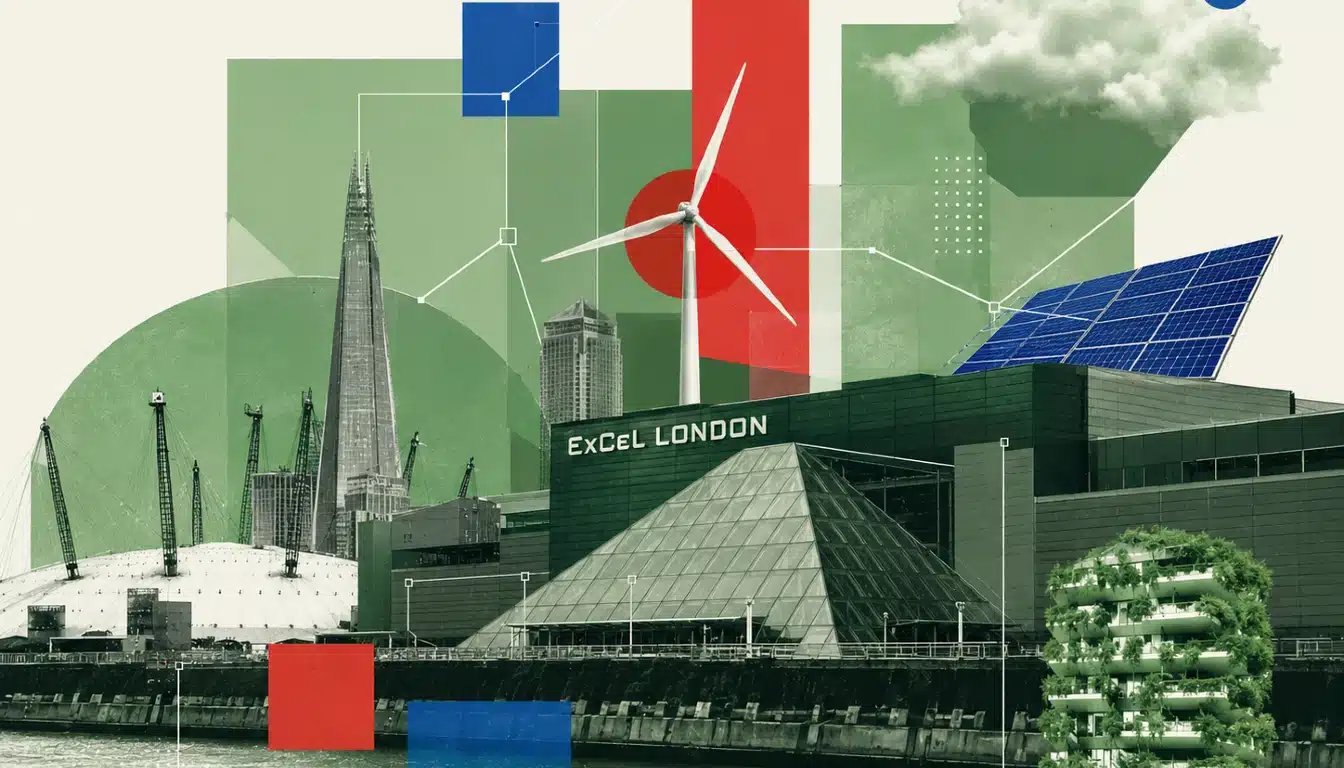
Few people watch that flow as closely as Duncan Reid. As chief executive of Reset Connect, he runs the green investment event that anchors London Climate Action Week. This year it returns to Excel on 23 and 24 June and expects more than 7,500 attendees. Reid sees investors, founders and corporate buyers in one room, which gives him an unusually direct read on sentiment. Speaking on the Climate Solutions News podcast, he made the case that the retreat is real, yet narrower than the mood implies.
A retreat with a pattern
Reid does not dispute that something has shifted. “Capital moves around, doesn’t it?” he says. He traces much of the pullback to Washington. The administration has weakened the Inflation Reduction Act, and federal support has eroded since 2025 through thinner funding, adverse permitting and fewer tax incentives.
The retreat is also reputational. Reid points to the largest managers stepping back from their climate pledges. BlackRock left the main net-zero investor group for asset managers in January 2025, part of a wider Wall Street exit (non-paywalled summary). “You see money move out of some of those kind of really big funds,” Reid says.
His reading of the underlying year is more sanguine than the headlines suggest. He estimates the sector did more than 10,000 deals in 2025, up from around 9,000 in 2024. These are his own estimates.
Why the institutions stay
Reid’s central argument is that the exit of a few American funds masks a deeper continuity. Climate, he says, is “a big institutional play”, not only a venture one. Pension funds carry liabilities that run across decades. A destabilised climate threatens the assets that sit behind them.
He puts it bluntly. “If the UK is all on fire or underwater, people don’t need pensions,” he says. Local government schemes in Britain and pension funds in Canada keep allocating, he argues, because that long horizon does not move with the political weather.
The thinking shaped the company’s name. Reid expected “a big reset where some of that kind of traditional money … was going to move into some different places”. On his account the capital has changed hands and crossed borders, away from the loudest US funds and towards institutions with longer obligations.
Climate Solutions News is a media partner of Reset Connect London, which returns to Excel on 23 and 24 June 2026 as the flagship event of London Climate Action Week. Entry is free and registration is open now. Register to attend Reset Connect London.
From soft sustainability to hard
The war in the Gulf has sharpened the case. The Strait of Hormuz has stayed effectively shut since late February, choking roughly a fifth of seaborne oil. Reid believes the disruption makes the shift to domestic renewable power more urgent than the 2022 price shock did.
He expects the vocabulary to change with it. “Energy sovereignty is going to be something that’s going to start getting talked about a lot more,” he says. Reliance on imported fuel, and on other countries’ rare earth minerals, now reads as a strategic weakness.
John Elkington, a Reset Connect keynote speaker last year, has made the same turn. Writing in May, he argued that the soft sustainability era ended with the war, and a harder version built on security and necessity has taken its place. Reid’s commercial framing is simpler. Once solar and storage undercut oil and gas, “that kind of pure economic piece just wins”, he says, whatever the politics.
A sector that has grown up
The exhibitors carry their own evidence of maturity. Companies that arrived at the first event in 2022 with prototypes now raise Series A, B and C rounds. “They’ve kind of grown with the event,” Reid says. Energy drives most of the demand, as buyers chase microgrids, power purchase agreements and cheaper supply. Artificial intelligence runs through almost every stand, much of it aimed at easing strain on the grid.
That breadth is the point Reid keeps returning to. The money is selective and the politics are loud, yet the market beneath them keeps widening. The investors backing away from renewables are easy to see. The institutions and governments still buying attract less notice, and they are the ones who will decide where climate capital settles next.