
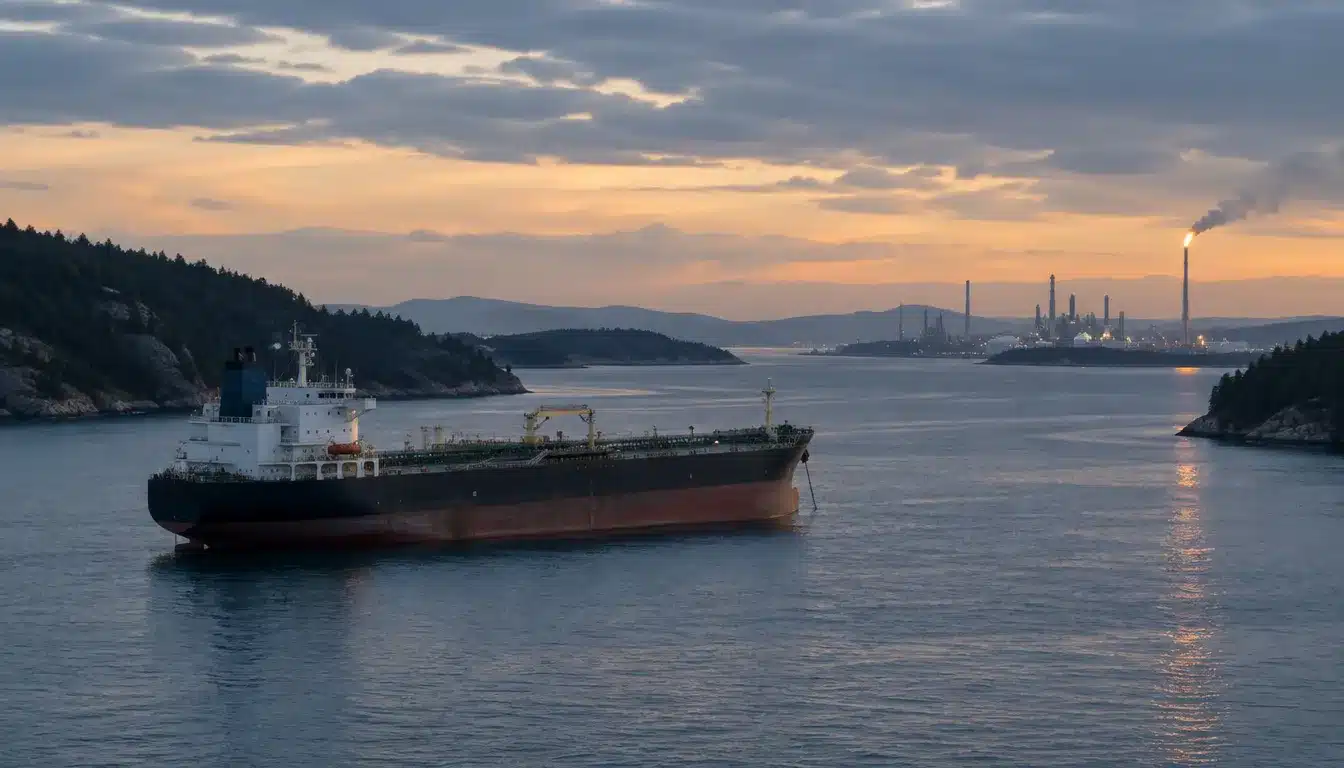
Global fossil fuel emissions are on course to drop by about 0.5 per cent this year, as the Hormuz crisis destroys oil and gas demand faster than coal can replace it.
Global fossil fuel emissions look set to fall this year. An analysis published on 16 September puts the decline at around 0.5 per cent against 2025 levels. War in the Gulf has made oil and gas costly enough to destroy demand. That effect now outweighs a rise in coal burning.
The US-Iran war has disrupted trade through the Strait of Hormuz for months. Oil and gas prices rose sharply and have stayed high. As a result, buyers across the world have cut back or switched fuel. Every extra month of disruption strengthens the case for alternatives.
Oil demand takes the biggest hit
Oil tells the clearest story. In January the International Energy Agency expected demand to grow by 930,000 barrels a day. By September the agency was forecasting a fall of 2.5m barrels a day. That is a drop of 2.4 per cent on 2025 levels.
The agency had previously expected oil demand to peak as late as 2030. Now it expects use to stay effectively flat for two years. So the timing of that peak has become much harder to call.
Coal picks up some of the slack
Coal has moved the other way. The IEA now forecasts a 1.2 per cent rise in global demand for 2026. In January it had expected a decline. Falling Chinese use, the agency thought, would offset pro-coal policy in the United States.
High gas prices changed that, although they explain only part of the shift. A strong El Nino has raised cooling demand and cut hydropower output in several markets. China, meanwhile, is wasting a large share of its wind and solar generation. Those factors sit outside the Hormuz story.
Coal’s rise still softens the headline number. Without it, the fall in fossil CO2 would be considerably steeper. So the net figure understates how far oil and gas demand has dropped this year.
Gas demand turns negative
The gas forecast has swung just as hard. In January the IEA expected global demand to rise by 2.0 per cent in 2026. By July it was forecasting a 0.6 per cent fall. Sustained high prices did the work.
Where 2027 lands depends heavily on those prices. If gas stays expensive, coal demand could climb again. If prices ease, coal use should fall back. Meanwhile governments that leaned on liquefied natural gas imports are weighing domestic clean power against longer coal runs.
Electric vehicles gain from the price shock
High pump prices have pushed drivers towards electric cars. Sales took record shares in Australia, China, Europe, Indonesia and Thailand. In July they nearly doubled year on year in markets outside China, Europe and North America.
Sverre Alvik is vice president at DNV. Each month of conflict, he said, raises “the probability of permanent [oil] demand destruction”.
That is the question hanging over these figures. Demand lost to price can return when prices fall. Demand lost to a new car or a heat pump does not.
The peak question
Peak fossil demand has been forecast, delayed and forecast again. The IEA’s own record this year shows how quickly the picture moves. In January it expected oil demand to grow and gas demand to rise 2 per cent. By September both forecasts had reversed.
Analysts now face a harder question than the direction of travel. A crisis-driven fall can unwind as fast as it arrived. What it leaves behind is the real test, and that depends on the hardware buyers install while prices stay high.
A fall driven by crisis
A 0.5 per cent dip is small set against climate targets. Still, global fossil fuel emissions have spent most of this century climbing. Breaking that pattern, even by accident, changes the baseline for every forecast that follows.
Whether the fall holds depends on the war and on what buyers do next. Cheaper oil would tempt some demand back. Yet each month of high prices locks in more electric cars and more solar. China’s own emissions have already turned down on the same logic.