Wood Mackenzie expects Europe’s power sector to pass 80% zero-carbon generation by 2030, yet the EU27 will fall short of its renewables targets as battery capacity more than triples.
Europe’s power sector will pass 80% zero-carbon generation by 2030, according to Wood Mackenzie. The consultancy published the forecast on 29 September in its Europe Power Markets Strategic Planning Outlook 2026. However, it also finds that the region will miss its own renewables targets over the same period.
The outlook covers 35 national markets out to 2060, and its figures refer to all of them unless marked as EU27. It expects progress to speed up after 2030, with renewables reaching 83% of supply across all 35 markets by 2050.
EU27 falls short on renewables
On an EU27 basis, renewables will make up 63.7% of supply by 2030. That’s below the 65% goal in the Fit-for-55 package and the 69% set out under REPowerEU. So the bloc’s zero-carbon generation share rises fast, while its renewables share lags its own ambitions.
The two numbers measure different things. Zero-carbon generation counts nuclear power alongside wind, solar and hydro, which is why it sits well above the renewables share. Fit-for-55 is the EU’s package to cut net emissions by 55% by 2030, while REPowerEU raised the renewables goal after Russia’s invasion of Ukraine.
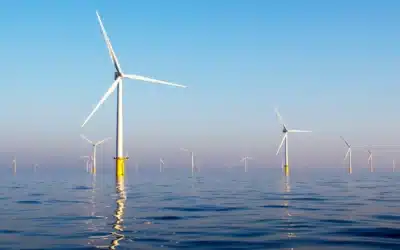
Offshore wind explains much of the gap. Wood Mackenzie expects capacity to reach 73GW by 2030 and 148GW by 2035, although supply chain limits will slow the build-out. As a result, gas plants will generate about 6% more between 2026 and 2040 than in earlier forecasts.
Solar and batteries lead the build-out
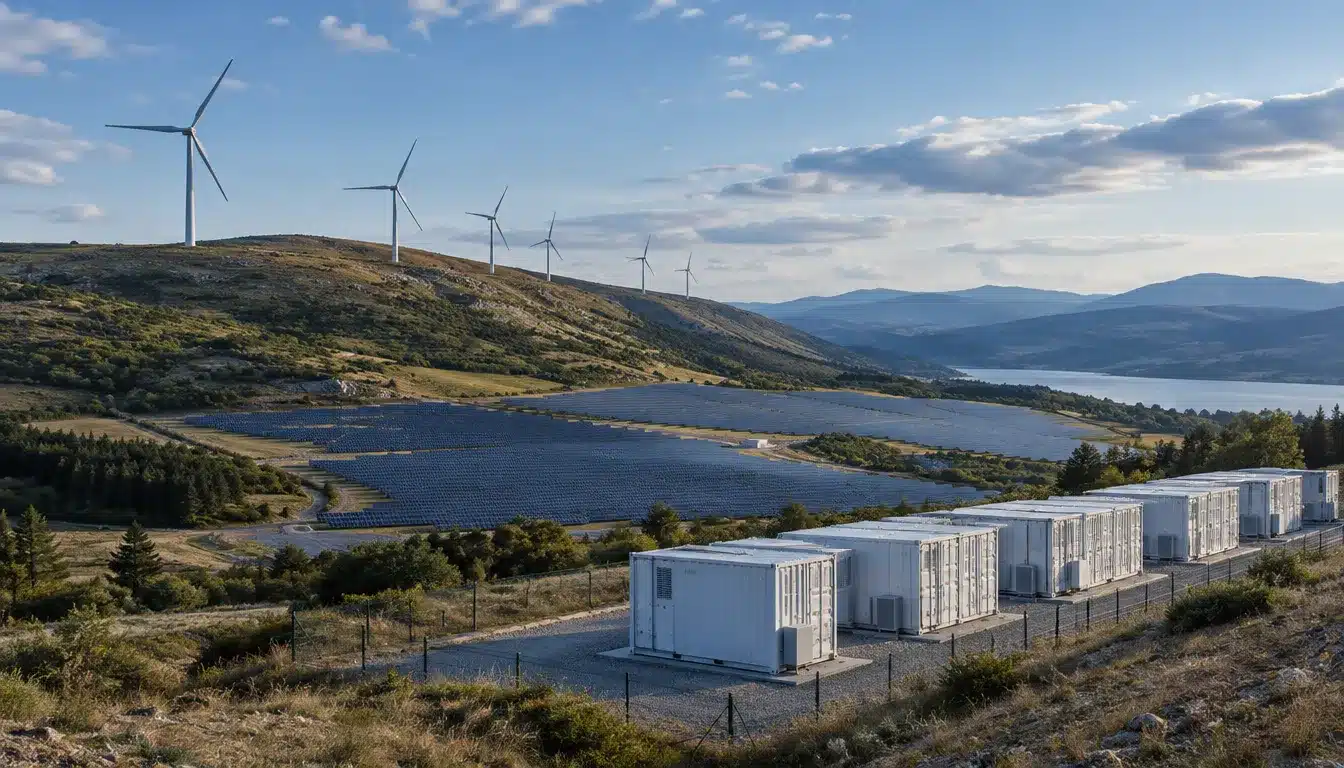
Solar capacity will nearly double to 637GWac by 2030, with roughly 61GW added each year. Meanwhile, onshore wind additions will reach 17GW a year, taking the fleet to 346GW.
Battery storage grows fastest of all. Capacity will more than triple from 47GW to 163GW by 2030. Germany, the UK, Italy and Poland will account for more than half of that growth, with Germany already drawing multi-billion-euro storage investment.
Gas stays for flexibility as coal falls away
Gas capacity will rise 5% to 273GW by 2030. Yet the fleet will run less often, with utilisation falling from 27% to 22%. By 2060, gas supply will fall by 45%.
In practice, gas plants shift from bulk supply to backup. They’ll cover the hours when wind and solar can’t meet demand, while batteries handle shorter swings. That change squeezes plant revenues, even as operators keep more capacity on the system.
Coal generation will halve from 457TWh in 2025 to 237TWh in 2030. The EU27 coal fleet then exits entirely by 2050. That decline mirrors the wider global shift, as renewables overtake coal as the world’s largest power source. Nuclear capacity, meanwhile, will grow through life extensions and new-build programmes.
Mohammed Alraood, research analyst for Europe power at Wood Mackenzie, said: “Europe’s power transition is on track.” He added: “Rising emissions costs will force structural decisions that markets are only beginning to price in.” He also said gas would stay in the mix for the moments when renewables can’t deliver.
Demand climbs unevenly across the continent
Total power demand reaches 4,103TWh by 2030, 11% above 2025 levels. It then climbs to 6,152TWh by 2050. Data centres drive the near-term rise, while falling power prices improve the case for electrification from the 2030s.
Electric vehicles will use far more power, rising from 39TWh in 2025 to 577TWh by 2050. Over the same period, grid-connected hydrogen production grows from almost nothing to 417TWh.
Heat pump use will expand more than fivefold by 2060. Still, high upfront costs mean most markets will miss their national heat pump targets.
Growth will also vary by region. Northern Europe sees the strongest demand growth, at 81% by 2050, while Southern Europe trails at 52%. For grid planners, that means very different investment needs from one market to the next. Even so, the direction is clear, with zero-carbon generation set to dominate supply everywhere.