Only five developed countries have set out new multi-year commitments, leaving average pledged public support for poorer nations at about $11.7bn a year for the rest of the decade.
Public climate finance pledges from developed countries have fallen by 71%, according to a new analysis of government commitments. Average annual pledges for the rest of the 2020s now stand at about $11.7bn. Before 2026, they averaged around $40bn.
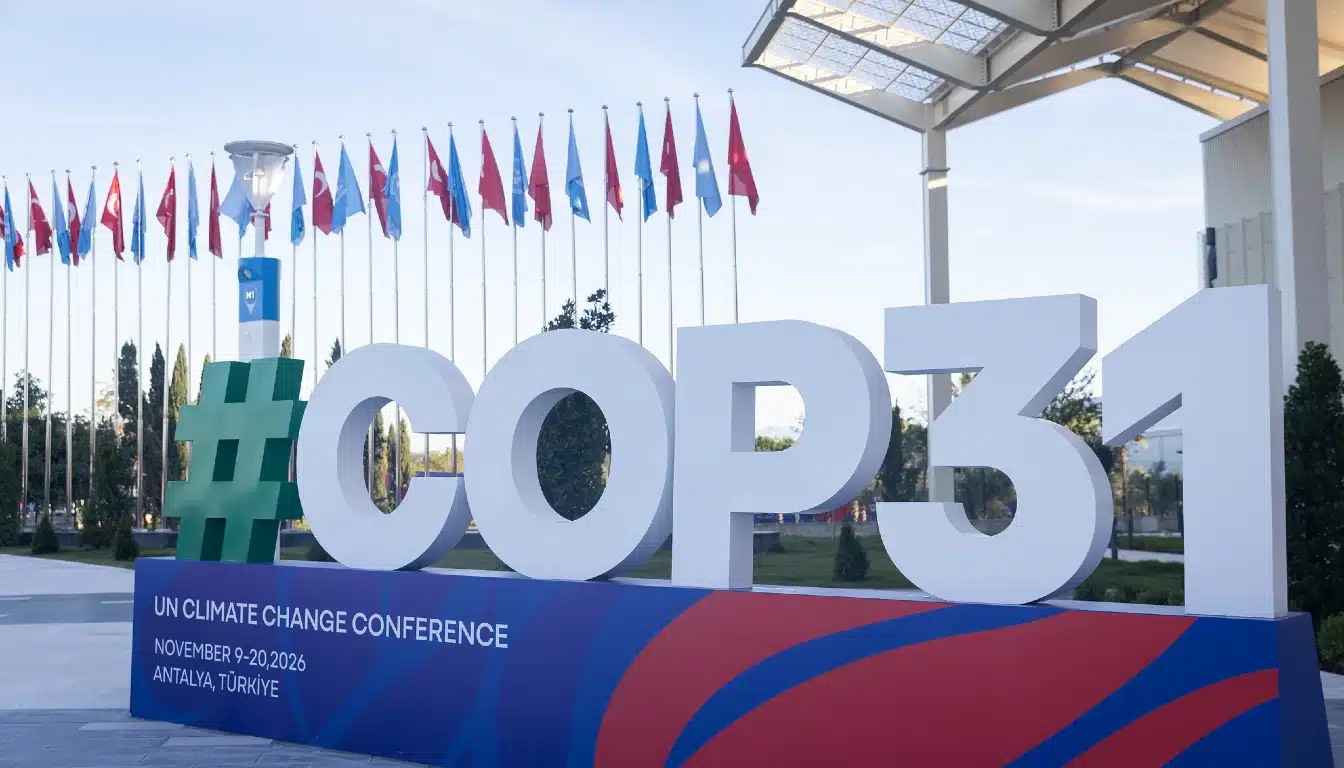
The drop comes as negotiators gather in Antalya, Türkiye, for COP31. Most multi-year pledges ran out in 2025. Since then, the United States has pulled out of global climate efforts, and many European governments have cut their aid budgets.
Five countries have made new commitments
Only the UK, Canada, Belgium, Switzerland and the Netherlands have announced new multi-year climate finance pledges. The UK alone accounts for half of the annual funds pledged from 2026 onwards. Its share averages about $5.7bn a year.
The UK package includes £6bn ($8bn) of aid for 2026-27 to 2028-29. The government has also promised £6.7bn ($8.9bn) from outside the aid budget.
Canada has pledged CA$5.3bn ($4.1bn) by 2030, or about $860m a year. Meanwhile, the Netherlands has committed “at least” €300m ($334m) a year of climate funding until 2031. Switzerland and Belgium have pledged smaller sums.
The European Commission’s own pledge averages $4.5bn a year, but it runs only until 2027. After that, funding depends on talks over the EU’s next long-term budget.
Large donors have gone quiet
Germany, France and Japan haven’t set out new climate finance plans. Germany and France each pledged €6bn ($6.8bn) a year by 2025, with nothing beyond that. Japan has announced no new multi-year pledges, either public or private.
Dr Anja Carolin Gebel, senior policy advisor at Germanwatch, said climate change and climate finance have “taken a back seat” in Germany’s current coalition. Her comment points to a wider trend, as aid budgets come under pressure across Europe.
In the United States, the Biden administration had committed to $11.4bn a year by 2024. However, the country now won’t provide official climate finance in the coming years.
Australia is also missing from the list. It holds the presidency of the negotiations at COP31, while Türkiye hosts the summit. Josie Lee, policy and advocacy lead at Oxfam Australia, warned of the effect on the talks if Australia failed to announce a pledge.
Pressure on the $300bn goal
The shortfall puts strain on a target agreed two years ago. At COP29 in Baku, developed countries pledged to “take the lead” on raising climate finance to $300bn a year by 2035. That compares with a goal of $100bn a year earlier in the decade.
The $300bn goal covers more than money from national budgets. Still, public pledges are the part that rich nations control most directly. So developing countries are now pushing for a climate finance work programme at COP31. They want it to cover how to scale up that support.
The EU has pushed back. In response to the work programme idea, it said its member states are already the “largest providers” of public climate finance. Wopke Hoekstra, the EU climate commissioner, also said that “any conversation on new fresh money is dead in the water”.
What negotiators want to see
Joe Thwaites, international climate finance director at the Natural Resources Defense Council (NRDC), said the lack of pledges was affecting the talks. “The lack of new announcements is making the finance negotiations tougher than they need to be,” he said.
He also said developed countries “would be wise to show how they are continuing to lead on climate finance”. New climate finance pledges could still come before the summit ends.
Other sources of funding are growing
Wider flows of money for climate action continue to rise. Total climate finance flows reached $1.9tn a year in recent UN reporting. That figure includes private investment as well as public money.
Multilateral funds are also active. For instance, the Green Climate Fund approved a record $3.3bn of projects for 2026. Even so, public climate finance pledges from rich nations remain the clearest sign of what their governments are willing to commit.