German start-up Reverion has closed a €154.2m Series B round to build a megafactory for its reversible solid oxide fuel cell power plants, aimed at data centres and heavy industry.
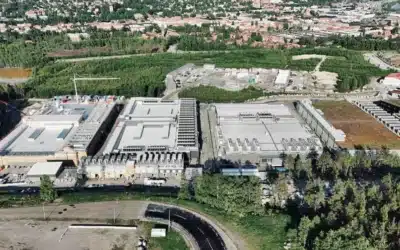
Reverion announced on 29 September that it had raised €154.2m ($175m) in a Series B round. Kembara, a deep tech and climate fund, led the investment. The Munich university spin-off will put most of the money into a new German megafactory for its solid oxide fuel cell power plants.
The factory will lift manufacturing capacity tenfold to 250MW a year. Staff numbers are due to grow from about 200 today to more than 800 at the new site. Meanwhile, Reverion says its commercial pipeline carries more than $2bn in potential revenue. The company expects demand for its solid oxide fuel cell units to come from data centres and industrial sites that need firm power.
New investors join the round
Allianz, KfW Capital, Aurum Impact and Carbon Equity joined as new investors. Existing backers also took part, including Extantia, Energy Impact Partners, UVC Partners, the European Innovation Council Fund, alfa8 and Possible Ventures.
The round follows a €56m Series A in September 2024, which included non-dilutive funding. Reverion also secured a further €19.5m in March 2025. So the company has now raised well over €200m across its main rounds.
Kembara is part of Mundi Ventures’ €1bn climate-focused fund. Its lead role gives Reverion a large growth-stage investor as it moves from building single plants to mass production.
How the solid oxide fuel cell plants work
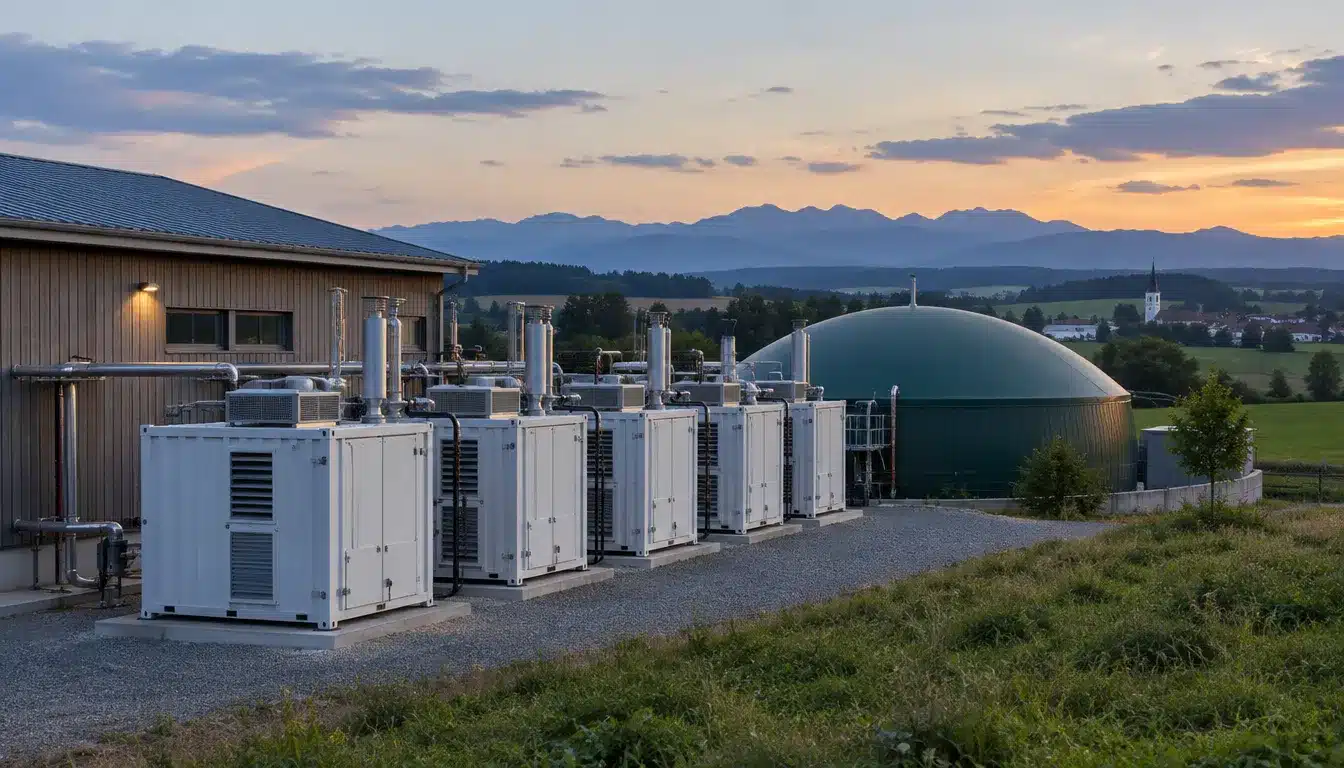
Reverion’s plants turn biogas, natural gas or hydrogen straight into electricity without burning it. The company claims an electrical efficiency of 74.2 per cent, which it says is nearly double that of conventional generators. The systems also capture carbon dioxide from the fuel stream for reuse or permanent storage.
When a plant runs on biogas and the captured biogenic carbon is stored for good, Reverion says the process delivers negative emissions. That claim depends on permanent storage being available for each site. On natural gas, by contrast, the plants still rely on a fossil fuel, so their climate case rests on capture and storage.
Solid oxide fuel cell systems run at high temperatures, which helps them convert fuel into power efficiently. The plants also work in reverse. When renewable power is plentiful, they switch to electrolysis and use the surplus to make hydrogen or methane. Then, when wind and solar output drops, they return to generating power from the stored gas.
Data centres drive demand
Seven Reverion plants already run at customer sites, and the company has raised output to 500kW per unit. Its first projects outside Germany are due for delivery later this year. Data centres are a key target, since they need steady power that doesn’t depend on the grid or swinging prices.
Other start-ups are chasing the same customers, including battery developers selling capacity to data centres. Reverion, however, pitches firm power that runs whenever it’s needed.
Stephan Herrmann, chief executive and co-founder of Reverion, set out the pitch. “Solar and wind give us clean energy, but only when the weather cooperates. What the world needs is clean power on tap,” he said.
Herrmann added that Reverion is “building the dispatchable, carbon-negative engine” for grids and heavy industry. The goal, he said, is clean power “24 hours a day, 365 days a year.” That promise will face its real test once the megafactory is running.
Investors point to efficiency
Robert Trezona, climate lead at Kembara, backed the technology’s efficiency case. “Solid oxide fuel cells are the most efficient way to convert gas into electricity, and Reverion sets the global benchmark in this field,” he said.
He also said data centres are the growth market, where Reverion’s “negative carbon footprint counts as much as efficiency.” Reverion spun out of the Technical University of Munich in 2022. It grew from doctoral research that Herrmann began in 2015 with Professor Hartmut Spliethoff.