Start-up Blaze Energy has raised a $6.5m seed round for a compact unit that lets existing ship engines burn ammonia, with a pilot at sea with Lomar Shipping due next year.
Blaze Energy has raised $6.5m in a seed round on 6 October to build a device that refits existing ship engines. The news named no backers. Its target is a hard problem for shipping: moving a huge, long-lived fleet onto ammonia fuel and other options.
How the reformer works
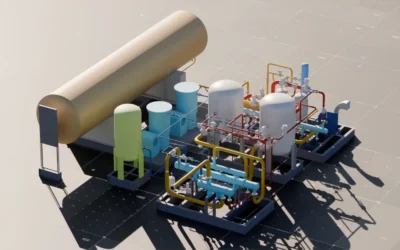
The unit uses a catalyst, heated by electricity, to split part of the fuel into a gas rich in hydrogen. With ammonia, that means splitting it into hydrogen and nitrogen, and the nitrogen leaves through the exhaust. The gas then mixes with the rest of the fuel to run the engine. Blaze has tested this at small scale with ammonia, methanol and LNG.
However, its first product works with ammonia fuel only. Ammonia burns poorly on its own, and the hydrogen helps the rest burn better. Rok Sitar, chief executive and co-founder of Blaze Energy, said “a certain composition of ammonia and hydrogen burns just like diesel”.
Blaze has designed the unit to be less than a tenth the size of the engine it serves. That makes it easier to fit into a cramped engine room. Size is a big part of the pitch.
Fitting into the dry-dock cycle
Timing is the other part of the pitch. The world’s trading fleet runs to about 100,000 ships. Yet yards build only about 1,500 new ships a year. At that pace, replacing the fleet would take decades.
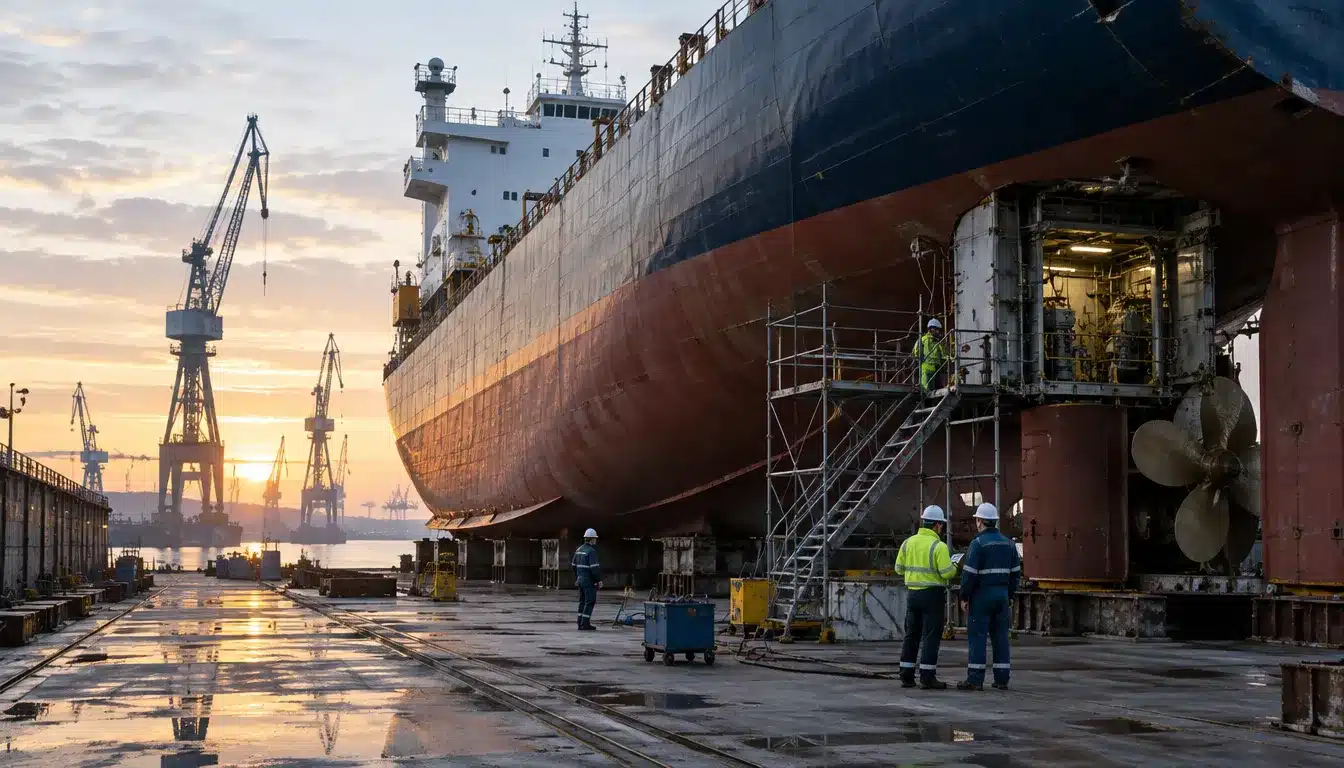
So refits offer a faster way to cut emissions from ships already at sea. Blaze plans to fit its system during routine dry-dock checks, which happen at least once every five years. As a result, owners could convert ships while they are already out of service. That avoids an extra trip to the yard, which would cost days of trade.
Lomar Shipping, a ship owner and operator, expects to start a pilot at sea next year. Lomarlabs, its innovation arm, announced the deal in March. Blaze is targeting a commercial rollout in 2028, and the seed round should last about 18 months. It is also growing in the US and Norway.
A hedge against shifting rules
Ammonia appeals to shipping because it has no carbon, so burning it gives off no carbon dioxide. However, it is toxic, and burning it can create nitrogen oxides that engines must control. Those trade-offs have slowed its uptake, even as engine makers build ammonia-ready designs.
Shipping’s rulebook is still unsettled. The International Maritime Organization’s Net-Zero Framework would set binding limits on emissions intensity, with net zero by 2050 as the goal. Adoption stalled last October after US pressure on member states. A vote is now due in December.
Blaze says flexibility is its main selling point. Because the unit can handle several fuels, owners can switch as markets and rules change. That cuts the risk of betting on one fuel too early. Sitar even sees the doubt as an advantage for a firm he says can thrive in uncertainty.
Sitar also sees uses beyond the sea. “By proving our system in maritime engines, we can very easily translate this into other hardware sectors,” he said.
What the pilot must prove
For now, the Lomar trial comes first. It will show whether a refitted engine can run well on ammonia fuel through real voyages. Owners will also watch fuel costs and upkeep once the unit is on board. In addition, the trial will test how crews handle ammonia, a safety issue for any ship using it.
Blaze expects to raise again around 2028, when the IMO hopes to have its Net-Zero Framework in place. By then, it could pitch investors with both pilot data and clearer rules. Still, a cheap refit that rides on dry-dock visits could appeal to owners facing tighter rules.