Governments returned to London this week for talks on the IMO Net-Zero Framework, with five competing proposals on the table and the shipping carbon price the point of division.
The IMO’s Intersessional Working Group on Greenhouse Gas Emissions from Ships met from 1 to 4 September, ahead of the Marine Environment Protection Committee’s 85th session later this year. The agenda covers proposed changes to the framework, implementation guidelines and lifecycle greenhouse gas rules.
The framework agreed at MEPC 83 pairs progressively tighter greenhouse gas fuel-intensity requirements with an economic mechanism that prices emissions and rewards ships using zero and near-zero fuels. It was due for adoption last October. Governments adjourned the extraordinary session for a year instead, after contentious negotiations and a US campaign against the measure.
Five ways to rewrite the deal
INTERCARGO’s pre-brief identified four competing proposals plus further submissions seeking changes.
Liberia proposes the largest overhaul, tying greenhouse gas fuel intensity requirements to the availability, affordability and scalability of commercially viable fuels. It would largely replace the IMO Fund mechanism with transferable Surplus Units that ships could trade, bank or borrow. Liberia and Panama would also award Surplus Units for verified efficiency improvements, with support for developing countries left voluntary.
Brazil would keep the framework and soften its start, with GFI reductions of three per cent in 2029 and four per cent in 2030 before a steeper trajectory. It retains the two-tier system, with Remedial Units at $100 and $380 per tonne of CO2 equivalent.
Tuvalu goes the other way, pricing Tier 1 units at $300 per tonne and Tier 2 at $380, with a trajectory reaching a 30 per cent direct-compliance reduction and a 65 per cent base-target reduction by 2035.
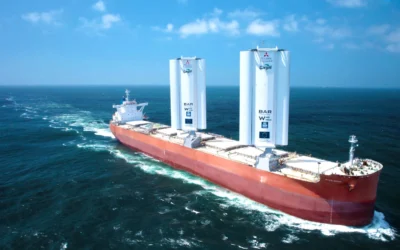
Australia, Canada, South Africa and the United Kingdom would keep the existing framework broadly intact while adding detail on Fund governance and revenue distribution. China seeks more technology-neutral language recognising shore power, wind propulsion and solar in GFI calculations.
The price is the fight
Norway, Pacific island states and European countries argue that weakening the pricing mechanism removes the incentive to invest in alternative fuels. Norway has rejected Liberia’s proposal to link requirements to commercial fuel availability, saying it would lower ambition and create regulatory uncertainty.
Liberia questions the legality, cost and administrative complexity of the Fund. It argues that letting ships comply through payments doesn’t guarantee emissions reductions, and could raise transport costs disproportionately for long-distance bulk exports from developing countries.
Saudi Arabia and the United Arab Emirates have raised comparable concerns, arguing that a uniform carbon price falls unevenly across global trade and lands hardest on remote, trade-dependent economies.
Ten to fifteen billion dollars a year
The economic mechanism is expected to raise roughly $10bn to $15bn annually. How that money is collected and distributed has become one of the most politically sensitive parts of the talks. Brazil, the Democratic Republic of Congo, Kenya, Solomon Islands and Tuvalu have proposed rules covering revenue collection, clean-fuel rewards, infrastructure, food security and transition support.
Even the basic structure is unsettled, including whether the mechanism operates as a Fund or a lighter Facility.
Industry has pushed for a global regime rather than a widening patchwork of regional rules. Andreas Enger, chief executive of Höegh Autoliners, said laying the regulatory foundation now is critical to ensuring investments take shipping in the right direction. Boudewijn Siemons, chief executive of the Port of Rotterdam, said shipping’s international nature makes a worldwide level playing field essential.
What happens next
The working group reports to MEPC 85, scheduled for 30 November to 3 December. A second intersessional meeting follows in November.
Shipping carries more than two per cent of global emissions and sits outside the Paris Agreement, which is why the IMO route matters. This week’s meeting won’t settle the framework. It will show whether enough support survives for the original deal, or whether the eventual outcome looks substantially different.