Türkiye has made zero waste and methane reduction the first of ten priorities for the Antalya summit. Satellites can now pinpoint the worst-leaking landfills, and a cluster of start-ups is building the tools to cut their emissions.
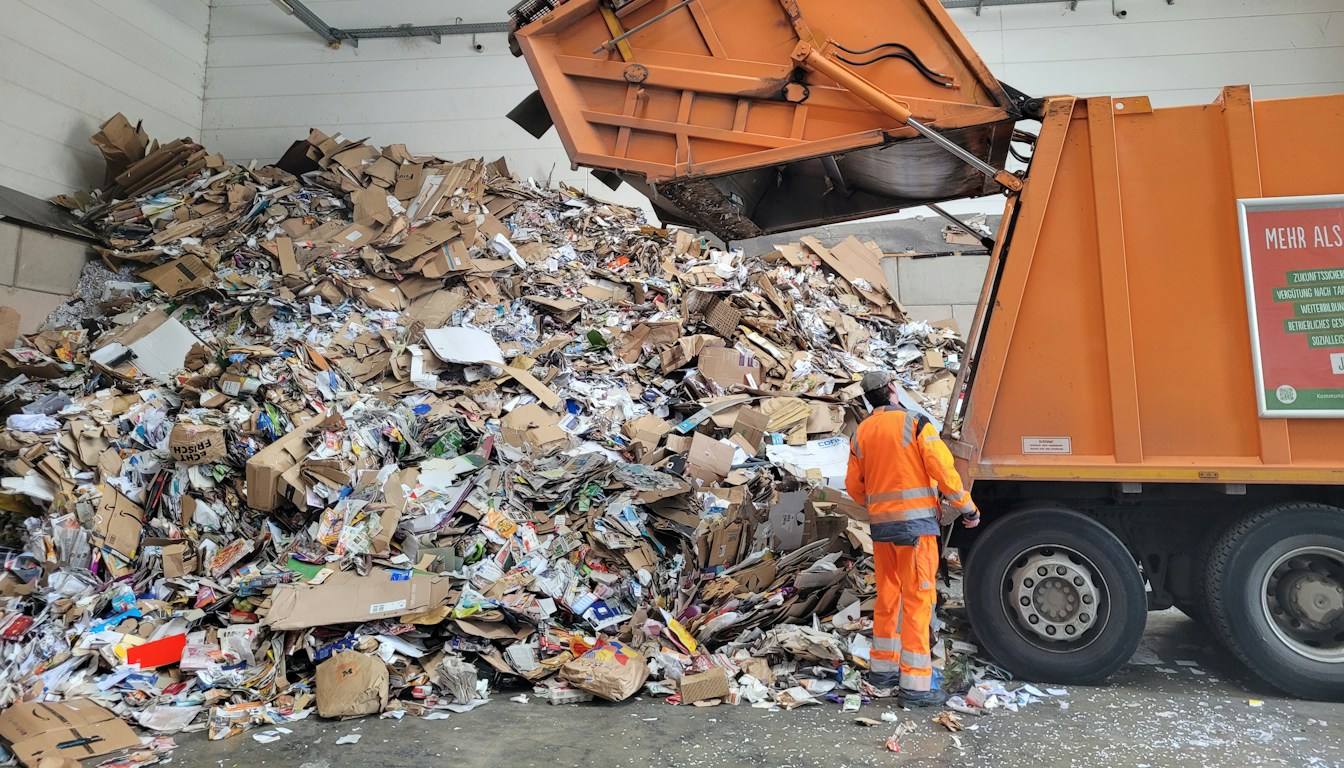
Delegates arriving in Antalya for COP31 will find rubbish near the top of the agenda for the first time. The Turkish presidency has placed zero waste and methane reduction first among the ten themes of its Action Agenda. It wants countries to halve the projected increase in global annual waste generation by 2035.
That goal covers growth in municipal waste, so the total volume of rubbish could still rise. Agriculture and energy, which produce about 42 and 38 per cent of human-caused methane, sit outside it. Waste produces roughly a fifth of the total, which makes it the third-largest source.
Methane is the fastest lever on near-term warming
Methane has caused nearly 30 per cent of the rise in global temperatures since the industrial revolution, according to the IEA. The gas breaks down in about a decade, so cutting it slows warming quickly. That is why 159 countries and the European Union have backed the Global Methane Pledge, launched at COP26 in Glasgow. They committed to a collective cut of at least 30 per cent from 2020 levels by 2030.
UNEP and the Climate and Clean Air Coalition found progress lagging in the first Global Methane Status Report, published at COP30. Emissions were still rising. National plans submitted by mid-2025 would deliver only an 8 per cent cut by 2030, even if fully implemented. However, more than 80 per cent of the potential reductions by 2030 could come at low cost. Energy holds 72 per cent of that potential, waste 18 per cent and agriculture 10 per cent.
Energy-related methane plateaued near record highs in 2025, the IEA’s Global Methane Tracker found. Existing technologies could abate around 70 per cent of fossil fuel methane. More than 35 million tonnes could go at no net cost. “Setting reduction targets is only a first step,” said Tim Gould, the IEA’s chief energy economist.
COP31 builds on three years of waste pledges
At COP29 in Baku, more than 30 countries signed a declaration to cut methane from organic waste, such as food. Belém followed with the No Organic Waste plan, backed by an initial $30 million from the Global Methane Hub. It commits to a 30 per cent cut in methane from organic waste by 2030. By launch, 25 cities in 18 countries had joined.
Antalya now wants countries to write waste methane into their updated national climate plans, with measurable targets and road maps. The presidency will also host a global high-level dialogue on methane from the waste sector. Murat Kurum, the COP31 president-designate and Türkiye’s environment minister, calls methane reduction one of the quickest ways to slow warming.
Emine Erdoğan, Türkiye’s first lady, helped launch Türkiye’s Zero Waste Movement in 2017 and later founded the Zero Waste Foundation.
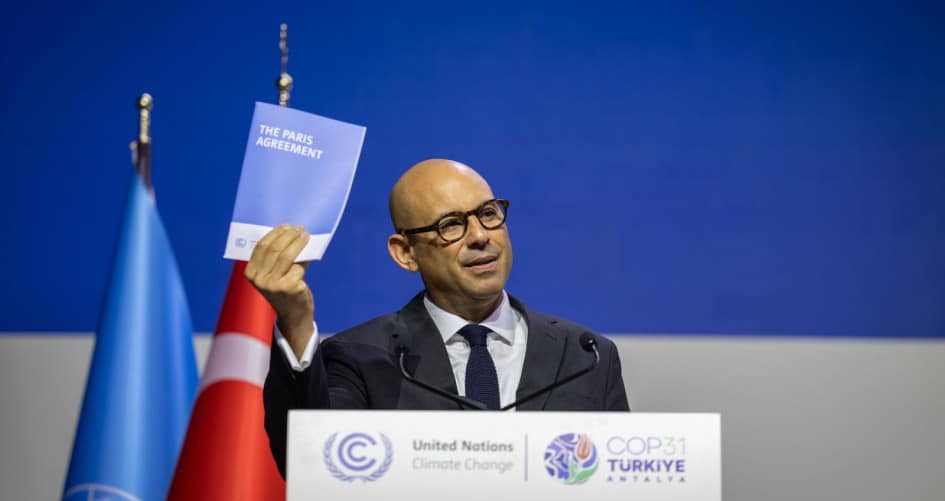
Simon Stiell, UN Climate Change Executive Secretary, at the opening of COP31 in Antalya. Credit: Kiara Worth | UN Climate Change
Satellites expose the host country’s own landfills
UCLA’s STOP Methane Project analysed Carbon Mapper data covering 2,994 plumes from 707 waste sites in 2025. The worst site, near Buenos Aires, emitted 7.6 tonnes of methane an hour. By the researchers’ estimate, a landfill emitting five tonnes an hour warms the planet like one million SUVs over a year.
Extending the data to April 2026 flagged a landfill at Silivri, which serves Istanbul, at 8.4 tonnes an hour. That rate exceeded every site on the 2025 list. Its operator is İSTAÇ, a subsidiary of Istanbul Metropolitan Municipality, and the site captures landfill gas to generate electricity.
Fatih Ugur, head of İSTAÇ, said about 30 hectares of the landfill were uncovered on the day of one measurement. Workers were repairing gas-collection pipes at the time. He added that low atmospheric pressure had also raised methane concentrations. Türkiye has not joined the Global Methane Pledge.
Oxford researchers want to make dumpsites visible
Silivri at least collects some of its gas. Dr Amani Maalouf is a senior researcher and waste management expert at the University of Oxford’s Smith School of Enterprise and the Environment. Across low-income countries, she said, 93 per cent of waste is openly dumped or burned. “Without knowing where these sites are, how much waste they receive and what emissions they generate, effective intervention becomes extremely difficult,” she said.
Her team’s GeoWaste project combines artificial intelligence, satellite imagery and geospatial analysis to find major dumpsites. It then estimates their potential methane emissions and maps how close they sit to vulnerable communities. “Our objective is to make invisible emissions visible, enabling governments, cities and financial institutions to prioritise interventions, direct climate finance and measure progress,” Maalouf said.
She added that data must lead to action. That means closing uncontrolled dumpsites, preventing food waste and sending organic material to composting or anaerobic digestion. “Zero Waste cannot remain a political slogan or an aspirational target,” she said. “It must become an implementation agenda backed by reliable evidence, dedicated financing, measurable methane reductions and meaningful support for the communities most affected.”
Detection start-ups sharpen the picture
GHGSat, the Montreal-based satellite operator, had 16 satellites in orbit by December 2025 and planned to add nine by the end of 2026. Its research suggests landfill operators undercount their emissions, with waste-sector leaks larger and more persistent than those from oil and gas. Its satellites turn “pledges into verifiable results”, said Stephane Germain, the chief executive.
AIRMO, based in Berlin and Luxembourg, raised €5 million in seed funding in March. The money will fund its first methane-monitoring satellite, due in 2027. Meanwhile, the company is scaling airborne monitoring across Europe, the Middle East and Central Asia.
Cheap covers for landfills without gas capture
StratX, a London start-up developed with Deep Science Ventures, raised $1.19 million in July. It targets uncovered landfills and dumps across the Global South. Neglected Climate Opportunities, the Grantham Environmental Trust’s venture vehicle, led the round.
StratX builds landfill covers from local soil, gravel and native microbes that oxidise methane before it escapes. It installs them free of charge and shares carbon credit revenue with operators, host governments and local communities. The company is assessing pilot sites in Tanzania, Colombia and Chile.
“Landfills in the Global South are often seen as an unsolvable burden for local leaders who are caught between compounding environmental externalities and funding constraints,” said Kevin Wheeler, chief executive of StratX. Tom Frankiewicz, a principal at the Rocky Mountain Institute, said adoption of landfill methane fixes has been slow. “Biocovers offer an effective solution that can be implemented today,” he said.
Turning waste gas into revenue
Emvolon, an MIT spin-out, raised $22 million in a Series A round in October. Its modular plants convert methane-rich gas from landfills, dairies and wastewater sites into biomethanol on site. A joint venture with Montauk Renewables plans to scale to 50,000 tonnes a year across several sites. In addition, Freepoint Commodities will buy up to $450 million of its fuels.
“The world is wasting an enormous energy resource every day,” said Emmanuel Kasseris, Emvolon’s co-founder and chief executive.
French start-up SUBLIME Énergie targets farms too far from the gas grid to inject their biogas. A connection can cost around €100,000 per kilometre, according to Jules Vasse, its head of public affairs. The company liquefies raw biogas on the farm, using a patented carrier agent that stops the carbon dioxide crystallising. Tankers then take it to a hub shared by about ten farms within 60 kilometres. There, it is separated into bio-LNG for heavy transport and liquid carbon dioxide for buyers such as greenhouse growers.
SUBLIME’s Charlie demonstrator, at a pig farm in Plélo, Brittany, can produce about 180 tonnes of bio-LNG and 330 tonnes of liquid carbon dioxide a year. Its first commercial project, Delta, will link around ten farms to a shared hub, with commissioning targeted for 2028. “Because of this technology we don’t need the gas network,” Vasse said.
Windfall Bio, a California start-up, raised $37 million to turn methane from farms and landfills into fertiliser, using methane-eating microbes. In May its lab and bioreactor equipment went to auction, and the company has reportedly ceased operations.
Farms hold the largest share of the problem
Agriculture is the biggest single source of human methane, and several start-ups there are nearing market. Rumin8, an Australian company backed by Breakthrough Energy Ventures, makes a bromoform-based feed additive for cattle. Minerva Foods and the University of São Paulo ran a 120-day trial with Nelore cattle. The additive cut methane by 50.4 per cent. It also improved feed conversion by 5 per cent. The company plans first commercial sales in Brazil as early as late 2027.
Flooded rice paddies are another large source. Paris-based CarbonFarm closed a €7 million Series A in October to expand its rice programmes across Asia, Africa, Europe and Latin America. In August, Mitti Labs raised $9.5 million in a round led by Aramco Ventures for similar work. Investors are also weighing rice methane projects in Vietnam.
Measurement now has to turn into cuts
The IEA’s findings on energy reinforce Maalouf’s view on waste. UNEP’s Eye on Methane 2025 report found that nearly 90 per cent of leaks flagged by satellite still go unaddressed. World leaders address the summit on 11 and 12 November, and negotiations close on 20 November.
“We already have many of the solutions,” Maalouf said. “What we need now is the political commitment to scale them.”