UK deep-tech company Viridi has raised £2.2m, led by Odyssey Ventures and joined by Thaioil’s venture arm, to scale a catalyst that makes surfactants and other ingredients from waste carbon dioxide.
Viridi, a UK deep-tech company, has raised £2.2m to scale a catalyst that turns captured CO2 into product ingredients. Odyssey Ventures led the round. TOP Ventures, the corporate investment arm of Thaioil, joined as a strategic backer. Alphatron Impact Ventures and existing angel investors also took part.
The company will use the money to develop its technology, grow its team and expand into Asian and US markets. It hasn’t disclosed a valuation or the size of each investor’s stake.
A catalyst for existing plants
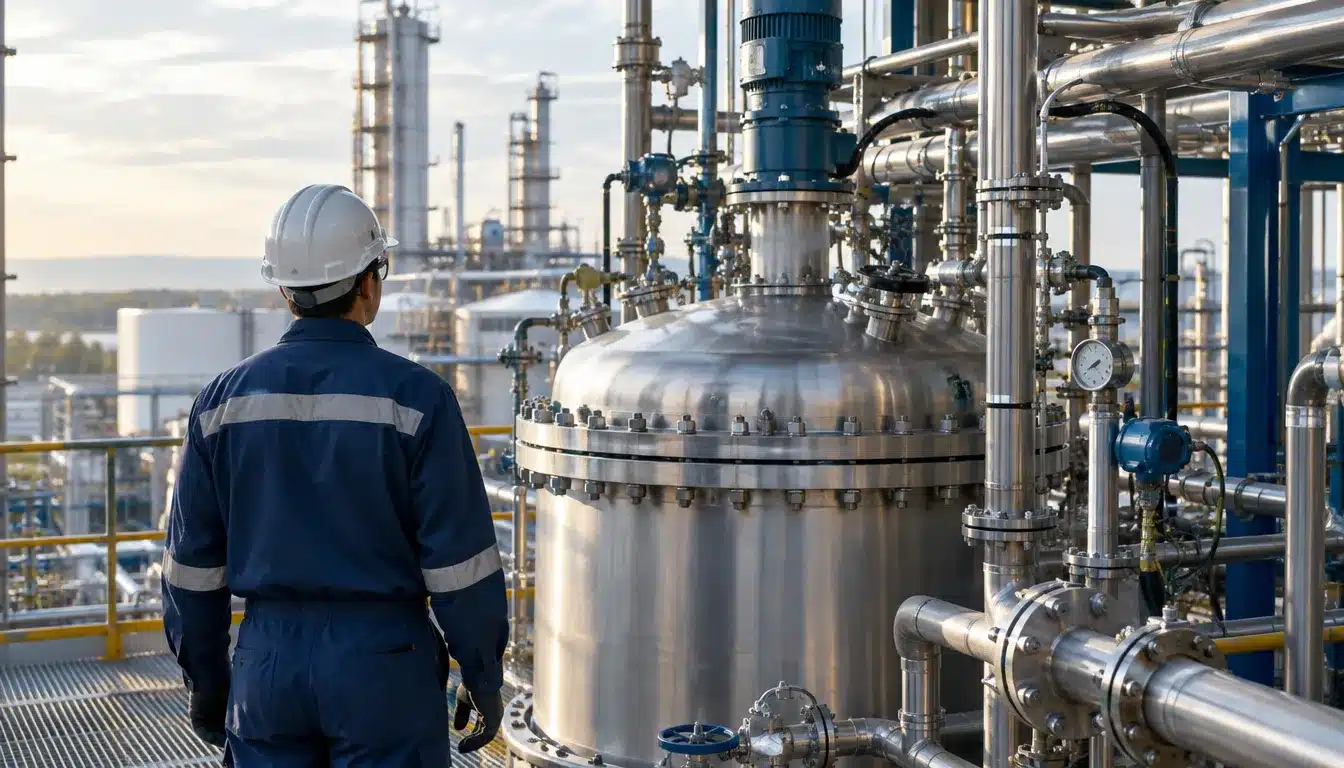
Viridi spun out of the University of Southampton and was founded in 2020. It’s built on the doctoral work of its chief executive, Dr Daniel Stewart, and on catalysis research by co-founder Robert Raja. Its product is a solid, reusable catalyst that feeds captured CO2 into existing chemical production lines.
That design is central to the commercial case, because manufacturers don’t have to rebuild their plants to use it. The company says the process runs at standard pressures and lower temperatures on existing equipment. It plans to license the technology to surfactant makers, so it won’t need to fund its own chemical plants.
Other companies are also finding uses for the gas, including Skyrenu’s delivery of direct air capture CO2 to a fuel maker. Viridi’s first market is closer to the supermarket shelf.
Surfactants as the first market
Surfactants are the cleaning agents in soaps, shampoos and household cleaners. Many of them use fossil feedstocks or ingredients derived from palm oil, so they bring both emissions and land-use problems. Viridi’s first product, Vireya, is a surfactant that uses captured CO2 as a principal feedstock. It’s designed to replace sodium laureth sulfate.
The company says Vireya cuts the ingredient’s carbon footprint by about 70 per cent, based on early assessments. It also reports a 10-fold increase in skin mildness in an in vitro test, which brand owners are now validating. In addition, it says the product contains no 1,4-dioxane, a by-product of conventional production.
Those figures come from Viridi, and independent results haven’t appeared. Further savings in Scope 1 and Scope 2 emissions would depend on each manufacturer’s plant setup.
Strategic investors and partners
TOP Ventures gives the company a link to Thaioil, a Thai energy group. Vivat Wongnirund is vice president of new S-curve business development at Thaioil. He said the technology “has been tested in real manufacturing environments and shows strong potential”. Thaioil has followed Viridi’s progress since 2024, and it links the technology to disinfectants as well as surfactants.
Ali Mitchell is managing partner of Odyssey Ventures, which focuses on UK and European deep tech. He said: “Viridi is exactly that kind of company.” He added that the deal gives Viridi more reach in the US and Asia.
The round also follows a joint development agreement with Zschimmer & Schwarz, a family-owned German chemicals group, announced in February. Zschimmer & Schwarz ran trials first, which identified several uses for the catalyst.
That deal is designed to move the surfactants from pilot validation to industrial production. The German group dates from 1894 and has 27 companies in 16 countries. The deal’s financial terms weren’t disclosed.
The route to commercial scale
Viridi has been targeting early commercial deployment in 2026. So the next step is showing that partners can make its ingredients in volume. Captured CO2 also has to compete on price with the feedstocks it replaces, although the company hasn’t published cost figures. Meanwhile, tighter rules on supply chains, such as the EU Deforestation Regulation, could add demand for palm-free options.
The company raised a £3m seed round in 2023. Stewart said a strategic partner such as TOP Ventures has looked closely at the technology and seen its value. The next test is whether a licensee will run it in a full production line.