Porto start-up Seamoretech has closed the first €1.1m of a seed round to scale a container-based system that recovers freshwater and minerals from the salty waste of desalination plants.
Porto’s Seamoretech has raised €1.1m in the first close of a seed round to turn desalination brine into freshwater and minerals. Its investors include Rypples, Seven Seas Capital and Crédito Agrícola, and no lead investor has been named. The company will spend the money on developing its technology, entering new markets and recovering critical raw materials.
Sofia Delgado and Eva Sousa founded the company in 2021. It’s a spin-off from the University of Porto’s Faculty of Engineering.
Delgado is chief executive and co-founder. She said the next phase has a clear ambition: “to scale our technology, accelerate our market entry”. The investors bring experience in ocean and climate technology, and the company is now raising the rest of the round.
A waste stream at sea
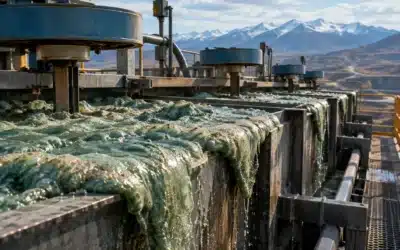
Desalination plants take in seawater and push out two streams: freshwater and a very salty liquid. Many operators discharge that liquid into the ocean.
According to the company’s profile at the Creative Destruction Lab, only about 40 per cent of the seawater comes back as freshwater. The other 60 per cent becomes brine. It puts daily global discharge at the equivalent of about 27,000 Olympic-size pools.
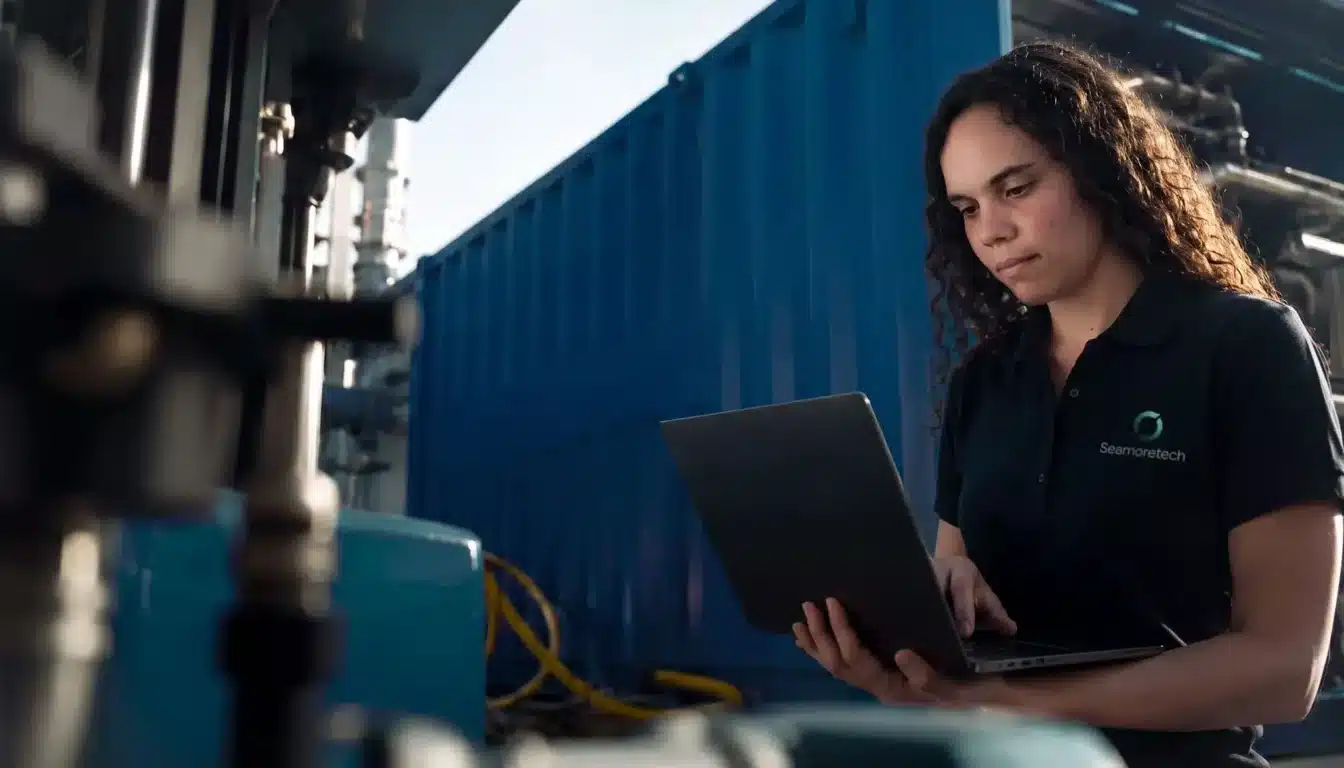
Seamoretech treats that brine as a feedstock. Its system fits inside a shipping container, so it can be installed at an existing plant. It then uses forward osmosis, a membrane process, to draw out more freshwater. After that, it recovers the dissolved minerals and keeps liquid waste out of the ocean.
What the start-up says it can recover
The company lists magnesium, calcium, copper and lithium among its products. It also markets a traceable mineral supply, at lower cost and energy than conventional mining. Other descriptions of its work also mention sodium, and the EIT RawMaterials start-up listing highlights lithium and magnesium. Those metals also feature in the wider debate over critical minerals, which covers how much supply actually reaches clean energy.
Seamoretech also makes several performance claims. It says it can double freshwater output, although it hasn’t stated the baseline for that comparison. It also claims a 50 per cent cut in energy use against reverse osmosis, and 30 per cent lower operating costs. Finally, it says it can reduce carbon emissions by up to 80 per cent compared with traditional mineral mining.
These figures are the company’s own, and it hasn’t cited independent verification. So data from working plants will be the real test of those claims. However, the company hasn’t named any pilot site in this announcement.
A service model with no upfront cost
The commercial pitch sits alongside the chemistry. Seamoretech says its system runs without interrupting plant operations and needs no upfront investment from operators. That lowers the barrier for a utility wary of funding an unproven add-on. However, it leaves the start-up to carry the capital cost itself.
The approach also helps operators reach zero liquid discharge, where a plant sends no liquid waste back to the environment. The company describes its kit as modular and tuned by machine learning, so that it runs without interruption. Still, it will have to show that mineral sales and extra water cover the cost of each unit.
Competition for the same metals
Desalination brine is one of several unconventional sources of minerals drawing early-stage capital. Investors have also backed new extraction methods at conventional mines, such as Giraffe Bio’s work on copper recovery. By comparison, Seamoretech’s €1.1m is a small first step. The company hasn’t said how much it wants to raise in total.
Its traction so far includes a place in the 2024/25 Oceans cohort at the Creative Destruction Lab’s Atlantic site. As a result, the second close of this round will be an early sign of investor appetite. Backers must decide whether desalination brine is a resource worth mining.