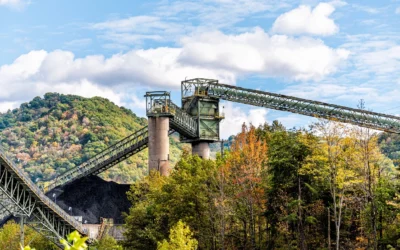
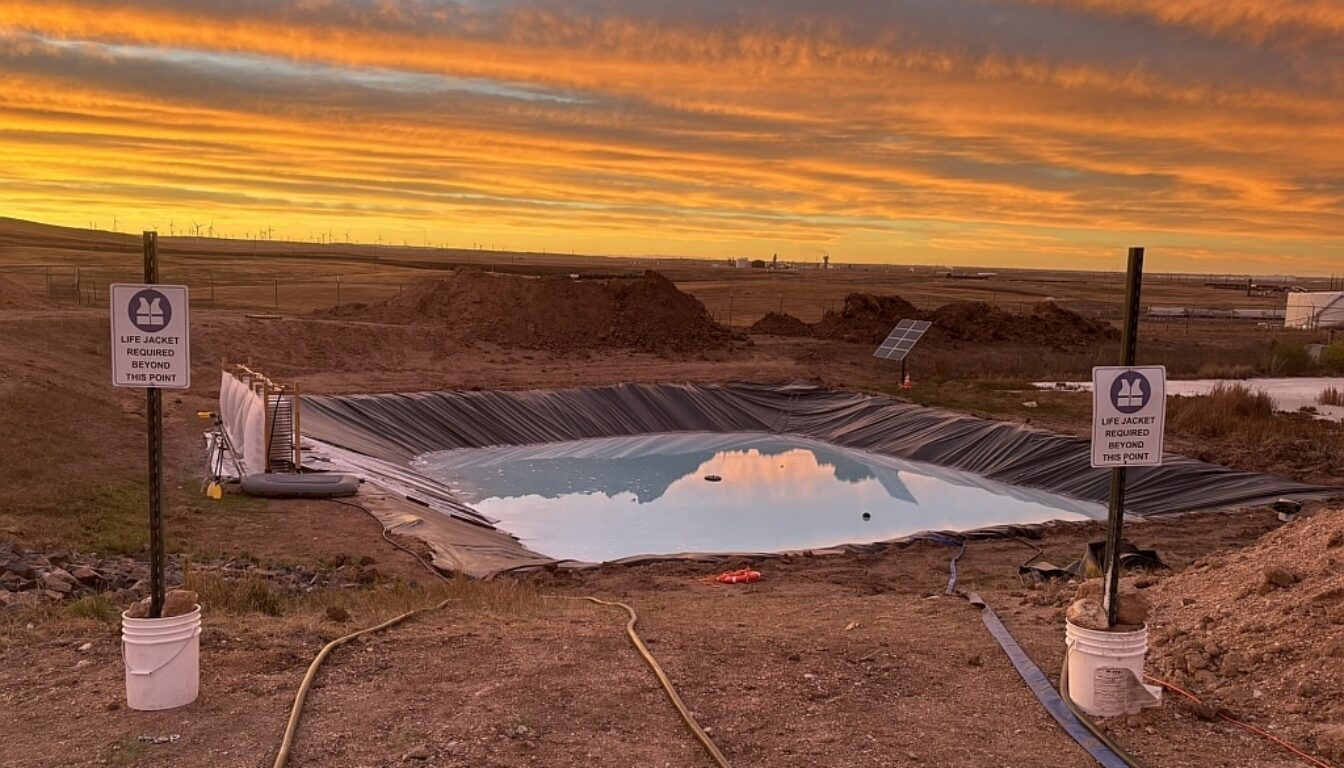
Colorado start-up Aquarry has begun field tests in Wyoming of a carbon removal method that uses alkaline mine waste, ahead of a planned demonstration at a former Newfoundland asbestos site.
Colorado start-up Aquarry has launched its first mine remediation pilot in Wyoming. The pilot moves its carbon removal method out of the laboratory. The company dissolves alkaline mine waste into pit lakes at former mines. As a result, the water absorbs more CO2 from the air and the carbon ends up as solid carbonate rock.
Aquarry says its lab and model results have been strong over the past year. However, the Wyoming site tests conditions that a lab can’t reproduce. Its team will track how wind, rain, ultraviolet light, native microbes and temperature affect CO2 uptake and mineral formation. It will also check the long-term effect on water quality.
How pit lakes store carbon
Pit lakes form when an abandoned open pit fills with groundwater, rain and surface runoff. That water is usually contaminated and acidic. So adding alkalinity can do two jobs at once. A higher pH improves the lake, while the water takes up more carbon.
Aquarry calls the approach “ocean-less alkalinity enhancement”. Its logic follows ocean alkalinity enhancement, although a pit lake is far more of a closed system than open sea. That makes the process easier to test and measure safely. Meanwhile, other developers are also working with water chemistry, including Vycarb and its water-based removal system.
Milkywire, an impact giving platform, has listed Aquarry in its Climate Transformation Fund. Its project page says the method carries “less environmental risk and more measurable results” than the ocean version.
The page also says the technology could store millions of tonnes of carbon permanently at low cost. Milkywire picked Aquarry as one of 13 carbon removal projects to support through a pre-purchase. Still, those claims have yet to face a full field test, which is the purpose of the mine remediation pilot.
Asbestos tailings at Baie Verte
Aquarry’s next target is Baie Verte in Newfoundland. There, it plans to work with BAIE Minerals at the Atlantic Carbon Mineral Hub.
The site holds 50 million tonnes of asbestos tailings and 250 million tonnes of waste rock. The Advocate mine there opened in 1963 and closed in 1994. Airborne fibres from its tailings pile, which rises 505 feet, have worried residents.
Asbestos is rich in magnesium, which makes it a strong alkaline feedstock. In addition, Aquarry’s process is entirely wet, so the company says it generates no harmful dust. Its business model relies on earning revenue from carbon credits while the site’s lake is reclaimed.
BAIE Minerals has done similar work on nickel tailings in Australia. It has also set out its own plans here, which include wetting the tailings to stop fibres escaping. It would then leach out magnesium and silica for use in cement and fertiliser. Separately, a 2022 US national laboratory report estimated that asbestos tailings in Canada and the US could remove up to 750 million tons of CO2.
Timeline and funding
Aquarry plans further asbestos-specific lab work and engineering in 2027. It’s then targeting an on-site demonstration at Baie Verte in summer 2028. The announcement doesn’t name the exact Wyoming site or give the pilot’s size. Until then, the mine remediation pilot in Wyoming will supply its field data.
A Wren Slingshot fundraiser last year brought in $248,906 to take the technology into the field. Aquarry now plans to open a new round this November. It hasn’t yet released details of the size or the investors.
As a result, the company joins other early-stage developers looking for capital. Philanthropic money has started to target that gap, as Terraset’s $2m commitment to carbon removal start-ups shows. For now, Aquarry’s pitch rests on results from a single pilot site. Its monitoring must also show that the carbon stays locked away.