
GM Ventures led the oversubscribed Series B, which will fund US manufacturing, more than $1bn in existing orders and a push to bring sodium-ion storage to data centres.
Peak Energy has raised $108m to scale its sodium-ion storage systems and take them into data centres. General Motors Ventures led the oversubscribed Series B round, which the California company announced on 21 October. Maverick Silicon, Infinite Capital, Eclipse, Xora Innovation and LG Technology Ventures also took part.
Peak will use the money to expand manufacturing in the US and fulfil more than $1bn in existing customer orders. It also plans to sell into the data centre market. There, the company argues, access to power is now the main limit on growth.
A grid battery with no cooling plant
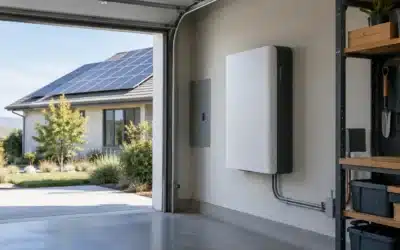
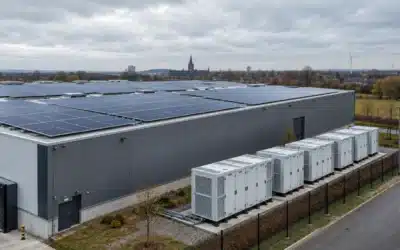
Conventional grid batteries use active cooling systems to manage the heat their cells produce. Peak’s design removes that equipment and cools its sodium-ion cells passively. According to the company, its flagship system also needs no planned maintenance.
Peak says this approach can cut the cost of energy by up to 20 per cent compared with conventional storage. It also claims a longer operating life and lower lifetime ownership costs. These figures are the company’s own, and it hasn’t published independent test data alongside them.
The company makes several claims about safety and siting, too. Its systems make virtually no noise and use no water, Peak says. In addition, it says the design removes the leading causes of battery fires.
Closer ties with General Motors
The round deepens an existing link with the carmaker. In June, Peak and GM announced a partnership to develop new sodium-ion cells for the storage market. Under that deal, Peak draws on GM’s experience of scaling up battery cell production in the US.
Kevin McCabe, president of GM Ventures, said the firm “is investing to help Peak Energy continue to scale this innovative technology”. He described sodium-ion storage as a safe, low-cost option. He also pointed to its use of abundant materials that can be sourced in the US.
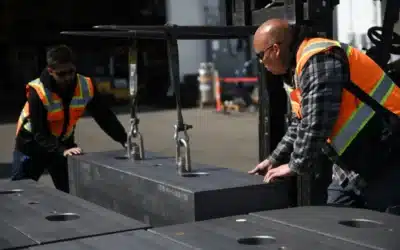
Manufacturing is the next test. In July, Peak unveiled plans for a 4GWh factory in Sacramento, California. The plant is due to begin production in the first quarter of 2027, and it will supply the orders the company now needs to fill.
Customers and the data centre push
Peak was founded in 2023, and its team includes veterans of Tesla, Enovix and Fluence. The company says it holds more than $1bn in customer commitments. Its customers include Jupiter Power, RWE and Energy Vault.
Landon Mossburg, co-founder and chief executive of Peak Energy, said the investment “will supercharge Peak’s ability to scale and deliver”. He added that buyers are turning to passively cooled sodium-ion storage in growing numbers. Meanwhile, Kenneth Safar, managing director at Maverick Silicon, said Peak “is taking a differentiated approach to sodium-ion”.
Data centres are a new market for the company. So far, Peak hasn’t named any data centre customers or given a date for its first project in that sector. Its pitch to operators rests on the same cost, safety and water claims it makes for grid projects.
A different chemistry for US storage
The raise follows other recent deals for US battery storage. In September, for instance, SMT Energy secured up to $268m from CAI. Peak’s round backs a different chemistry, however, as an alternative to the lithium-ion cells that dominate grid storage.
That choice is central to GM’s interest. The carmaker sees sodium-ion storage as a way to use materials it can source at home. As a result, the partnership ties Peak’s growth to US supply chains as well as to its own factory.
For now, the company’s case rests on its own cost and safety figures. It also rests on a factory that has yet to start production. Still, its order book and GM’s backing give it a head start. The first months of output in Sacramento will show whether Peak can deliver at the scale its customers expect.