The Colorado-based developer will pair the equity with tax equity and project debt to build distributed and utility-scale batteries as demand for power climbs across the country.
SMT Energy has agreed an equity partnership with Climate Adaptive Infrastructure (CAI) worth up to $268 million to grow its US battery storage business. The two companies announced on 22 September that CAI will invest at the parent-company level.
The deal adds to $32 million that CAI has already put into SMT’s assets. So, if CAI invests the full amount, its total backing would reach $300 million. The money gives SMT a larger base for its US battery storage pipeline.
Equity to unlock project finance
SMT will combine the new equity with tax equity and project-level debt. Together, that money will fund the development, construction and operation of its battery projects across the country.
That structure is common in US clean energy. Equity at the parent level takes on early risk. In turn, it lets a developer raise cheaper debt for each project. As a result, SMT expects the total value of projects it delivers to far exceed the direct equity from CAI.
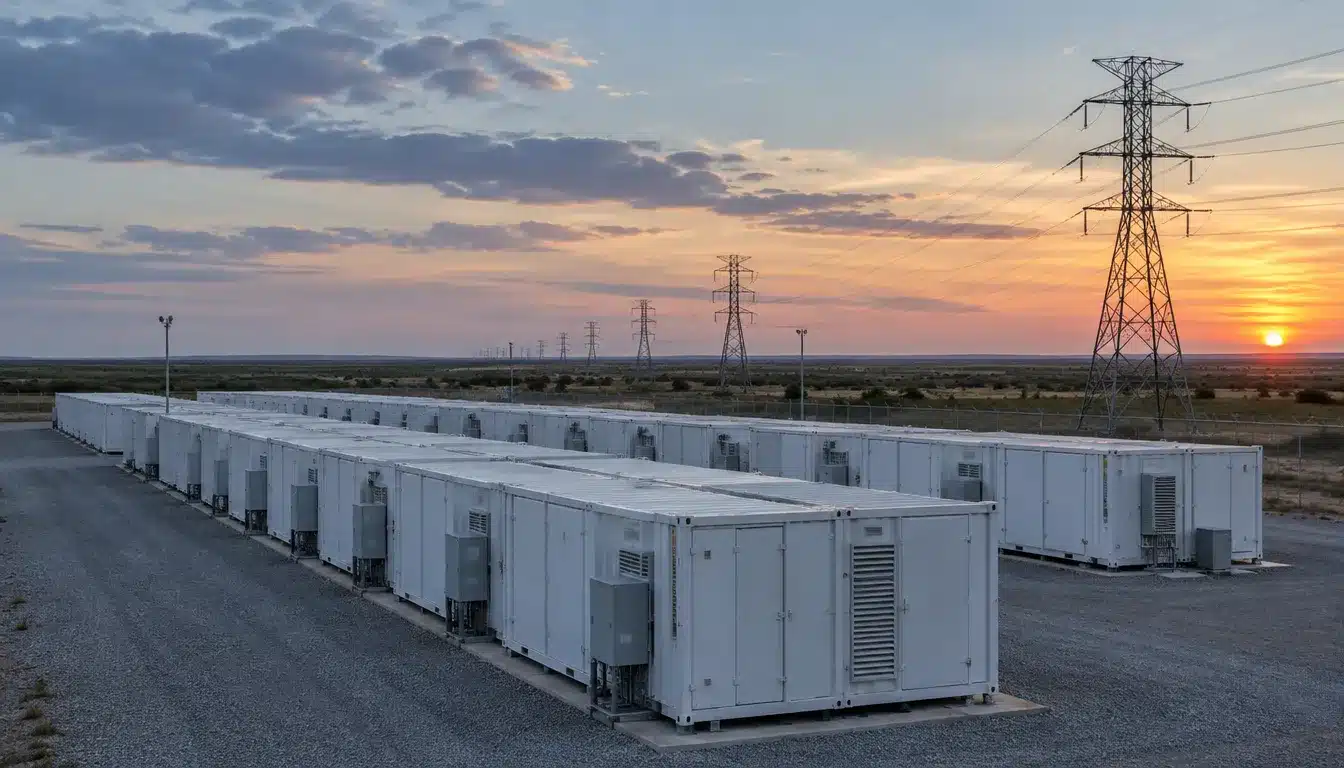
Based in Boulder, Colorado, SMT builds, owns and runs battery systems. Its portfolio spans three types of project. There are smaller batteries on local networks, large utility-scale batteries and powered land sites, all meant to make the grid more reliable. Powered land means sites that already have a route to a grid connection, which large power users such as data centres now prize.
A fast build in Texas
The company has already shown it can build quickly. Earlier this month, SMT and FlexGen said they had built the SMT Houston IV project in Texas and commissioned it in six weeks. The battery is rated at 160MW and 320MWh, so it can run at full power for about two hours. It came online about three times faster than its original schedule.
Speed counts on the Texas grid, known as ERCOT, where demand has hit record highs. Batteries can charge when power is cheap and plentiful, then discharge during evening peaks. That makes them more useful as more wind and solar join the system, because output from both rises and falls with the weather.
“This partnership is a defining milestone for SMT Energy,” said JJ Switzer, co-founder and co-chief executive of SMT Energy. “CAI gives us the capital and support needed to move faster and build at greater scale.”
Why CAI is backing batteries
CAI invests in low-carbon real assets across energy, water and urban infrastructure. It said the deal fits its plan to back platforms that can grow with rising demand. In particular, it wants to meet the need for resilient, reliable and lower-carbon power.
“Battery energy storage is increasingly critical for grid stabilization,” said Bill Green, managing partner of Climate Adaptive Infrastructure. He linked that to wind and solar becoming the main sources of new power capacity. Batteries help smooth their output, so more storage lets grids take on more renewables without losing stability.
Expedition Infrastructure Partners acted as financial adviser to SMT Energy. Stoel Rives gave legal advice to SMT, while Orrick advised CAI.
US battery storage keeps drawing capital
The deal lands as batteries and solar dominate new US power plants. Meanwhile, rising demand from data centres and industry is putting pressure on grids. As a result, investors see US battery storage as a way to add capacity fast.
Other developers are chasing the same demand. For instance, Branch Energy recently raised money to sell battery capacity to data centres in the PJM market, which covers much of the eastern US.
For SMT, the next task is to turn its pipeline into working projects. With CAI’s equity in place, it can now raise the debt that each build needs. Even so, each site will still need its own permits and a grid link, and those often take the longest.