The Washington DC start-up plans to run servers at sea on ocean thermal energy conversion, with a multi-megawatt prototype due to sail on an oceangoing ship in early 2028.
Drogue, a six-month-old start-up based in Washington DC, has 筹集了 20 亿美元 to build floating data centres powered by the ocean’s heat. Its backers include XYZ Venture Capital, Toyota Ventures, Tamarack Global, Dream and FDVC. Garuda Ventures, Flexcap, Boost VC and Slow Ventures also invested, but the company hasn’t named a lead.
Sam Sipe, the founder and chief executive, used to fly E-2D Hawkeye aircraft off US Navy carriers before he started the company. The company disclosed the raise on 13 November and runs a lab in Washington.
How ocean thermal energy works
The system uses ocean thermal energy conversion, or OTEC, an idea first developed in the 1950s. First, warm surface water cools the servers. That water then heats ammonia until it boils, and the gas drives a turbine to make electricity. Ammonia boils at about minus 33°C, so warm surface water is enough to turn it into gas.
Next, a condenser turns the ammonia back into liquid, using cold water drawn from about 1,000 metres down. Deep water averages about 4°C, far colder than the surface. The ammonia then returns to the start of a sealed loop, while the warmed water goes back into the sea.
In effect, the system works like a heat pump in reverse, making power from a difference in temperature. It also joins cooling and power in one loop, since the seawater that cools the servers then feeds the power cycle. Sipe argues that the plant can’t draw out enough heat to close the temperature gap. Each year, the oceans soak up about 5.8 million terawatt-hours of extra energy from global warming, against roughly 180,000 terawatt-hours used by people.
Why put data centres at sea
The pitch rests on speed. “The data center industry is a real estate game,” Sipe said. Developers usually plan on eight to ten years, which he says can’t keep up with AI.
“AI demand has increased 10x in just the last three years. It’s completely incompatible,” he said.
Data centres also suit an offshore site. Their servers are compact and sending data to shore is cheap, while power cables to the coast are costly. So floating data centres can use their electricity where it’s made.
Onshore, developers are also hunting for faster ways to get power. TAR, for instance, raised money to build 离网数据中心电源 in six months. Drogue’s approach moves the whole operation offshore.
Prototype and timeline
Drogue designed a multi-megawatt prototype in its first six months. It’s now buying its first ship, and the prototype is due to go to sea in early 2028. Each vessel should stay at sea for about a decade. The company hasn’t said where the first ship will operate or who its first customers will be.
Later versions will sit on floating structures closer in form to offshore oil platforms. In the meantime, the company has “approval in principle” from the American Bureau of Shipping. That body sets and checks safety standards for ships, and its approval is a preliminary sign-off.
1980世纪XNUMX年代的教训
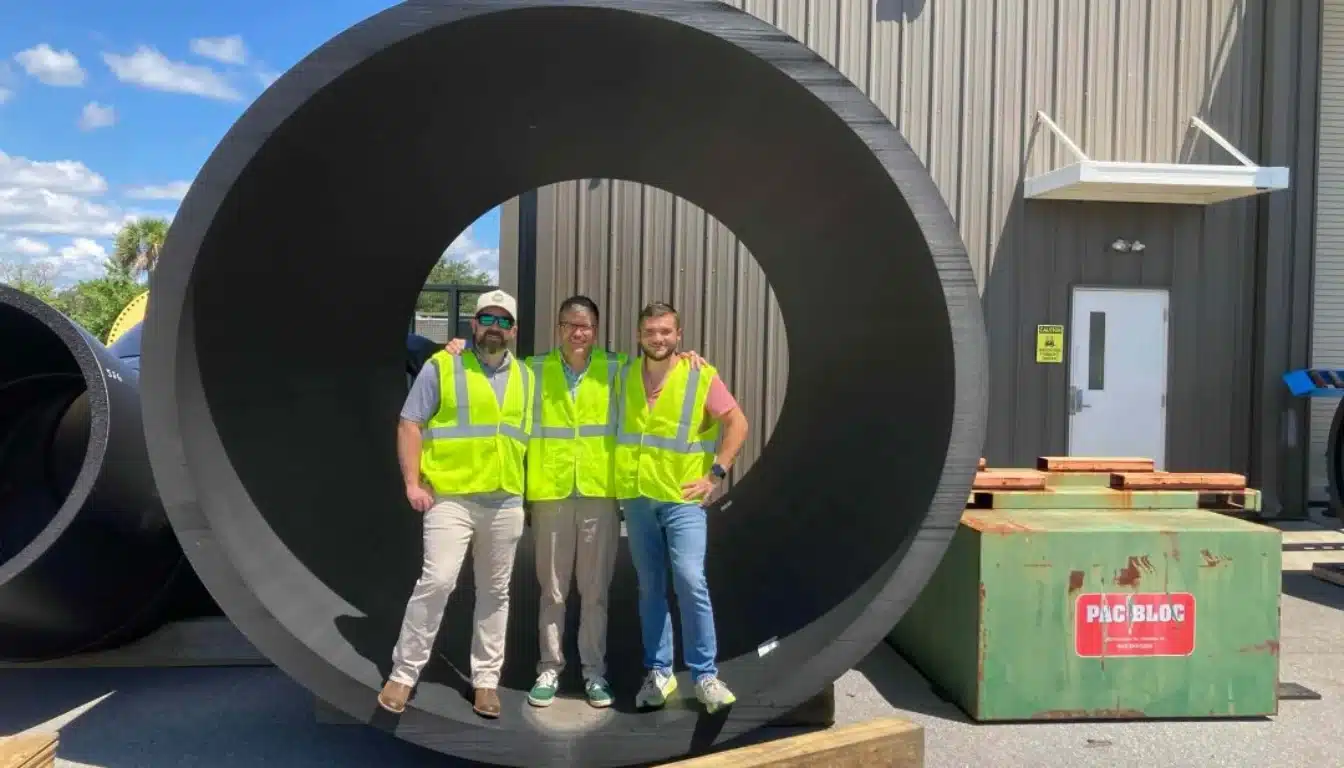
Engineers tested OTEC in the 1980s and then set it aside. Sipe spoke to people who worked on those projects to learn what went right and wrong. He says pipe and heat exchanger manufacturing has improved a lot since then. In his view, the main obstacle has been raising enough capital to build a large system.
The idea echoes recent plans for data centres in orbit, including those proposed by Elon Musk. However, floating data centres avoid the cost of rocket launches. Waves, storms, corrosion and fouling by marine life remain the obvious risks at sea. The 2028 prototype will show how well the design copes with them, and whether developers will put servers on the water.