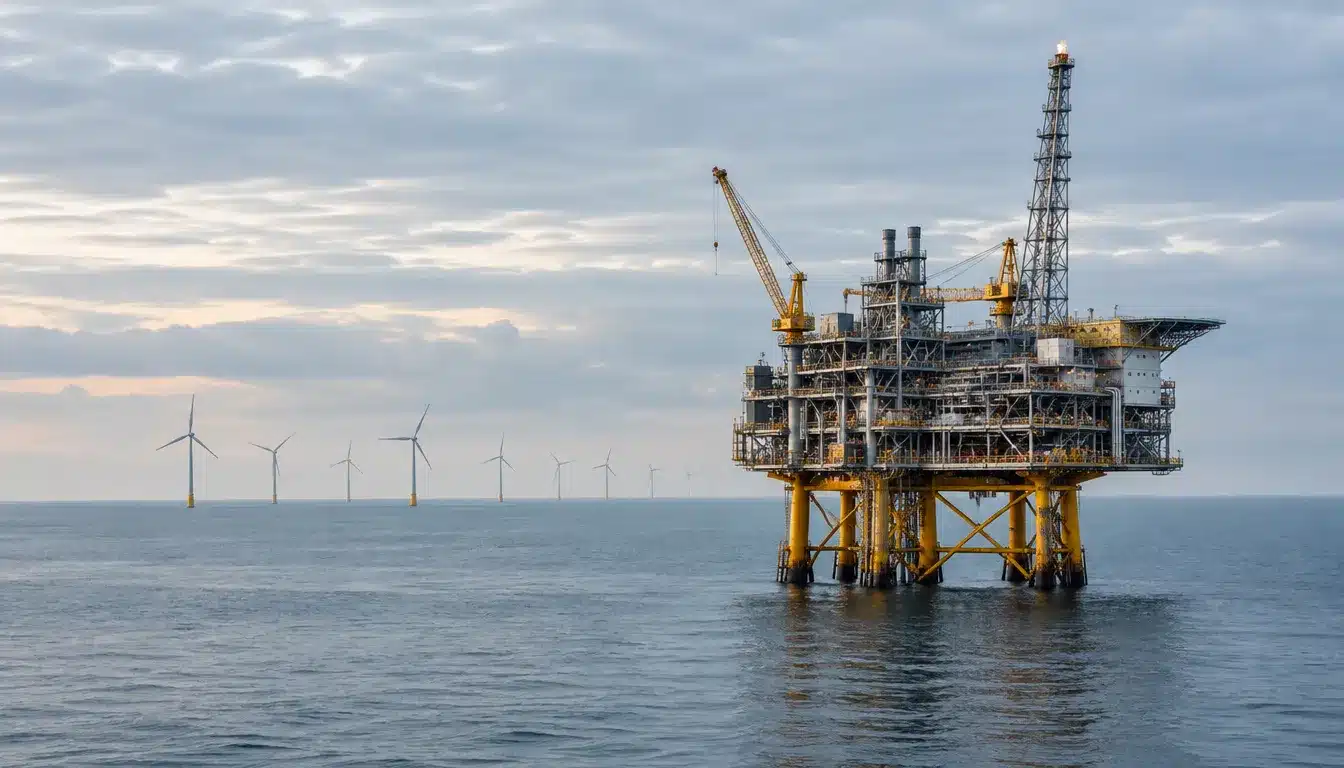
The new vehicle within the National Wealth Fund will invest oil and gas tax receipts in renewable and low-carbon energy, and arrived alongside approval for the Jackdaw gas field.
The UK government has set up a new Energy Wealth Fund that will invest North Sea oil and gas tax revenues in clean energy. Chancellor John Healey announced the fund on 21 October ahead of the Budget, with an initial injection of £2bn. On the same day, ministers cleared the way for gas production at the Jackdaw field.
The fund sits within the 国家财富基金, the state-backed investment body. Future North Sea revenues will flow into it over time, so the £2bn is a starting point. The government calls it a down payment on a lasting national asset for future generations.
What the fund will back
The Energy Wealth Fund will invest in renewable and low-carbon energy projects and infrastructure across the UK. Its stated goals are to support the green transition, attract private investment and back future industries. It should also create skilled jobs across Scotland and the rest of the UK, according to the government.
“I want Britain’s energy wealth to spark a new wave of clean power to work for the British people,” Healey said. He added that the new fund will invest in the clean energy industries of the future.
The case from history
The government framed the fund with a counterfactual. It estimates that the UK has collected around £200bn in North Sea tax receipts since 1980 to 1981. If that money had gone into a sovereign wealth fund as production grew in the 1980s, ministers say, it could now be worth about £1tn.
That estimate uses HMRC statistics and a constant compounding rate, and it assumes no withdrawals. The new fund starts with £2bn, however, a small fraction of that hypothetical total.
Jackdaw gets the green light
Energy Secretary Miatta Fahnbulleh agreed that the regulator can grant consent for gas production at Jackdaw. The field already had a licence, but a licence alone doesn’t allow development. Stuart Payne, chief executive of the North Sea Transition Authority, then granted consent to the developer, Adura.
Jackdaw could start supplying gas to homes and businesses as early as the end of October. The government expects it to raise domestic gas production by around 6 per cent at peak, over a lifespan of up to 11 years. Over its life, the field should produce gas equal in energy to around 40 million barrels of oil.
Adura estimates that Jackdaw will add around £2.9bn to the UK economy. It also expects the project to create 27 direct jobs and safeguard 273 more.
Climate limits and the Finch ruling
The decision follows the Supreme Court’s 2024 Finch ruling. That judgment requires operators to account for the emissions from burning extracted oil and gas in their environmental assessments. Adura submitted further information after the ruling, and the government held public notice periods on it.
Ministers concluded that Jackdaw won’t stop the UK from meeting its legally binding carbon limits or reaching net zero by 2050. They also say the approval fits Labour’s manifesto pledge to issue no new exploration licences while managing existing fields for their full lifespan.
Prime Minister Andy Burnham backed the decision. “We’re committed to moving towards renewable energy and reaching net zero by 2050,” he said.
Gas supply and the wider transition
The UK still draws its gas from several sources. Between 2021 and 2025, the UK continental shelf supplied 42 per cent on average, while Norway’s shelf supplied 37 per cent. Liquefied natural gas made up 20 per cent, and interconnectors provided the remaining 1 per cent.
Ministers also asked the regulator to consider urgent cases for Transitional Energy Certificates now, before legislation is in place. Announced on 26 November 2025, the certificates will allow some production in explored areas near licensed fields, tied back to existing infrastructure.
Meanwhile, the government says more than £100bn has gone into UK renewable and low-carbon energy since 2024. The Energy Wealth Fund now links part of that effort directly to fossil fuel revenues. In turn, its growth will depend on how much tax the remaining North Sea fields generate.