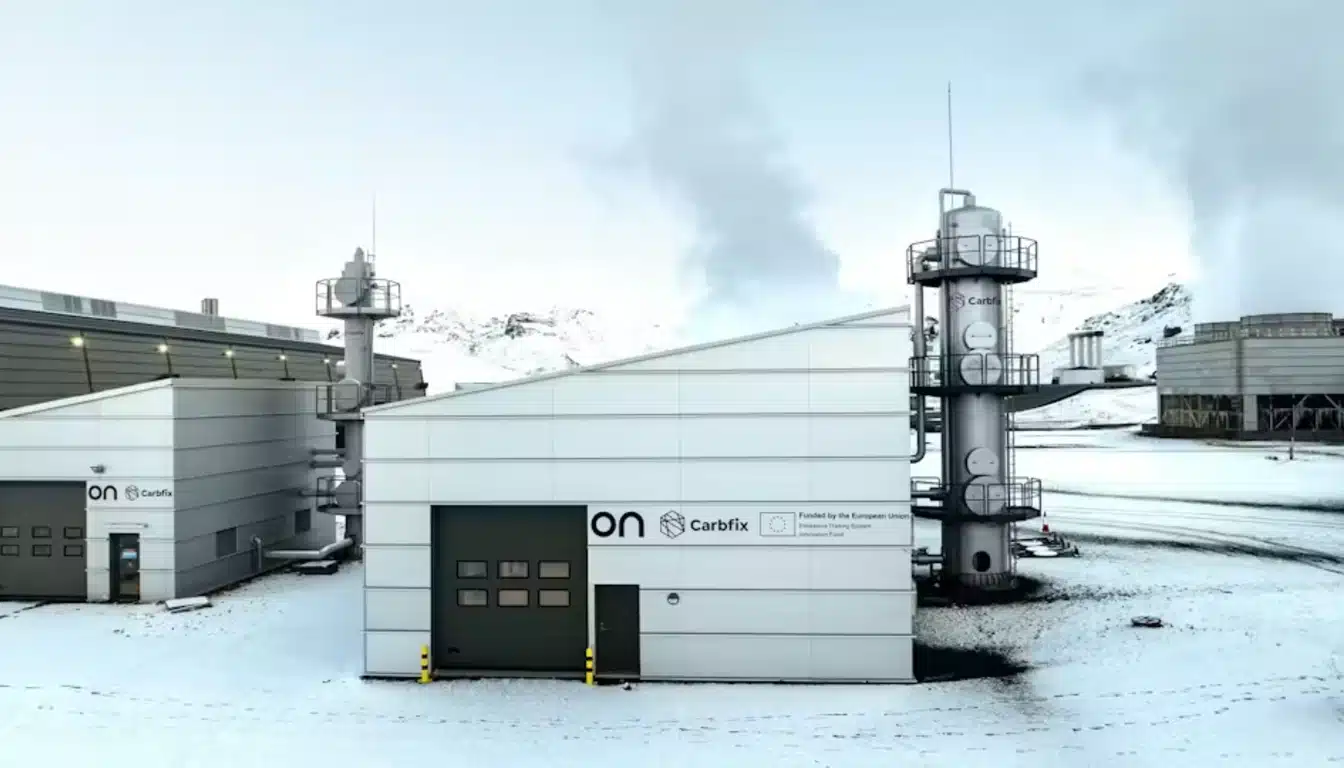
A year of data from the Steingerður facility shows geothermal carbon capture can run continuously at high efficiency, with nearly all carbon dioxide and all hydrogen sulphide sent for storage in rock.
Carbfix reported on 10 September that its Hellisheiði facility captured 99.6% of incoming carbon dioxide over a full year. The site sits at a geothermal power station run by ON Power in Iceland. Its results, covering 1 July 2025 to 30 June 2026, give a strong data point for geothermal carbon capture.
The system also captured all of the hydrogen sulphide over the same period. The plant dissolved both gases in water and sent them for permanent storage in the bedrock. That leaves only a small share of incoming carbon dioxide uncaptured, at 0.4%.
How the Carbfix method works
Geothermal power plants bring carbon dioxide and hydrogen sulphide up from underground along with the steam. At Hellisheiði, the Steingerður facility captures those gases and dissolves them in water straight away.
Next, Carbfix injects the carbonated water into reactive rock formations nearby. There, the gas turns into new minerals within two years. In nature, the same process takes thousands of years.
During the measured period, the operation injected about 19,000 tonnes of carbon dioxide. It used existing geothermal wells that now serve for storage.
Carbfix has used its method at Hellisheiði for more than a decade. Over that time, the site has locked more than 120,000 tonnes of carbon dioxide into rock. It has also stored over 50,000 tonnes of hydrogen sulphide. Iceland helps here, because young basalt lies close to its geothermal fields.
EU support for the Silfurberg project
Steingerður opened in June 2025. Carbfix and ON Power built it under the Silfurberg innovation project, which also goes by the English name Silverstone. Because the measured period began a month after opening, the figures cover its first full year of operation.
The EU Innovation Fund provided about €3.9m in support. The fund is one of the largest clean technology funding programmes in the world, and revenue from the EU Emissions Trading System pays for it. According to the partners, that money was key to developing and scaling the technology.
The grant also helped them build methods for measuring the resulting cut in greenhouse gas emissions. Those methods let the partners put firm numbers on the plant’s performance.
Carbfix says the approach reduces the climate impact of geothermal power. In addition, it gives operators a safe and low-cost way to handle hydrogen sulphide. That gas is toxic and has a strong rotten-egg smell.
The update didn’t include cost figures for the facility or its energy use. Those numbers would help other geothermal operators judge whether to copy it.
Why a full year of data counts
Geothermal plants release some carbon dioxide from the reservoirs they tap. So capturing almost all of the gas that enters the system sharply cuts a plant’s direct emissions. Carbfix says the result confirms the efficiency of its geothermal carbon capture and shows it works in continuous operation.
A result held over twelve months carries more weight than a short trial. It shows the equipment can run day after day at a working power station. According to Carbfix, the numbers put Hellisheiði among the global leaders in cutting emissions from geothermal power.
That record could interest developers of geothermal carbon capture elsewhere. Geothermal is drawing fresh attention, with projects such as a Utah test of whether enhanced geothermal can last. Still, the Carbfix method relies on reactive rock such as basalt, so storage options will vary by site.
For ON Power, the figures also strengthen the case for Hellisheiði as a low-emission source of power and heat. The plant supplies hot water to the Reykjavík area as well as electricity.
Carbfix and ON Power both sit within the Reykjavík Energy group. The partners say the Silfurberg work has also built knowledge about the role Icelandic engineering can play in cutting emissions.