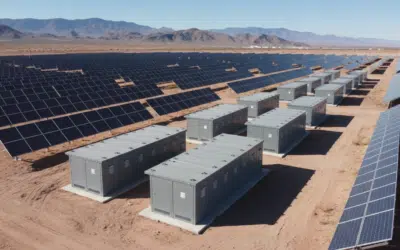
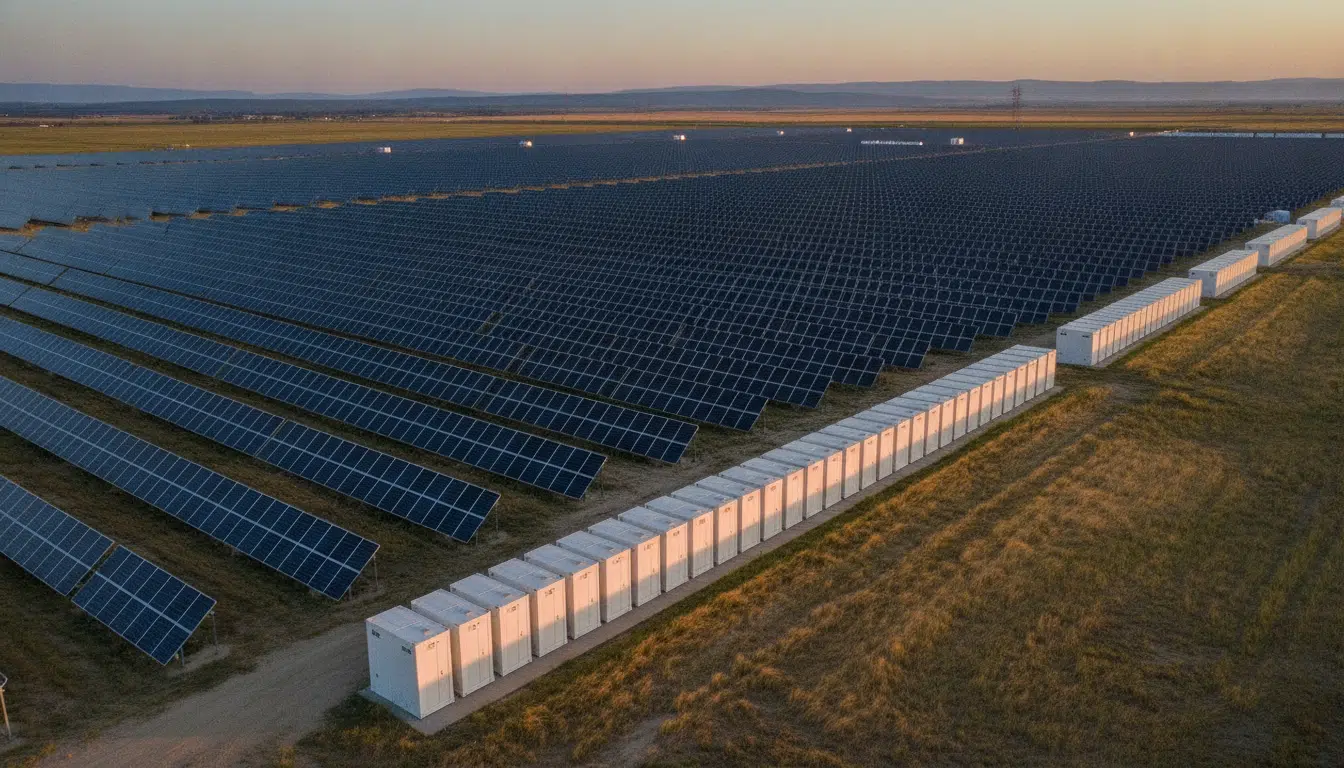
Investment in co-located renewable projects, mostly solar paired with batteries, reached a record $25 billion in the first six months of 2026, nearly double the previous high, according to BloombergNEF.
The figure covers projects that combine solar, wind or storage on a single site, though solar-plus-storage dominates the category. The previous record was set in the second half of 2025, so the jump has come within a single six-month period according to BNEF’s latest renewable energy investment analysis.
Why developers pair the two
Solar’s weakness is timing. A solar farm produces nothing at night and a surplus on sunny afternoons, and neither pattern matches demand. Batteries on the same site store the midday surplus and release it later. As a result, the combined plant behaves more like a conventional on-demand generator, ramping up or down with power prices and the grid’s needs. That flexibility is what investors are paying for.
The United States leads
BNEF names the US as one of the leading markets for co-located solar-plus-storage. The country’s grid battery sector has just recorded its best quarter for installations, helped by falling cell costs and growing developer confidence in the technology. Nearly half the storage capacity added last quarter was built alongside solar farms, so the hybrid model is already the default for a large share of new American capacity.
A bright spot in a flat market
The record for hybrids arrived while overall renewable energy investment stayed flat between the second half of 2025 and the first half of 2026. Co-located projects remain a small share of that total. Offshore wind fell sharply over the period. BNEF points to poor auction results in Denmark and Germany, which cut the number of projects able to reach financial close in recent months.
Even so, BNEF’s analysts concluded that “the numbers show that the broader growth story for renewables remains intact”. The test for the second half of the year is whether hybrid projects keep growing while the rest of the market recovers. Meeting rising electricity demand without adding emissions will need total clean energy investment to rise well beyond the co-located slice.