
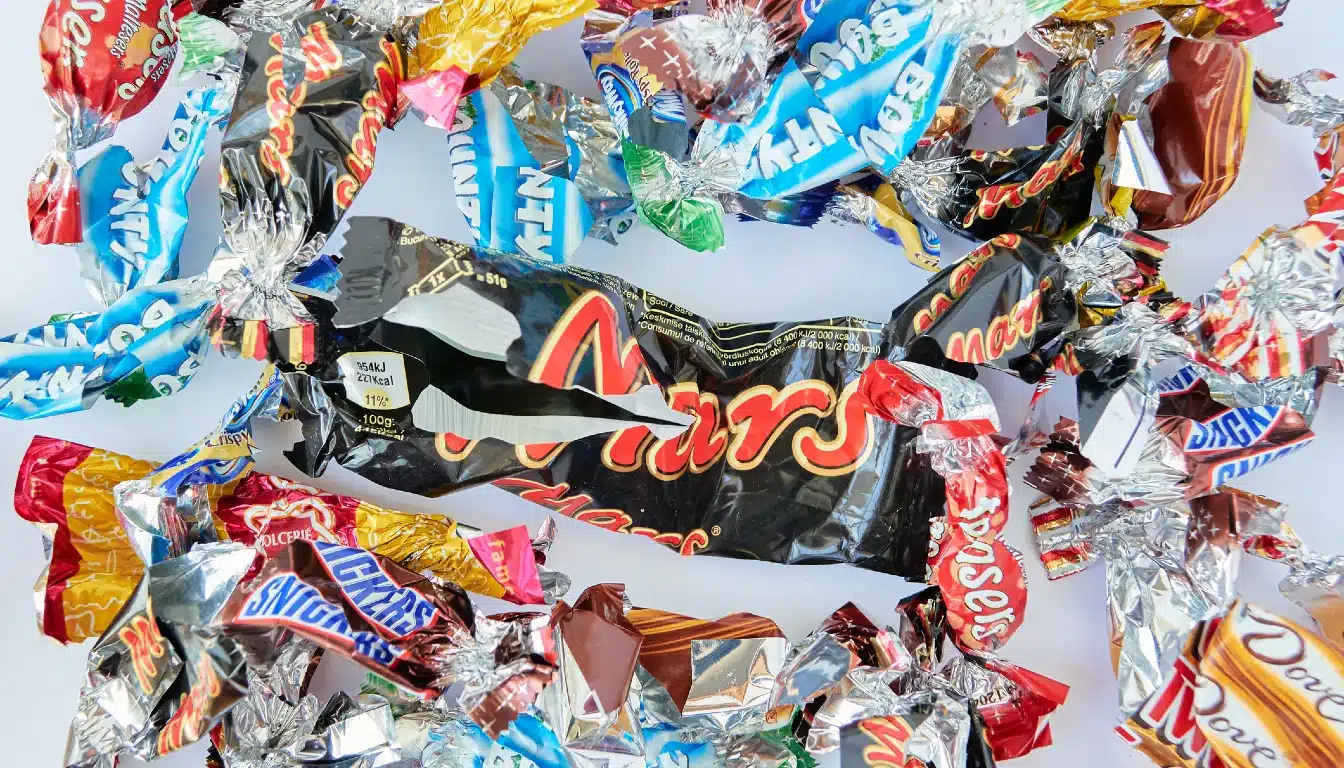
Belgium is running Europe’s first large-scale trial of invisible digital watermarks on flexible snack packaging. The goal is to recover crisp packets, biscuit wrappers, and similar film plastics for use in new food containers. This addresses one of the most persistent gaps in plastics recycling.
The project brings together Mondelēz International, Ferrero, PepsiCo, and Pladis. Fost Plus, Belgium’s household packaging recycling organisation, coordinates the effort. It runs under the HolyGrail 2030 circular packaging initiative, in partnership with digital watermarking specialist Digimarc.
How the Watermark System Works
Each piece of packaging carries an invisible digital code printed during manufacturing. Philippe Gendebien, business innovation manager at Fost Plus, described the technology plainly. “It’s similar to a QR code, invisible to the naked eye, that carries information about what the packaging once held,” he said. “When a package arrives at a sorting centre via the PMD bag, cameras on the sorting line can read that code and automatically send the package to the right waste stream.”
Belgium already sorts packaging into 16 material streams. This technology adds a further distinction. Sorting systems can now separate food-contact flexible plastics from non-food film packaging. That separation matters for food safety. Recycled material going into food packaging must meet stringent regulatory standards. Sorting plants have historically lacked the precision to make that separation reliably.
Gendebien put it directly. “While we already sort packaging into 16 material streams today, this technology lets us add an extra step, also distinguishing between food and non-food packaging.”
The Regulatory Pressure Behind the Trial
European regulators are tightening requirements on recycled content. The EU’s Packaging and Packaging Waste Regulation requires plastic food packaging to contain at least ten per cent recycled content by 2030. A study published in June found the bloc will need 2.5 million tonnes of post-consumer flexible plastics packaging material by 2030 to meet those targets. That figure signals the scale of the supply gap facing brands and recyclers.
Flexible plastics have long sat outside the recycling loop that handles rigid packaging such as bottles and trays. Mechanical recycling systems accept recycled PET from drinks bottles for re-entry into food packaging. Flexible snack wrappers have generally not qualified, because sorting facilities could not separate them with sufficient confidence.
The Belgian trial works at product level. Packaging receives its watermark before consumers ever see it. Cameras at sorting facilities then read that mark and direct film plastics into a dedicated stream for reprocessing.
Early Results From Related Trials
HolyGrail 2030 builds on the earlier HolyGrail 2.0 programme, which tested digital watermarks on rigid plastics. According to Fost Plus, industrial tests in Germany sorted 5.6 million rigid plastic items carrying watermarks between August and December 2024. Separate trials earlier in 2024 successfully separated polyethylene and polypropylene films from mixed packaging waste.
Semi-industrial testing has also shown that cameras can identify marked packaging at a high rate even when items are soiled, crumpled, or compressed. That finding matters for real-world sorting lines, where packaging arrives in variable condition.
The Belgian pilot intends to prove both technical performance and commercial viability. After the operational phase, the initiative will examine end uses for the recovered material. It will also assess whether the process can support a wider market rollout.
What Success Could Mean for European Markets
For Belgium, the trial offers a route to converting low-value snack wrappers into higher-quality recycled feedstock. The country collects household packaging through its PMD bag system, which gives Fost Plus a structured collection base to work from.
If the trial delivers, it could give other European markets a workable model. Many countries face the same combination of regulatory pressure and inadequate sorting infrastructure for flexible plastics. A proven, scalable approach to food-grade film recovery would be a practical asset for any market trying to meet the 2030 recycled content targets.
The initiative does not yet have confirmed end-market commitments for the recovered material. Fost Plus has said the post-operational assessment will address that question. Whether brands and reprocessors can agree on pricing and volume will determine whether the technology moves from trial to standard practice.