
The UN has named three new World Restoration Flagships at UNCCD COP17 in Mongolia. Together they commit to bringing almost five million hectares of degraded land under restoration by 2030.
The UN Environment Programme and the Food and Agriculture Organization announced the awards on 26 August, during a high-level event at the seventeenth Conference of the Parties to the UN Convention to Combat Desertification. The three initiatives sit in Brazil, the Sahel and Saudi Arabia.
Their combined 2030 target is close to five million hectares, an area the UN puts at nearly seven million football pitches. That feeds into the wider global goal of restoring one billion hectares by the same date. Twenty-seven initiatives now carry the flagship designation under the UN Decade on Ecosystem Restoration.
Brazil turns to the Cerrado
The Araticum Initiative works across nine Brazilian states in the Cerrado, the world’s most biodiverse tropical savannah. More than 180 organisations take part, including Indigenous Peoples, local communities, farmers, researchers and government bodies. Methods include natural regeneration, direct seeding and agroforestry with native species.
By June 2026 the initiative had brought over 27,000 hectares under restoration. Seeds from more than 150 native plant species have been collected and used. The 2030 target is two million hectares, so the work so far covers little more than one per cent of the goal.
Saudi Arabia plants at scale
Saudi Arabia’s National Greening Programme covers rangelands, forests, deserts, urban areas and coastal mangroves. It aims to restore 2.5 million hectares and plant 215 million trees by 2030, while generating up to 187,000 jobs. Those targets feed a national goal of 40 million hectares and 10 billion trees by 2100.
The National Center for Vegetation Cover Development and Combating Desertification runs the programme. By June 2026 it had brought one million hectares under restoration and planted 159 million trees. Activities include controlled grazing, rainwater harvesting, treated wastewater use and the reintroduction of Arabian oryx, gazelles and ibex.
The Sahel links land to food
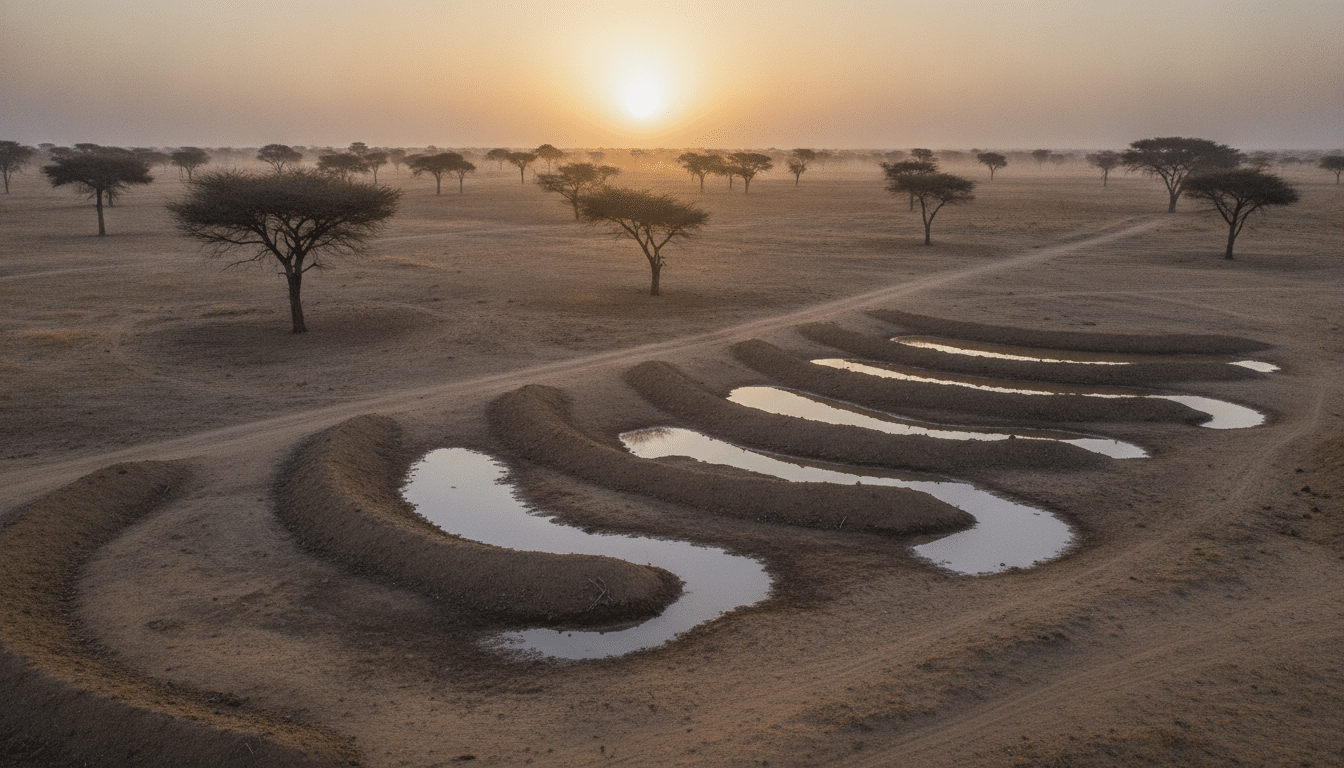
The Sahel Integrated Resilience Initiative operates in Burkina Faso, Chad, Mali, Mauritania and Niger, where conflict, drought and land degradation compound each other. The World Food Programme leads it, and the work includes support for refugees from Sudan.
By June 2026 the initiative had restored more than 335,000 hectares, against a 2030 target of 470,000. More than four million people have benefited, through soil and water management, livelihood support and school feeding programmes.
Dr Yasmine Fouad, executive secretary of the UNCCD, said land degradation and drought “are no longer just environmental concerns” and now bear on food security, water security and economic stability. Inger Andersen, executive director of UNEP, said investing in healthy land is “one of our strongest defenses against these threats”.