Electrification dominated the opening of the UN climate summit in Türkiye. New money for grids and rooftop solar arrived alongside the first dedicated home for start-ups at a COP.
Nearly 200 countries are meeting at COP31 in Antalya. Türkiye holds the presidency, while Australia’s Chris Bowen chairs the negotiations. The formal talks have so far centred on finance and the shift away from fossil fuels. For founders and investors, the voluntary announcements around the negotiating rooms carry more practical weight. Most push more electricity into transport, buildings and industry, backed by public money that lowers the risk for private capital.
The 35-by-35 pledge puts a number on electrification
The COP31 Presidency formally unveiled its Global Electrification Pledge on 10 November. It sets a goal of lifting electricity’s share of final energy use from around 23 per cent to 35 per cent by 2035. COP31 President Murat Kurum said the summit “will be remembered as the moment we flicked the switch”.
More than 180 companies, including Volvo, IKEA and Siemens, backed faster electrification through the We Mean Business Coalition. Together they report over $1.69 trillion in annual revenue. Meanwhile, the Utilities for Net Zero Alliance raised its annual investment pledge from $148 billion to $156 billion. The IEA will track progress, and a new Electrification Forum with the EU will keep meeting after the summit.
The pledge is voluntary, however, and sets no requirement for clean power. As a result, its climate value depends on cleaner grids. Current policies would take electricity to only 28 per cent of final demand by 2035, according to Climate Action Tracker. Even so, firms selling heat pumps, industrial heat, charging or grid software now have a shared global benchmark.
Catalytic finance for grids and storage in emerging markets
A new Electrify Now Finance Coalition launched to steer private investment into clean electrification in developing economies. The World Bank Group and the African Development Bank will co-chair it from 2027. Early members include the EBRD, the European Investment Bank and the Institutional Investors Group on Climate Change.
Alongside it, the Climate Investment Funds named the first five investments under its AMPLIFi programme. CIF will deploy $94 million of catalytic finance. It hopes to draw in more than $1.2 billion of private capital for clean power, grids and storage. Its chief executive, Tariye Gbadegesin, said each unit of AMPLIFi money should mobilise six to twelve from the private sector.
Developing economies account for around 80 per cent of growth in electricity demand, according to Sustainable Energy for All. Yet Africa receives only about 2 per cent of energy transition investment. A new Grids Technical Assistance Solutions Hub will also link regulators and grid operators with outside expertise. That gives grid technology suppliers another route into those markets.
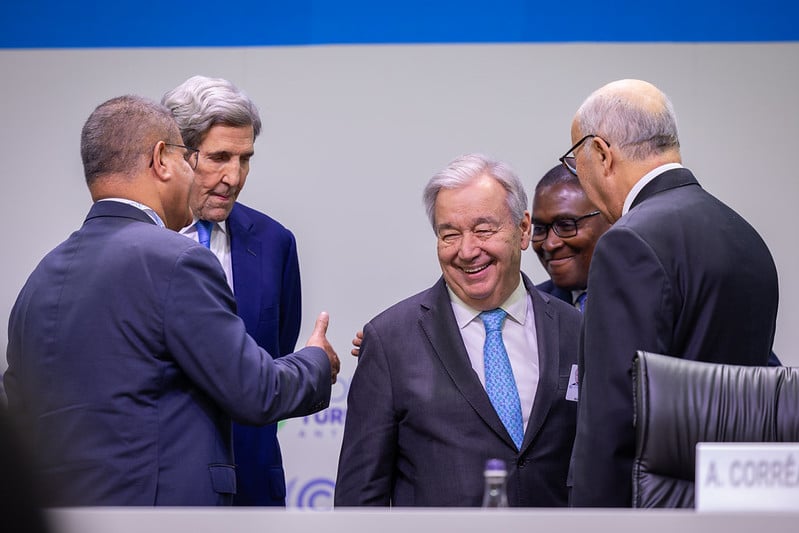
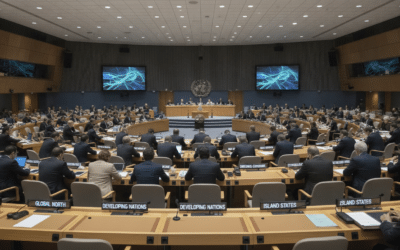
High-level dignitaries attend the COP30 Presidency on the Roadmap to Transition Away from Fossil Fuels (Photo: © UN Climate Change – Kiara Worth)
Rooftop solar gets a global target
Australia, Bangladesh, Kenya, Nigeria and Vanuatu were among the countries that signed the Global Rooftop Solar Declaration on Energy Day. Indonesia’s state utility PT PLN also joined. The declaration targets 300 million solar-powered homes by 2030, double the roughly 150 million today.
Signatories commit to six areas of action, including simpler permitting and helping banks lend against rooftop systems. Those measures bear directly on the costs of installers, distributed energy financiers and home battery companies. The text is non-binding, and the full list of signatories hasn’t been published.
Ports set their own electrification goal for shipping
Ports, shipping companies, campaign groups and think tanks launched the Maritime Electrification Breakthrough Goal on the same day. It targets 20 per cent of shipping’s final energy demand from electricity by 2035, up from a negligible share today. The Port of Esbjerg in Denmark and the Port of Long Beach in California are among its backers.
The goal covers electric ferries on short routes, shore power for ships at berth and electrified cargo-handling equipment. Separately, the presidency launched a Global Green Freight Corridors Initiative with the International Transport Forum.
Trade rules still lag clean technology exports
Only 7 per cent of climate provisions in recent trade agreements tackle tariff and non-tariff barriers to clean technology, UNCTAD found in new research. Exports linked to solar and wind value chains exceeded $1.8 trillion in 2025. Trade in batteries rose 29 per cent and in electric cars 11 per cent in the first half of 2026.
Many smaller exporters in developing countries lack accredited laboratories and verifiers. As a result, differing standards and carbon accounting rules raise their compliance costs.
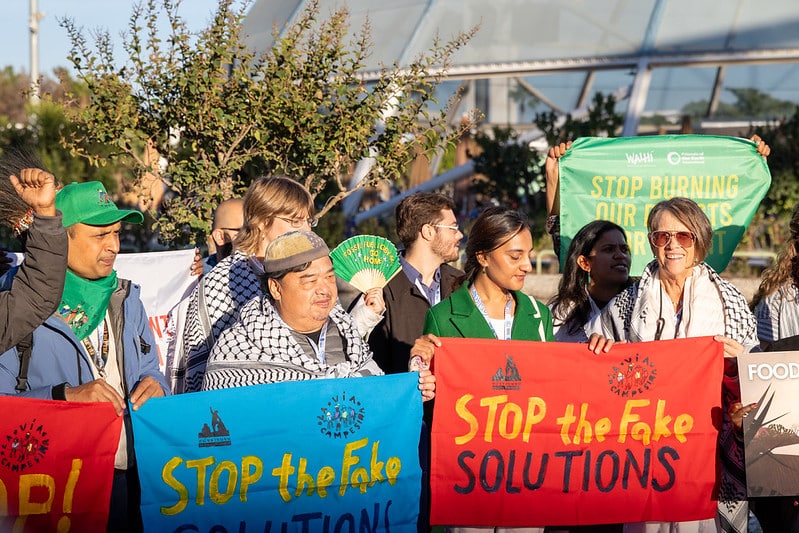
Members of civil society demonstrate at the venue in Antalya (Photo: © UN Climate Change – Kubilay Ciftci)
A first dedicated Startup Zone at a COP
COP31 is the first COP with a dedicated Startup Zone. The 3,600-square-metre space in the public Green Zone has stages, meeting areas and an investor lounge. Desk stands are reserved for climate start-ups up to three years old. The Green Zone is closed to visitors on 11 and 12 November while world leaders attend. Its programme ends on 20 November with Connect To Funds, a day for matching projects with finance.
What to watch next
Finance Day on 13 November and Industry Day on 16 November come next, with further initiatives promised for both. Türkiye also plans to launch its Industrial Decarbonization Investment Platform during the summit. Its backers, including the EBRD and the IFC, want to mobilise more than $6 billion by 2030 for green hydrogen, carbon capture and energy efficiency. The Clean Technology Fund has put in $250 million of seed money.
On 13 November, the first Africa Climate Implementation Summit will connect African climate projects with investors in Antalya. A technology and AI day later in the fortnight should bring news on the presidency’s AI for Clean Technologies Initiative. It plans to pair AI-enabled clean tech pilots with industry partners and investors.
Photo: © UN Climate Change – Kubilay Citfci