French start-up VoltR has raised €22m from Bpifrance’s SPI 2 fund, Decathlon PULSE and state grants to double its plant and grow battery remanufacturing across Europe.
VoltR, a French firm built on battery remanufacturing, has secured €22m in new funding. The deal includes €16m of equity from Decathlon PULSE and the SPI 2 fund. Bpifrance runs that fund for the French state under France 2030, a plan to rebuild the nation’s industry. A further €6m comes as grants from Première Usine, a scheme that backs start-ups building their first French factory.
The cash will scale its battery remanufacturing work, which turns used cells into new, certified packs. Alban Regnier, François Mallet, Thibaud Maufront and Maxime Bleskine set up the firm in 2022. It raised a €4m seed round in April 2024. This round is more than five times larger.
How remanufacturing works
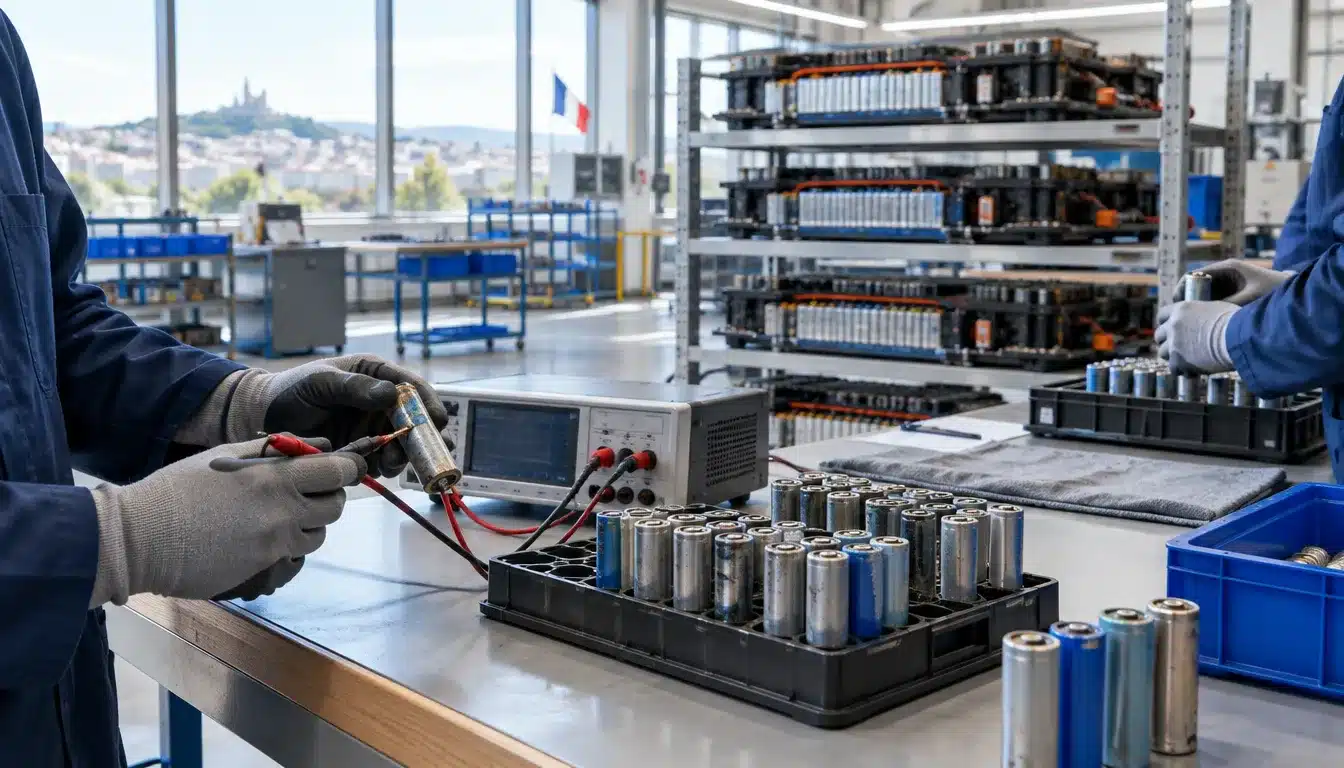
VoltR collects batteries at the end of their first life. It then tests each cell and reuses the good ones in new packs. Those packs meet the same performance and certification rules as standard ones. So its model covers collection, cell testing and production in one firm.
Maxime Bleskine, chief executive of VoltR, argues that many cells still have years of use left. “A lithium cell that has reached the end of its first life has not necessarily reached the end of its industrial life,” he said.
The firm sells packs for power tools, e-bikes and scooters, smart homes, smart cities and mobile storage. So far, it says it has brought more than 20,000 batteries to market. Bleskine said the team has spent four years proving the idea. Now the task is to repeat it at a far larger scale.
Doubling the plant
The cash will double the size of VoltR’s plant at Verrières-en-Anjou, near Angers in western France. Output is set to rise sixfold within two years. Meanwhile, the staff of about 40 should roughly double, adding about 40 jobs.
The firm also plans to grow across Europe. “Within two years, we aim to increase our production capacity sixfold and double our workforce,” Bleskine said. He added that its proof of concept rests on “more than 20,000 batteries placed on the market”.
In addition, VoltR says reuse makes a vital supply chain less reliant on imports. Bleskine said the aim is “to make remanufacturing a key player in the European battery value chain”.
Backers want a home-grown supply chain
For Bpifrance, the deal fits a wider industrial goal. “With VoltR, the SPI Fund is reaffirming its commitment to building a sovereign battery industry,” said Jean-Philippe Richard, director of the SPI Fund at Bpifrance.
Decathlon PULSE, the sports retailer’s investment arm, joins as a strategic partner. Bleskine called the arrival of both backers “particularly significant”.
For Decathlon, the link to its own goods is clear, since its e-bikes and scooters run on lithium packs. Franck Vigo, chief executive of Decathlon PULSE, said it shares “VoltR’s conviction that circularity must be at the heart of tomorrow’s industrial models”. Decathlon’s statement sets out both stakes.
Where remanufacturing fits
Much of Europe’s work on circular batteries centres on battery recycling, which breaks cells down for their raw materials. EU rules will also demand a minimum share of recycled content in new batteries from 2031. Remanufacturing comes one step earlier and keeps good cells in use for longer.
It also eases a supply problem. Europe still imports most of the lithium cells it uses, so each reused cell cuts that need. In addition, it keeps value in the region that would otherwise leave as scrap.
Still, the model depends on testing every cell well. That makes VoltR’s testing step central to its pitch. If the sixfold rise lands on time, battery remanufacturing could grow from niche to industrial scale in France. Backers will watch whether the Verrières-en-Anjou plant delivers on its two-year plan.