
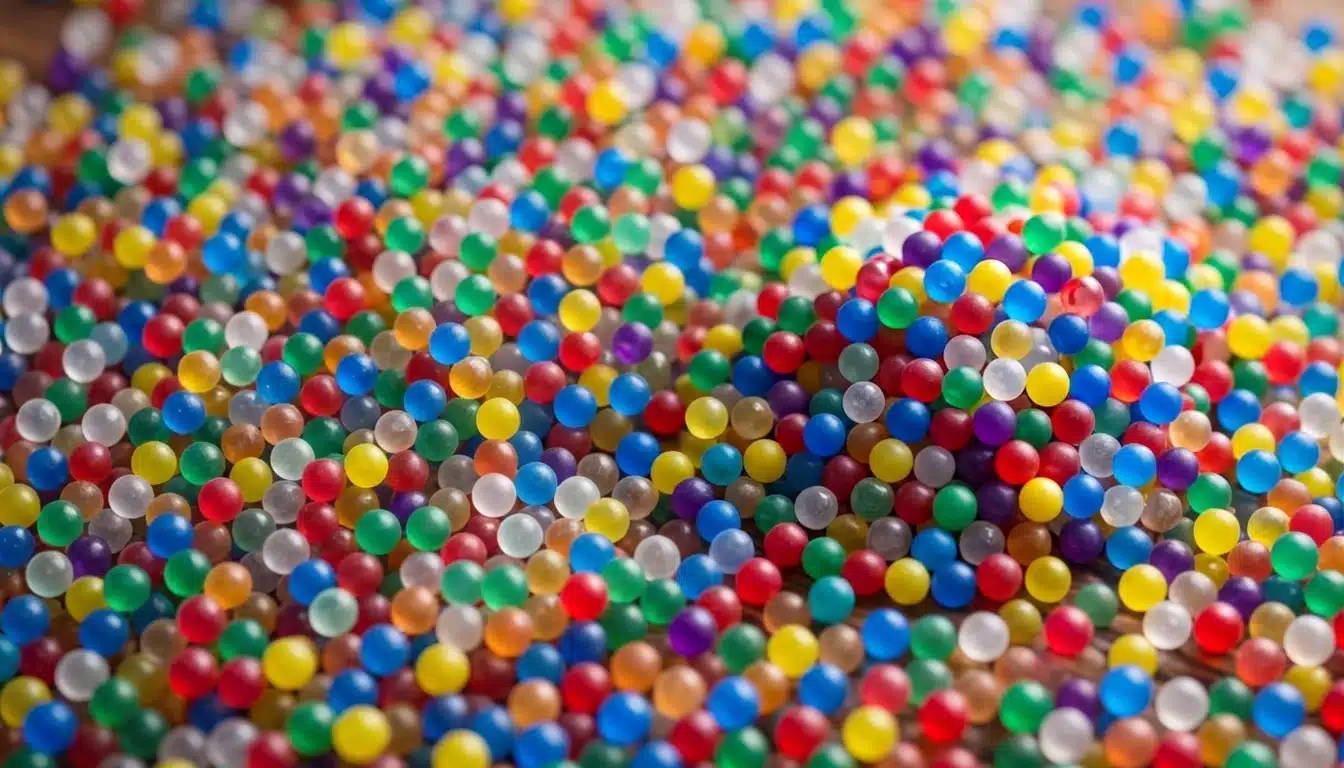
Bath-based start-up Naturbeads has received €4.1 million in European Union funding to support its transition from laboratory research to industrial-scale manufacturing of plant-based microbeads. The grant arrives as the EU prepares to impose progressive restrictions on synthetic microplastics in cosmetics and consumer products.
The funding, channelled through the European Structural Fund, will part-finance the company’s first manufacturing facility in Lecce, in the Puglia region of southern Italy. According to Naturbeads, the plant is already undergoing testing, with production expected to begin within the coming months.
A university spin-out approaching commercial scale
Naturbeads was founded in 2018 as a spin-out from the University of Bath by Professors Janet Scott and Davide Mattia, together with chief executive Giovanna Laudisio. The company holds a patent on a process that converts cellulose, the structural material found in plant cell walls, into uniform microspheres designed to match the size and functional performance of conventional plastic microbeads.
Synthetic microbeads are used extensively across cosmetics, detergents, paints, and industrial coatings. Their persistence in waterways and ecosystems has drawn sustained regulatory and scientific scrutiny. Naturbeads positions its cellulose-based alternative as biodegradable and as a direct replacement for plastic beads, one that manufacturers can adopt without compromising performance or cost competitiveness.
That drop-in proposition matters commercially. Ingredient reformulation carries significant development costs for manufacturers. A substitute that integrates into existing production processes removes a meaningful barrier to adoption.
Regulatory pressure is shaping the market
The EU’s regulatory timetable is already creating urgency. The bloc is progressively restricting synthetic microparticles in cosmetics, starting with rinse-off products in 2027. Restrictions on leave-on formulations follow in 2029, with make-up products brought into scope by 2035. Those staged deadlines give brands and ingredient suppliers a clear horizon, and Naturbeads is positioning itself to meet it.
The company’s commercial focus extends beyond cosmetics. Naturbeads says its technology can also serve paints, adhesives, fabric softeners, and biomedical applications. That breadth of potential use widens both the market opportunity and the possible contribution to reducing microplastic pollution across multiple industrial sectors.
Previous investment and the path to production
The EU grant follows a £7.8 million Series A round completed in November 2024. That round was led by Eos Advisory, with participation from Progress Tech Transfer and new investors including CDP Venture Capital. The Series A was directed at funding the build-out of the Italian facility and expanding production capacity for customers across cosmetics, home care, and industrial markets.
The combination of equity investment and public grant funding reflects a financing model common among deep-tech material companies, where capital-intensive physical infrastructure requires support from multiple sources before revenues can cover costs.
Puglia as an emerging manufacturing location
The choice of Lecce places Naturbeads within a region Italy has been working to develop as an industrial and innovation base. For Puglia, the project represents another strand in that effort. For Naturbeads, it marks the point at which a concept developed inside a university laboratory moves into a production business designed to supply global markets.
The Lecce plant, once operational, will be the clearest test yet of whether the company’s manufacturing process scales as intended, and whether its cost and performance claims hold at volume. The EU funding and prior Series A together represent a substantial commitment to answering those questions.
The broader context for microbead substitutes
Microplastic contamination has become a significant focus for environmental regulators beyond Europe. The UK introduced restrictions on microbeads in rinse-off cosmetics in 2018. Other markets are at various stages of developing their own frameworks. A commercially viable, biodegradable substitute produced at industrial scale would carry relevance in multiple regulatory environments simultaneously.
Naturbeads is not the only company working on cellulose-based or bio-derived alternatives to synthetic microparticles. The competitive landscape in this segment is still forming, and no single supplier has yet established dominant market share. What the current funding round confirms is that Naturbeads now has the capital to pursue a first-mover position, if its production timeline holds.