The Reykjavík start-up draws power straight from high-voltage lines to run grid monitoring kit in remote places, and its new backers see a defence case as well as an energy one.
Laki Power, an Icelandic company that makes grid monitoring hardware, has raised €6m in Series A funding. Most of the money comes from the NATO Innovation Fund, the venture fund backed by NATO member governments. ReykVC also provided support.
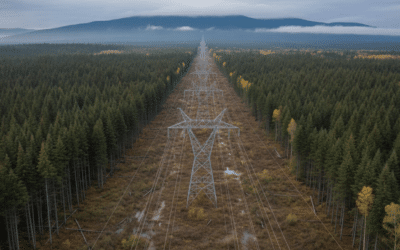
The deal puts defence money behind a problem grid operators know well. Transmission lines often cross remote country, where running power to grid monitoring sensors is costly and complicated. As a result, operators can struggle to watch the lines they rely on.
The round is small by energy sector standards. Its lead backer is what stands out, because the money comes from a fund built to invest in defence and security technology.
Power taken from the line itself
Óskar Valtýsson co-founded Laki Power in Reykjavík in 2015 with Ósvaldur Knudsen. Before that, he worked for Iceland’s grid operator. There, he saw how hard and expensive it was to get electricity to monitoring equipment along the corridors.
Knudsen tells the same origin story. At the time, the grid operator needed monitoring equipment along its transmission corridors. Power, he said, was a major problem.
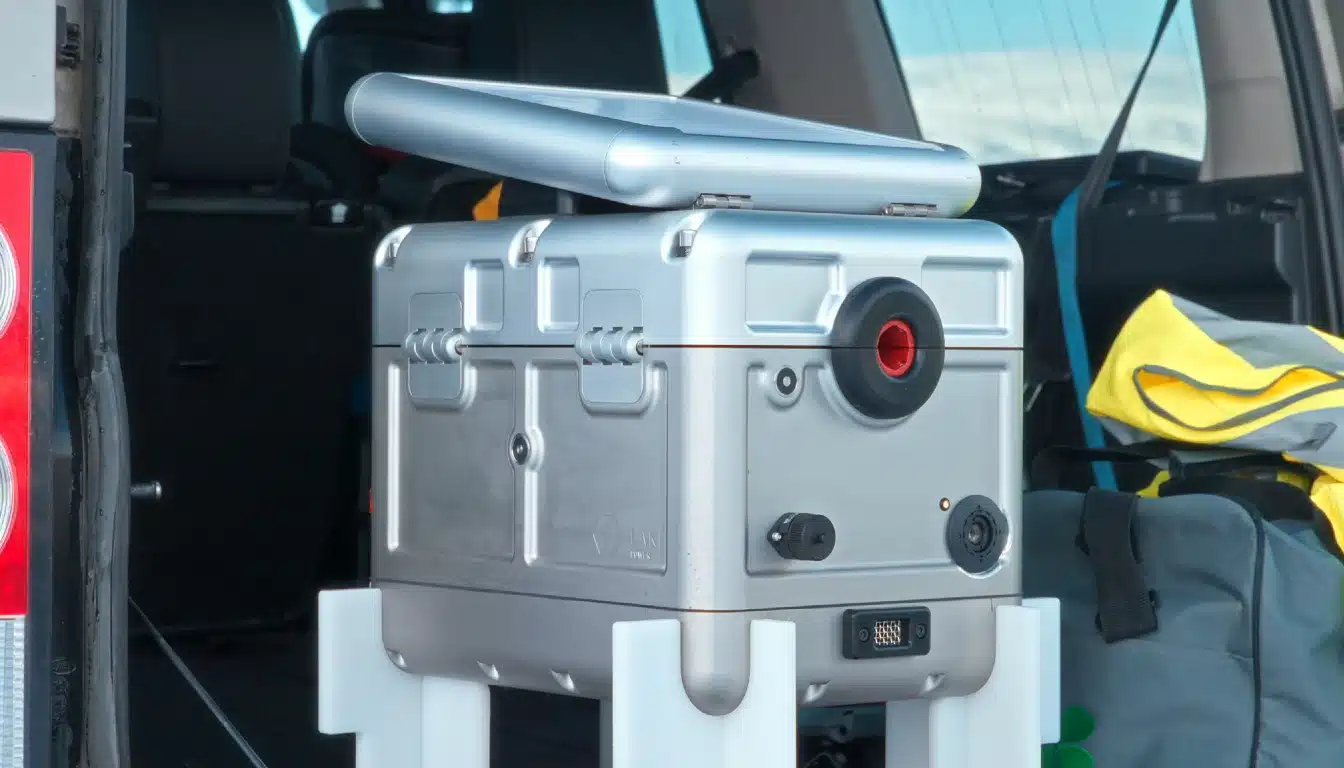
Valtýsson’s fix was a device that draws power directly from the high-voltage line it monitors. Now patented as PowerGRAB, it can take up to 300 watts from a live line. According to Laki, that is 100 times more than ordinary inductive designs. Because it feeds on the line it watches, the kit needs no separate power supply at remote sites.
That supply runs cameras, weather sensors and satellite links without battery swaps. In addition, the company uses it to charge drones as they fly along power corridors. The aim, Knudsen said, is to “build a network of drones along the grid”.
Knudsen is confident about where the company stands among European start-ups working on the grid. “We are really second to none; there is no competitor that can do it the way we do,” he said.
Why a defence fund is interested
For the NATO Innovation Fund, the team counted as much as the product. Dr Sander Verbrugge, a partner at the fund, praised how well the founders had prepared. He said they “understood both the subject matter and the market”.
The fund also sees clear dual-use potential. “You can use it to charge drones, fit advanced sensor systems on it and install advanced communication relay systems,” Verbrugge said. In his view, those uses “increase the resilience” of the fund’s LP members.
Verbrugge also sees value in the device’s simplicity. “Such simple and inexpensive devices can be of great assistance,” he said. For grid hardware start-ups, defence investors now offer a source of capital beyond the usual climate funds.
Grid security has climbed up the agenda in Europe since the April 2025 blackout across Spain and Portugal. Grid monitoring gives operators one way to spot trouble on their lines earlier. Meanwhile, investors are also backing software that helps utilities find spare grid capacity with AI.
Patient capital and a wider rollout
Neither side is in a hurry. “We are a patient kind of investor and therefore have no intention of going public in the next three years,” Verbrugge said. He added that the fund’s mission platform group is already working with Laki on a possible third product line.
Laki first tested its grid monitoring technology with Landsnet, Iceland’s national grid operator. Now it is moving beyond that home market. The company already has customers in Australia, South America, North America and Europe.
Hiring is the next priority, according to Knudsen. The company plans to grow its hardware, software, and sales and marketing teams. For now, grid operators are still testing the technology. So for Knudsen, success means “deploying our solutions on a large scale”.
The next test is turning those trials into wider rollouts across operators’ networks. If that happens, Laki’s self-powered grid monitoring could become a standard fixture on remote lines.