Brussels has picked 77 projects in 23 countries for grants, adding a small modular reactor and a direct air capture project for the first time.
The European Commission has chosen 77 net-zero technology projects to share €3.4bn from the EU Innovation Fund. It announced the awards on 19 October. The winners sit in 23 countries across the European Economic Area.
The cash comes from the EU Emissions Trading System. Power plants and heavy industry pay for carbon allowances under that scheme. In turn, the EU Innovation Fund puts part of that revenue back into clean technology.
Heavy demand for limited funds
The call opened in December 2025 and drew 358 bids. Together, they asked for €17.5bn in grants. Yet the call had €2.9bn on offer, so most bidders came away with nothing. Only about one bid in five succeeded, and the €3.4bn awarded covers roughly a fifth of the money requested.
According to the Commission, the winners should avoid around 290 million tonnes of greenhouse gas over their first ten years. It likens that to roughly one tonne of CO2 every second for a decade.
Wopke Hoekstra, the European Commissioner for Climate, Net Zero and Clean Growth, welcomed the list. “These projects show that Europe’s innovators are turning climate ambition into industrial leadership,” he said.
Where the money goes
Large-scale projects take the biggest share. Twelve of them asked for around €1.58bn between them, or nearly half of the total. Meanwhile, 17 medium-scale projects asked for around €458m, and 20 small-scale projects for around €124m.
A separate topic covered clean-tech manufacturing. There, 12 projects asked for almost €895m, including a plant to make rare earth magnets. In addition, 16 pilot projects asked for around €394m. Brussels gives these as the sums each group requested, and they add up to close to the €3.4bn total.
Six of the chosen projects focus on critical raw materials. According to the Commission, they feed into the Net-Zero Industry Act and the RESourceEU Action Plan.
Nuclear and direct air capture join the list
For the first time, the EU Innovation Fund has picked a small modular reactor project. It has also picked its first direct air carbon capture and storage project, known as DACCS. However, the Commission’s notice doesn’t name either project or say where they are.
Both choices widen what the fund treats as net-zero technology. Small modular reactors are nuclear units built in factories and smaller than standard plants. By contrast, direct air capture machines pull CO2 out of the air so it can be stored underground.
A tidal kite for Irish waters
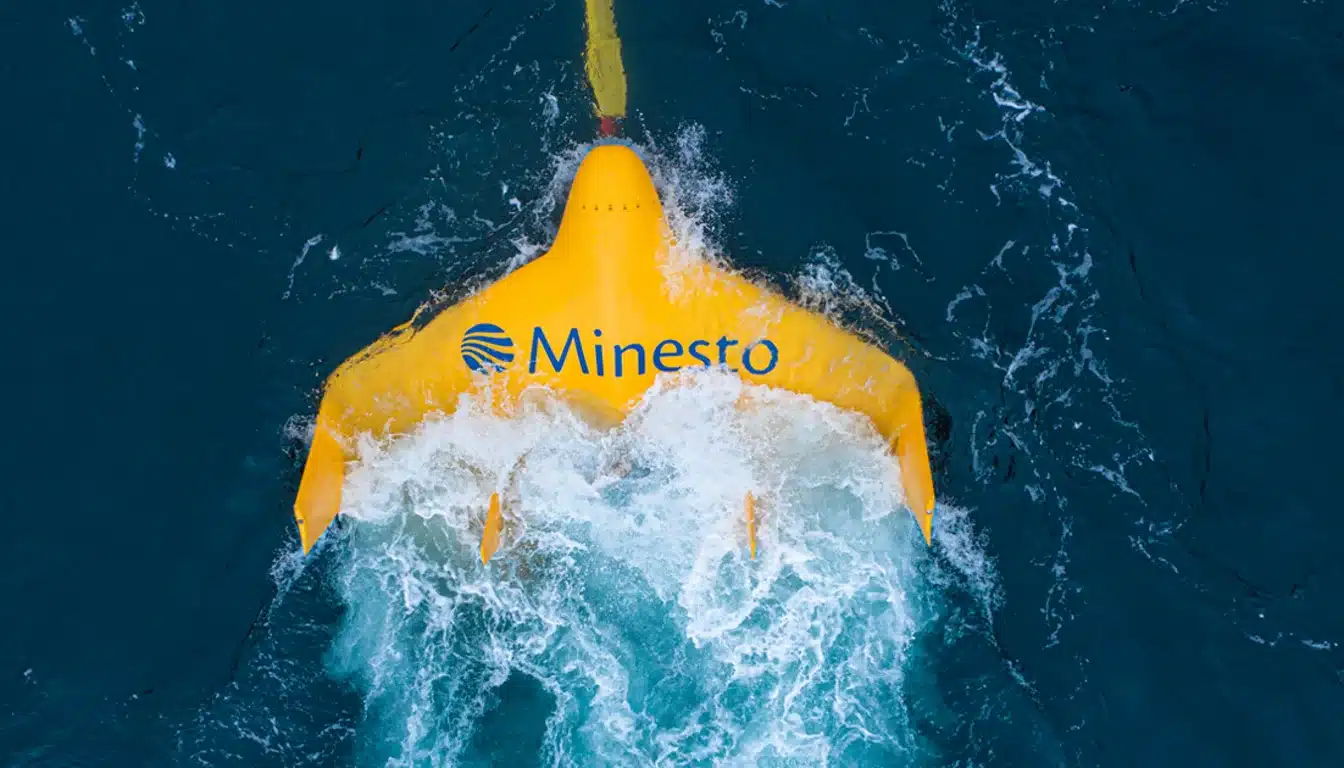
Some winners have named themselves. Swedish developer Minesto said it had won a €20.2m grant for its Euro Dragon Farm project. It plans a tidal kite array of up to 10 MW in Irish coastal waters. The company announced the award the same day as the Commission.
Minesto’s kites fly on a tether and draw power from underwater tidal currents, including slow ones. The grant would cover 60 per cent of the cost of the array, according to the company. Martin Edlund, chief executive of Minesto, called it “the most significant commercial milestone in Minesto’s history so far”.
Like the other winners, Minesto expects to sign its grant deal in the first quarter of 2027. Until then, the money isn’t locked in.
Grant deals and the next call
Being chosen doesn’t release the cash straight away. Each winner must now agree terms with CINEA, the European Climate, Infrastructure and Environment Executive Agency. The Commission expects to announce the outcome in the first quarter of 2027.
Another 84 projects passed the evaluation but won’t get money this round. Along with the 77 winners, they’ll receive the STEP Seal, a quality label meant to help them raise funds elsewhere. Separately, 160 more proposals can seek help to develop their projects from the European Investment Bank.
Next, the Commission plans to open a fresh EU Innovation Fund call in early December 2026. That round will include a €1bn topic for clean-tech manufacturing.