French start-up Epyr has raised €15m to build firebrick units that store cheap electricity as heat, with a 35MWh project at a French paper site next in line.
French energy company Epyr has raised a €15m Series A to expand its industrial heat storage business. SlateVC led the round. Existing backers AENU and Daphni joined, along with WEPA Ventures, OVNI Capital and Aurum Impact.
The money will fund Epyr’s next wave of projects. First on the list is a 35MWh unit for the paper maker Papeco, which will replace all of the gas used at its Orval-sur-Sienne site.
How the firebrick system works
Epyr’s units charge when power is cheap. During those hours, smart controls run electric resistors that heat air. That hot air then heats a stack of firebricks, which hold the energy until a factory needs it.
When the plant calls for heat, the bricks release it to make steam. Because the units draw power when supply is high, they can also help balance the grid. Epyr sells the system as Heat-as-a-Service and adapts it to each client.
Under that model, it handles the technology, integration and energy management. Where a client needs it, the company can also arrange third-party financing.
Industrial heat accounts for about 20 per cent of global energy use. Most of it still comes from burning fossil fuels, and in Europe that mainly means natural gas. As a result, electrifying industrial heat has become an EU priority, both to cut emissions and to reduce reliance on imported fuel.
The price case for electric heat
Factories will only switch if electric heat costs less than gas. Epyr argues the market is now moving its way. Fossil fuel prices remain high and volatile, while growing renewable output pushes power prices down whenever supply outstrips demand.
Epyr’s co-founders are Léa Dardenne and Bastien Oggeri. They say France has already logged more hours of near-zero or negative power prices this year than in all of 2025. They describe that cheap power as the cheapest, cleanest energy European industry has. “Our mission is to harness it, and this Series A lets us do it at scale,” they said.
Industrial heat storage turns those cheap hours into something a factory can use. In practice, a site buys power when it costs least and then draws on stored heat around the clock. That way, the steam supply stays steady even when the power price swings during the day.
A first site at a Troyes paper mill
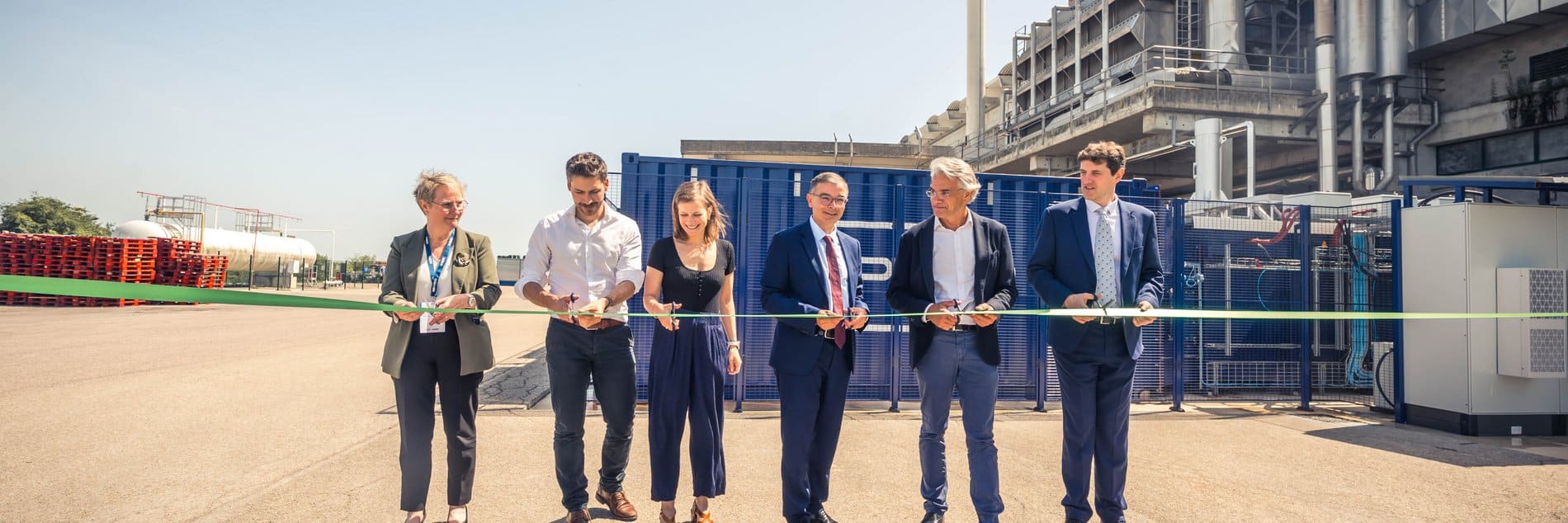
Epyr opened its first installation in May 2026 at the WEPA Group paper mill in Troyes. The company says it’s France’s first industrial thermal energy storage unit. It took less than six months to build and commission, and it now supplies up to 25 per cent of the mill’s steam.
WEPA is now an investor as well as a customer. “The first installation has demonstrated the value of both the technology and the partnership,” said Andreas Krengel, a member of WEPA’s management board.
The Papeco project is much larger. Epyr says it’ll become France’s largest thermal energy storage project once built. Energy Pool is supporting the work, from early studies through to operation.
Investors bet on a wider market
SlateVC sees room for growth well beyond paper. “Epyr has the potential to become a European leader in electrifying the €100bn industrial heat market,” said Sébastien Léger, co-founder and general partner at SlateVC.
For now, Epyr is focusing on steam users in paper, food and drink, and chemicals. It’s also exploring several more deployments and expects to announce them in the coming months.
The raise adds to a run of funding for industrial heat storage in Europe. Earlier this year, Exergy3 secured €11.4m to decarbonise industrial heat with surplus renewable power. Epyr’s test now is to repeat its Troyes result at a site where it replaces gas entirely.