
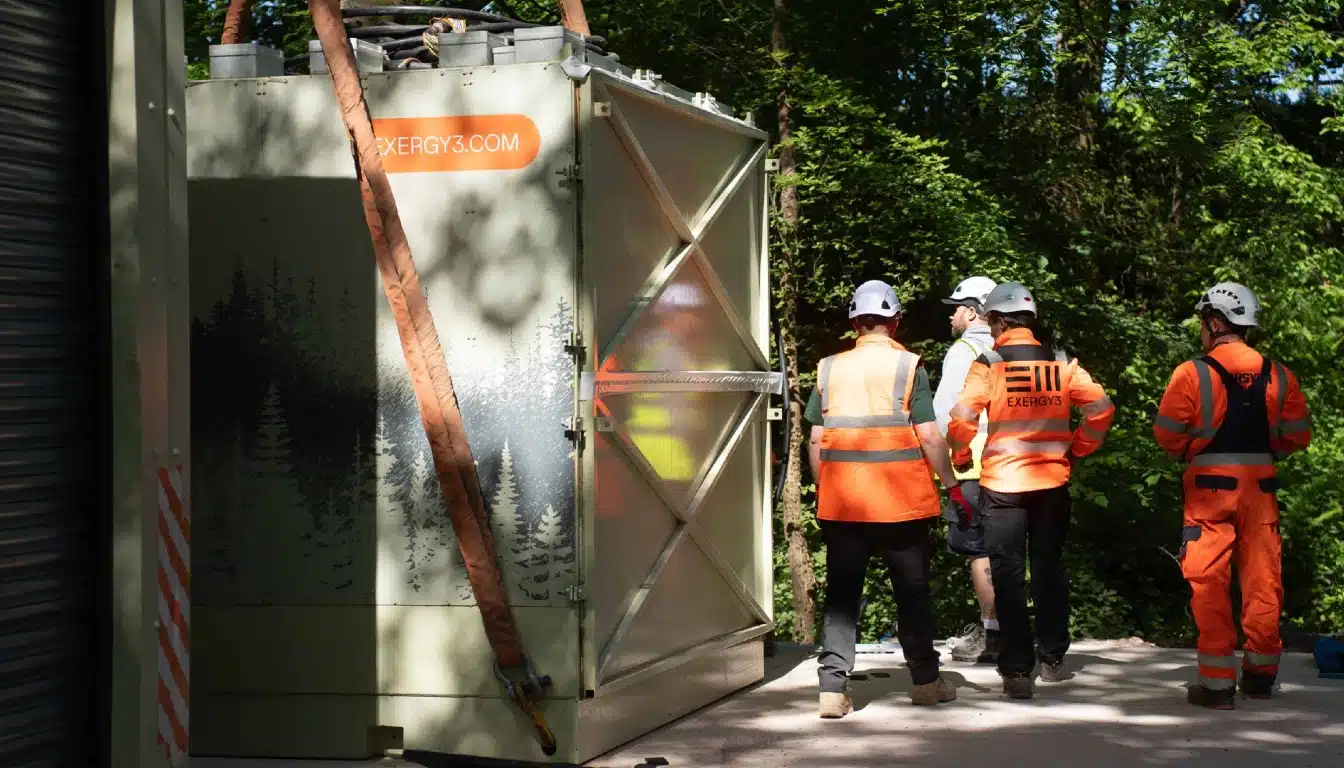
Edinburgh-based Exergy3 has raised €11.4 million to scale technology that converts surplus renewable electricity into high-temperature industrial heat, addressing one of the most stubborn emissions sources in the European economy. The seed round positions the company within a growing cohort of startups targeting industrial decarbonisation through electrification rather than hydrogen or carbon capture.
Industrial heat accounts for roughly 20 per cent of global energy consumption, according to the International Energy Agency. A large share of that demand sits above 400 degrees Celsius, a temperature range that heat pumps cannot reach and that electrification has historically struggled to serve economically. Exergy3 claims its thermal storage technology can bridge that gap by absorbing cheap, excess renewable power and releasing it as process heat on demand.
Markus Rondé, CEO of Exergy3, said: “These are two sides of the same problem. Industry needs reliable, high-temperature heat, while large amounts of renewable electricity are going to waste. Exergy3 brings them together – turning surplus renewable power into reliable, low-cost heat for industry. That means lower emissions, lower energy costs, and a more resilient energy system. This funding allows us to move rapidly from pilot to commercial deployment.”
Why Industrial Heat Remains a Decarbonisation Bottleneck
The industrial sector is the hardest part of the energy system to clean up. Steel, cement, glass, and chemicals all require sustained high temperatures that fossil fuels have supplied cheaply for over a century. Renewable electricity has disrupted power markets, but it has done far less to displace gas and coal in factory furnaces and kilns.
The economics of the problem are structural. Renewable generation is increasingly intermittent and periodically produces power in excess of grid demand, driving wholesale prices to zero or below. Industrial operators cannot simply plug into that cheap electricity without a storage mechanism that smooths supply and delivers heat at the right temperature and timing. Exergy3’s proposition is that its technology acts as that buffer, turning a grid management problem into a commercial opportunity for energy-intensive manufacturers.
The European Union’s industrial decarbonisation agenda adds regulatory urgency. The EU Emissions Trading System has pushed carbon prices high enough to make alternatives to fossil fuel heat financially meaningful for large emitters. The Net Zero Industry Act and the Industrial Decarbonisation Accelerator Act, both part of the broader Green Deal framework, set expectations for domestic clean technology manufacturing that create a receptive policy environment for companies like Exergy3.
The Competitive Landscape for Thermal Storage
Exergy3 is entering a field that has attracted increasing capital. Companies including Rondo Energy in the United States and Heatrix in Germany are pursuing comparable approaches to high-temperature thermal storage using electrified systems. The sector has drawn attention partly because the underlying materials, refractory bricks and resistive heating elements, are well understood and relatively cheap compared with electrochemical batteries or electrolysers.
The differentiation between these companies lies in operating temperature range, discharge efficiency, and integration with specific industrial processes. Exergy3 has not publicly disclosed the precise temperature ceiling its current system achieves, which makes independent technical comparison difficult at this stage. What the funding round does confirm is that investors see sufficient commercial promise to back the company through what will likely be a capital-intensive path to first commercial deployments.
Scotland provides a plausible testing ground. The country’s wind resources are among the most productive in Europe, and curtailment, the practice of paying wind farms to switch off when the grid cannot absorb their output, has cost British consumers hundreds of millions of pounds annually in recent years. Converting that curtailed energy into industrial heat rather than wasting it is an argument that resonates with both grid operators and industrial energy buyers.
What Comes Next for Exergy3
The €11.4 million raise will likely fund engineering development, pilot installations, and the commercial partnerships needed to validate the technology at industrial scale. Seed-stage capital in deep tech hardware companies rarely covers a full route to market. Exergy3 will need to demonstrate reliable performance in real industrial environments before it can attract the project finance that larger deployments require.
The broader trajectory of the sector suggests the window for proving the technology is narrow but real. European industrial energy buyers face rising carbon costs, volatile gas prices, and increasing pressure from downstream customers and regulators to cut emissions. A proven, cost-competitive source of clean process heat would find a receptive market.