Commonwealth Fusion Systems has raised a further $1bn in equity, taking its total to $4bn and giving the Massachusetts company roughly 30 per cent of all the capital raised across the fusion industry.
Commonwealth Fusion Systems said on 30 July that it had raised $1bn of additional equity financing. The round is the largest single raise in the fusion sector since the company’s own $1.8bn Series B in 2021. Combined with the $863m it took in last year, CFS has now raised $4bn since its founding in 2018.
The company didn’t name individual backers. It said its investor base has widened to take in pension funds, sovereign wealth funds, infrastructure investors and industrial corporate partners. Institutional money of that kind usually arrives late in a technology’s development, so the makeup of the round matters as much as the headline figure.
What the money is for
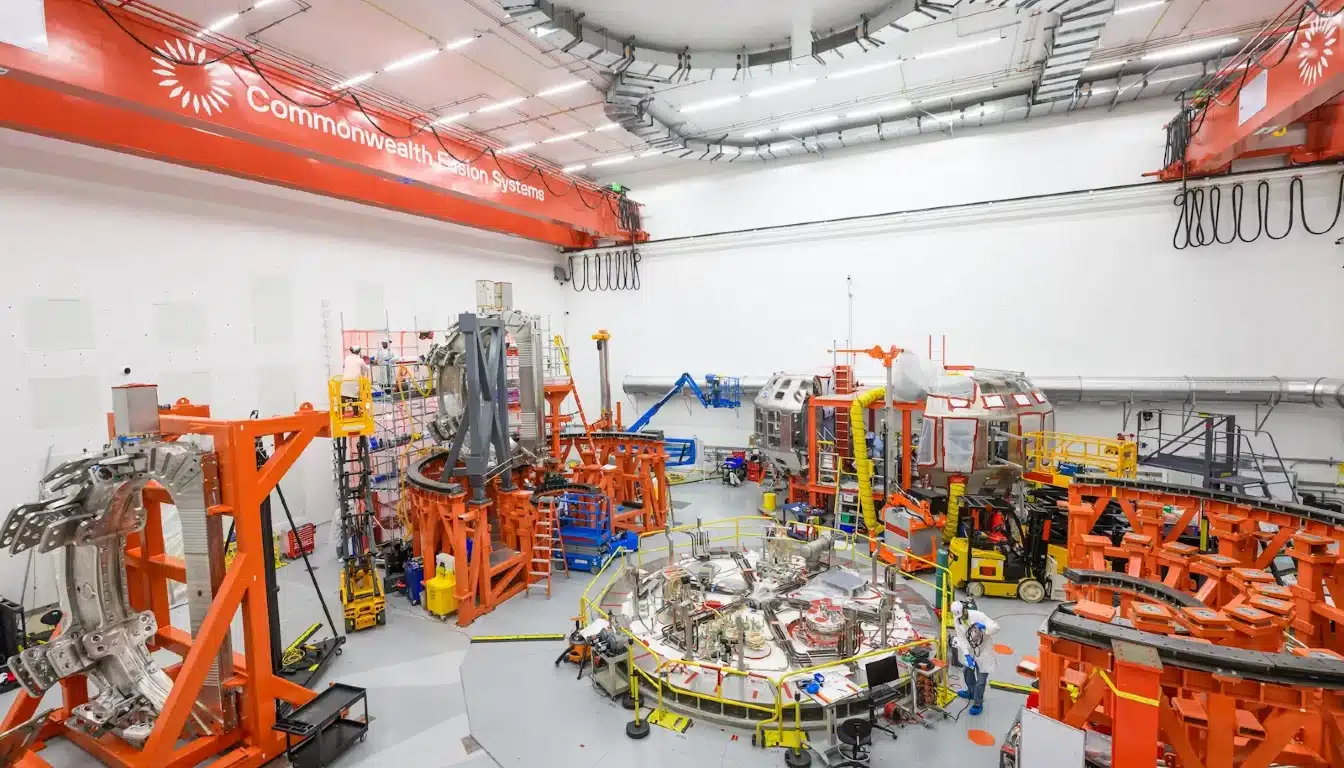
CFS is finishing assembly of SPARC, the demonstration machine at its Devens, Massachusetts headquarters designed to produce net energy from fusion. In parallel it’s developing ARC, a grid-scale power plant at the Fall Line Fusion Power Station in Chesterfield County, Virginia. The new capital goes towards both.
Bob Mumgaard, Chief Executive Officer and co-founder of Commonwealth Fusion Systems, said: “CFS is making what once was impossible into inevitable. In the 2030s, we will put commercial fusion on the grid. We have the science that works and the proven execution that’s consistently validated by the market.”
The route to the grid
CFS became the first fusion company to file an interconnection application with PJM Interconnection, the largest wholesale electricity market in the United States. It’s targeting power on the grid in the early 2030s. Dominion Energy is its partner on the Virginia site. Google and Eni, both investors in the company, have signed power purchase agreements covering more than half the plant’s expected output.
Those contracts give the project committed demand before construction finishes, something most first-of-a-kind generation lacks. For investors weighing fusion against other clean firm options, that’s the more useful signal.
What the round says about the sector
CFS puts its $4bn at about 30 per cent of all capital raised by the fusion industry so far, which implies an industry total above $13bn. The company credits decades of experience, the more than 150 tokamaks built worldwide to date, a consistent execution record and a commitment to peer-reviewed science for the broadening of its investor base.
Fusion still has no commercial plant delivering electricity anywhere, and SPARC has yet to demonstrate net energy. The round therefore rests on confidence in execution. Results from Devens over the next two years will settle whether the capital keeps flowing.