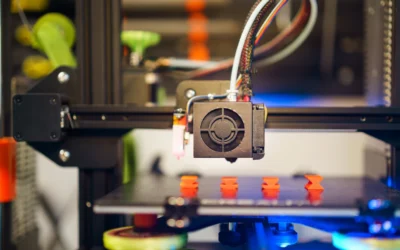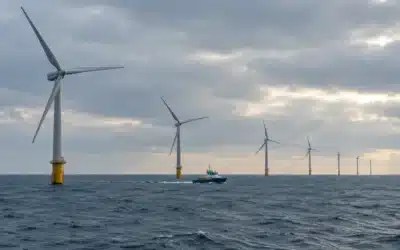
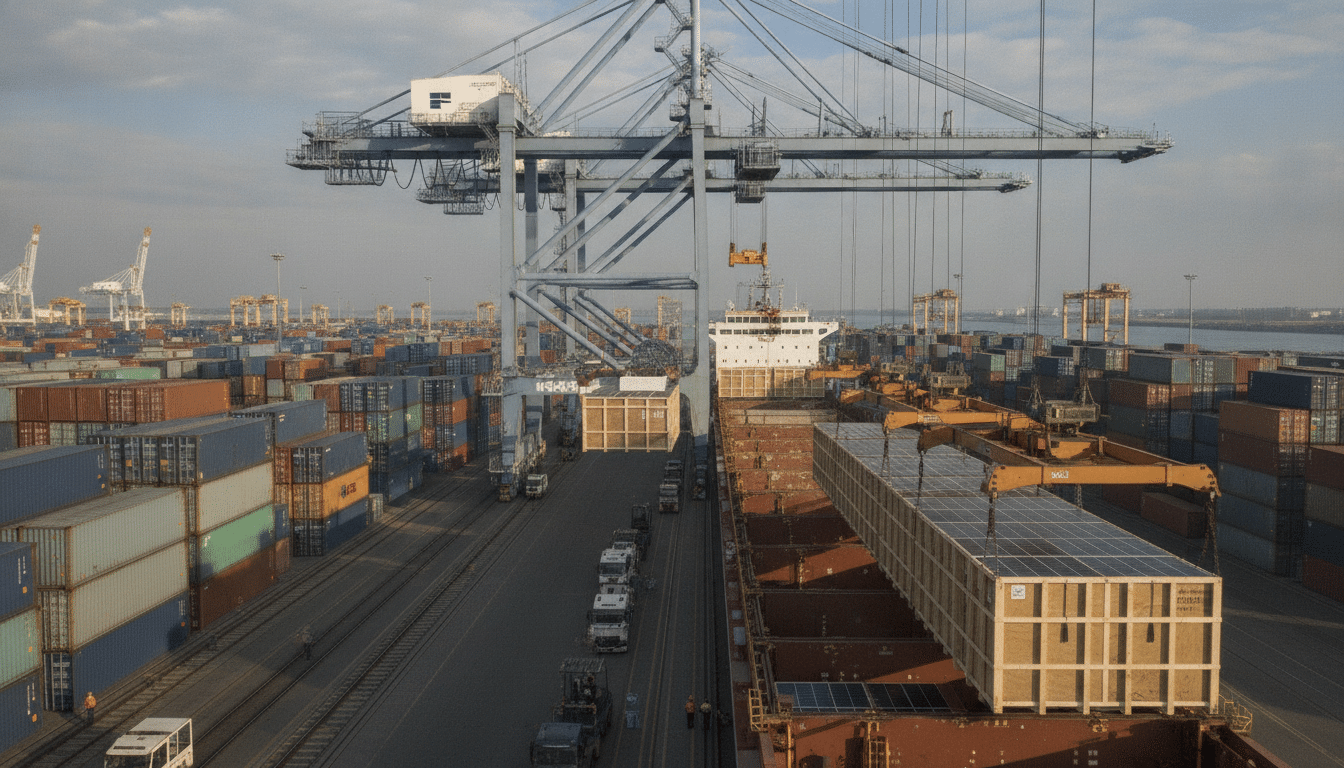
Ember data shows clean technology made up 6.6 per cent of Chinese exports in the first half of 2026. Coal generation is slowing or falling in 17 of the 26 regions it tracks.
China’s clean energy exports are closing in on the scale of its old export engines: garments, furniture and appliances. A report from the think tank Ember puts cleantech exports at $140 billion in the first half of 2026. That is 6.6 per cent of everything the country shipped abroad, up from 2.7 per cent in 2020.
The surge coincides with a shift at home. Chinese power demand grew 5 per cent last year and clean sources met all of it. Thermal generation, mostly coal, dipped slightly even as consumption passed a record 10.4 trillion kilowatt-hours. In early September, solar overtook coal in installed capacity for the first time.
A turning point in the provinces
National totals hide the change, according to Muyi Yang, senior analyst at Ember. Province-level data shows coal generation has slowed, flattened or fallen in 17 of the 26 regions the think tank tracks. Those 17 provinces hold more than half of China’s thermal capacity. Shandong, one of the country’s biggest manufacturing hubs, has cut coal generation by 10 per cent since 2021.
Industry tells a similar story. Light manufacturing such as textiles passed peak fossil fuel use years ago, Yang said. Now consumption is flattening even in heavy sectors such as metals smelting. He describes China as moving from “building before breaking” to a harder phase of “building while breaking”. In the first phase, China added clean capacity before any fossil plant closed. In practice the second means managing falling run-hours at coal plants and cushioning coal-dependent regions.
Yang added that the Iran war brought the tipping point forward. It pushed countries to speed up electrification and cut their exposure to imported fuel.
Tariffs redirect the flow
US tariffs have sent Chinese exports elsewhere. Chinese solar shipments to sub-Saharan Africa rose 37 per cent year on year. Brazil imported enough Chinese electric vehicles to drive a 300 per cent jump in registrations. Pakistan, meanwhile, bought more than 50 GW of Chinese modules as a hedge against volatile fossil fuel import costs.
Importing countries are also moving up the value chain, and that is where the story gets interesting. Yang points to Southeast Asia, where economies are moving from panel assembly into cell and silicon fabrication using Chinese upstream parts. “Clean manufacturing sectors are gradually spreading into those economies,” he said, helping them “climb the value chain, and build their own long-term industrial ecosystems”.
The energy dominance gap
The contrast with the United States is stark. In 2025 the US recorded its first year of net negative clean energy investment since at least 2012. That was a $22 billion fall on 2024. Nick Zenkin, analyst at Latitude Intelligence, has written that the “ping pong” of federal energy policy has chilled long-term manufacturing investment.
Washington’s tariffs, project cancellations and push on oil and LNG exports point towards a role as a commodity supplier. Beijing, meanwhile, is selling the hardware that the rest of the world uses to cut its fuel bills. On current numbers the gap is widening. The window in which the US could outbuild China looks close to shutting.