Novele has closed a $17m Series A led by Boisei Labs to roll out software and batteries that let commercial buildings in daily use shift their power use as it happens.
Novele, a New York firm set up in 2021, has raised $17m in a Series A round. It will use the cash to add storage in commercial buildings that are already in use. Boisei Labs led the round, while Locke Health, Arup Ventures and Barton Malow took part.
The list of backers mixes money with know-how. Arup Ventures is the venture arm of the engineering firm Arup, while Barton Malow is a US builder. Several large property owners also joined, so Novele gains possible clients as well as cash. That mix should help it win sites.
Software plus storage
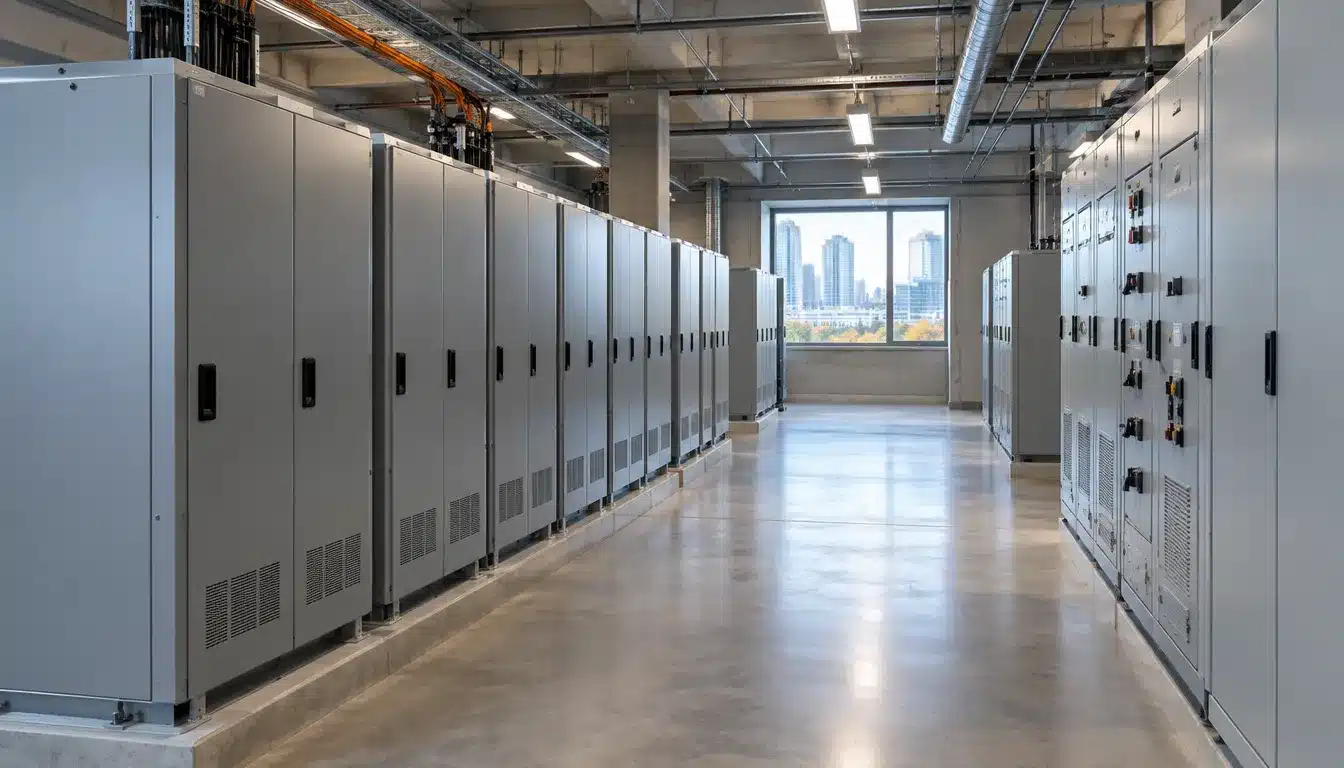
The firm pairs two products. BoardOS is its AI energy software, while EnergyBoard is a battery system made for existing buildings. Together, they watch and control a building’s power use as it happens.
As a result, a building can react to power prices, its own needs and the state of the grid. In effect, it becomes a flexible asset the grid can call on. That is the core of its pitch to owners.
Novele calls BoardOS an autonomous operating layer for the building. EnergyBoard is the hardware that lets a building act as a grid asset. Most commercial buildings, the firm says, can barely forecast or manage their own power use today.
Why demand is driving the deal
Power demand is rising across the US. AI, data centres and high-tech factories are all adding load, and Novele wants a share of that growth. Because the grid can take years to grow, Novele argues that buildings can fill part of the gap.
Charles Conwell, its chief executive and co-founder, said “commercial buildings are among the largest consumers of energy in this country”. He added that “the grid needs flexibility”.
George Perry, president and founder of Boisei Labs, backed that view. “Novele represents exactly the kind of technology we believe can create transformative impact at scale,” he said. In his view, owners gain “lower costs, greater resilience, and more intelligent control of their energy”.
The firm already reports live sites with Fortune 50 clients. It also counts more than 2,000 buildings engaged, across a pipeline of 2.6 billion square feet. That shows how much floor space owners are willing to test. Turning them into installed sites is the next step.
Safety testing and the spending plan
Batteries inside busy buildings raise clear fire risks. So Novele has completed large-scale UL 9540A fire testing, which supports its UL 9540 listing. UL 9540A is a fire test for battery systems, and UL 9540 is the safety standard for energy storage.
The new cash will grow Novele’s engineering, install and sales teams. It will also pay for more sites across its pipeline. In addition, the firm will keep training BoardOS. That work runs alongside the new installs.
Arup Ventures brings an engineering angle. Soroush Jalali, senior ventures manager at Arup Ventures, said its work with Novele focuses on “optimizing and streamlining the engineering and deployment process”.
Turning a pipeline into sites
In practice, a building with its own batteries can charge when power is cheap and draw on them at peak times. That cuts its bills and eases strain on local networks. The software decides when to switch, based on prices and the building’s needs.
For owners, the appeal is extra value from buildings they already run. Meanwhile, grid operators gain demand they can shift when supply is tight. Both depend on the system working well in busy offices. Fire safety will stay high on the list.
The round gives Novele the cash to turn its pipeline into installed storage in commercial buildings. Its next test is how many of the 2,000 buildings become paying sites. That rate will decide whether storage in commercial buildings becomes a mainstream grid resource.