Disclosures from more than 6,500 companies to CDP point to about US$397bn in anticipated financial impacts from water, with US$45bn sitting in supply chains and many firms still lacking any assessment process.
Companies disclosing to CDP expect around US$397bn in future financial impacts from water-related risks. The disclosure platform published the analysis on 21 September, drawing on data from more than 6,500 companies. Their anticipated costs include disruption, regulatory risk and capital spending. The total gives a cross-sector measure of corporate water risk exposure.
However, some of those costs have already landed. Companies reported US$1.4bn in current financial impacts from water disruption. Of the anticipated total, about US$45bn sits upstream in supply chains.
Supply chains carry the exposure
CDP found that about 60 per cent of upstream water risks for Global North companies sit in the Global South. In practice, much of the exposure lies in suppliers’ river basins, outside companies’ own operations.
“You can relocate production but you cannot relocate a river basin,” said Sherry Madera, chief executive of CDP.
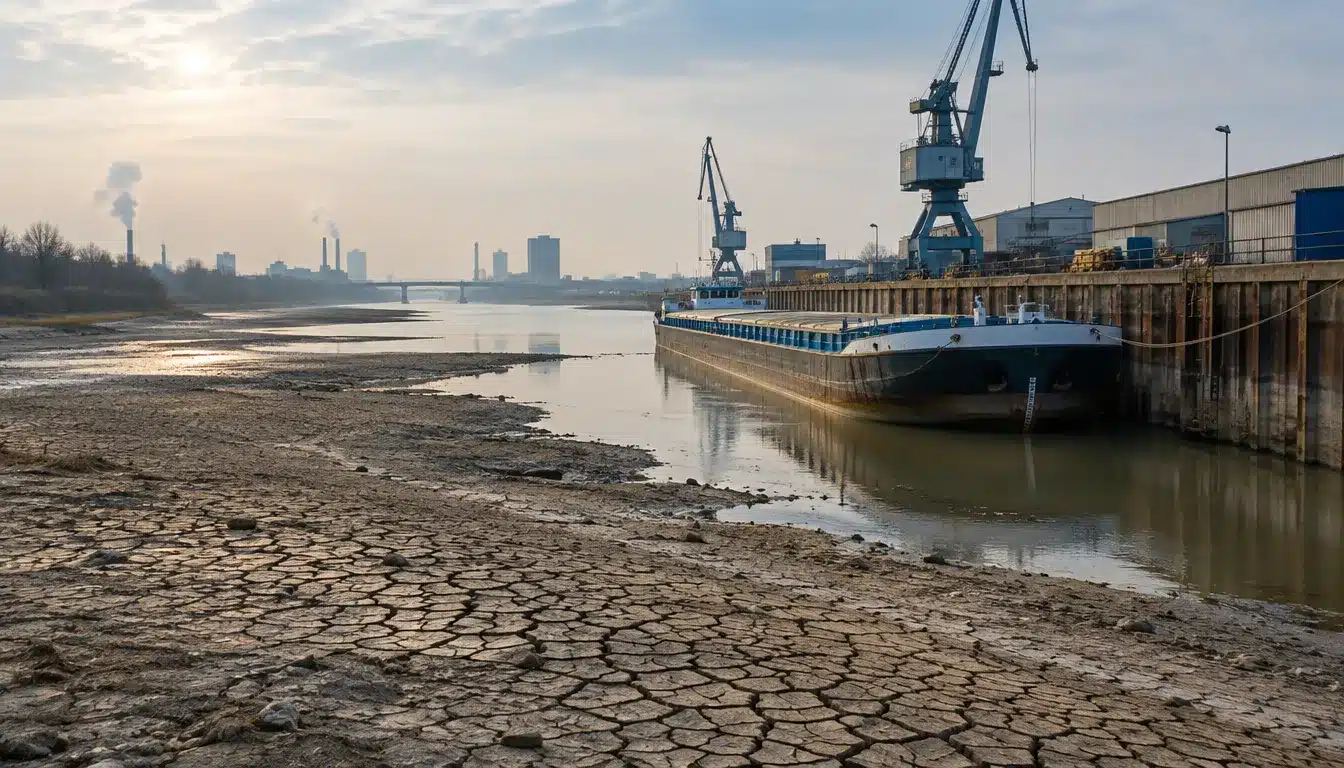
CDP’s report, titled Water, Trade and Capital, sets water within a wider shift in the global economy. As geopolitical tension rewires trade, it argues, water will become “a core determinant of economic competitiveness”. It also points to droughts that have disrupted waterborne trade on the Rhine and through the Panama Canal.
Some companies are already moving. For instance, 39 per cent report pulling out of areas of high water stress. That’s up from 27 per cent a year earlier.
Meanwhile, 78 per cent of companies disclosing on water in 2025 mapped or planned to map their supply chains. A year earlier, the figure was 70 per cent.
Case studies from Mars and Adani
The report cites Mars, the confectionery maker, as one company mapping water use across its farm supply chains. In Spain’s Guadalquivir River basin, Mars reported risks including higher input costs and reduced availability of quality rice.
Adani, the Indian conglomerate, gives a second example. It reported that 12 of its operational sites are in water-stressed regions. It identifies freshwater availability and groundwater regulation as material risks. According to its disclosure, groundwater restrictions could force it onto more expensive alternative water sources, raising operating costs.
Gaps in risk assessment
Even so, more than a third of companies disclosing to CDP still lack a process to assess and manage water risks. Among companies that report at least one water-related risk, 21 per cent have no assessment process at all. So a sizeable share of water risk exposure goes unmeasured inside the firms that carry it.
Meanwhile, physical stress is already visible in many basins. In the American West, for instance, a recent study tied half of the region’s water loss to 122 carbon majors.
“Water risk is deeply material to many sectors but is not yet fully priced into capital markets,” said Joe Ray, CDP’s head of water.
Investors and the funding gap
Financial institutions, for their part, are starting to look harder. In 2025, 54 per cent of them were assessing their portfolios’ water risk exposure. Madera said water “is increasingly a strategic business issue with direct implications for growth and competitiveness”.
Still, the funding picture for water itself is tight. Global water investment was about US$300bn a year in 2022, according to the OECD. By contrast, the OECD estimates an annual financing gap of US$700bn to achieve water security by 2030.
The gap shows up at country level too. In the Philippines, the OECD warns of a possible water crisis by 2040. It puts the cost of universal water and sanitation access there at about US$18bn between 2020 and 2030.
At the same time, the CDP data points to upside. Companies reported US$35bn in current water-related opportunities. They also identified US$925bn in potential future opportunities. So the same disclosures that reveal water risk exposure also show where firms expect to gain.