The first Cool Effect Catalyst Award grants go to Kenya’s Octavia Carbon for direct air capture and to Tradewater for India’s first compliant facility to destroy ozone-depleting refrigerants.
Cool Effect has named the first recipients of the Cool Effect Catalyst Award, a programme worth up to $1m for high-integrity climate projects. The first grants go to Octavia Carbon, a direct air capture company in Kenya, and Tradewater, a Chicago-based firm. A third award, for nature-based solutions, will follow in 2027.
The award covers three areas: durable carbon dioxide removal, superpollutant reduction and nature-based solutions. Under the programme rules, projects receive money for development and return carbon credits to Cool Effect later. Cool Effect then plans to present the projects to buyers and donors once their credits are issued.
Early demand for African direct air capture
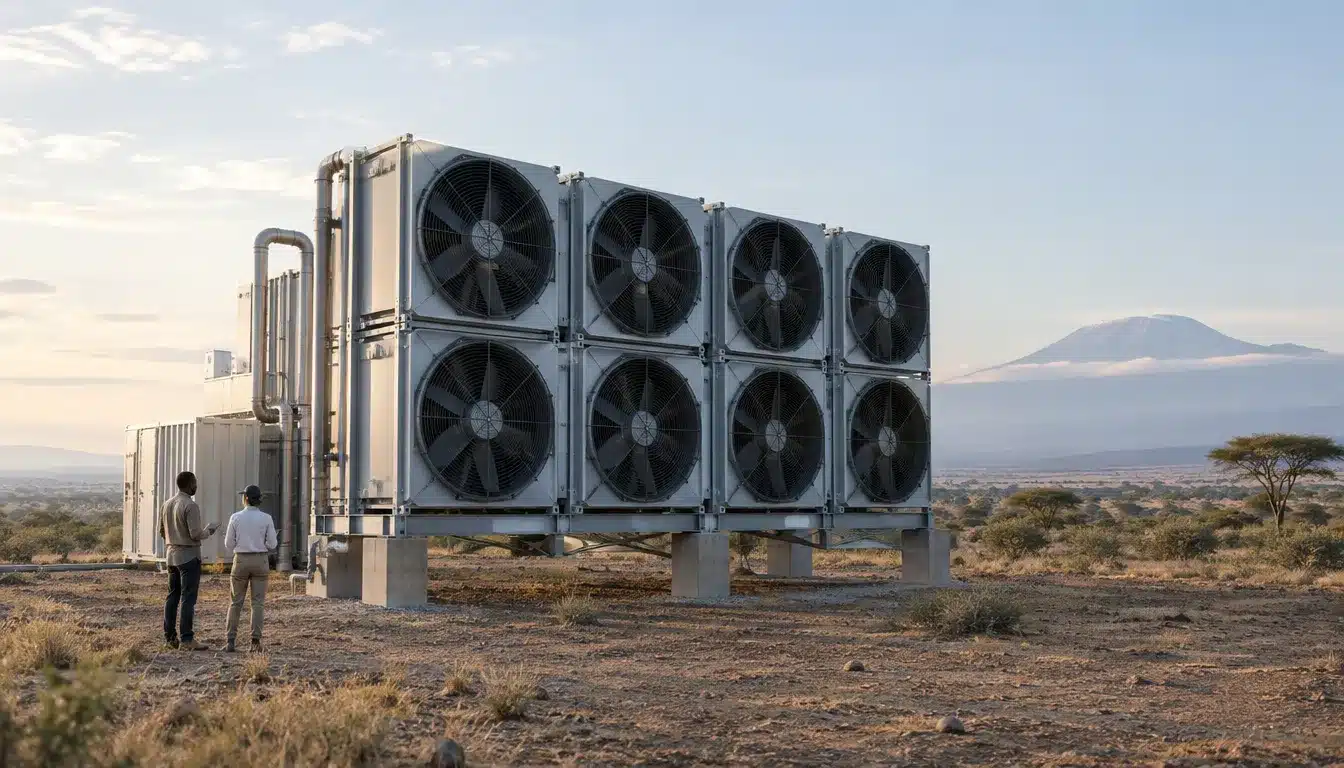
Octavia Carbon won the durable carbon dioxide removal category. The company builds and runs machines that capture carbon dioxide from the air, and it stores the gas permanently. Its work focuses on Africa and the wider Global South.
Octavia operates in Kenya’s Rift Valley, where its Project Hummingbird pilot pairs direct air capture with geological storage in partnership with Cella. The company says Kenya’s grid is 93 per cent renewable, with about 48 per cent of that from geothermal power. So its machines can draw on low-carbon electricity, which is a key cost for the technology.
Cool Effect says its money gives Octavia early demand for future removals. It should also help the company grow its operations across Africa. Direct air capture is still a young industry, and even the biggest plants are still raising their capture rates.
A first for refrigerant destruction in India
Tradewater took the superpollutant reduction category. Its grant is immediate and will help set up India’s first compliant facility for destroying ozone-depleting substances. The project is designed to eliminate up to 325,000 tonnes of carbon dioxide equivalent each year.
Tradewater finds and destroys potent greenhouse gases before they reach the atmosphere. The company says its work has so far eliminated emissions equal to 8 million tons of carbon dioxide.
Old refrigerants sit in ageing cooling equipment and stockpiles. Many of these gases trap far more heat than carbon dioxide, so their release adds heavily to warming. The new facility will collect these legacy gases and destroy them before they escape.
Superpollutants are drawing more attention from funders. For instance, Google recently opened a research call covering superpollutants alongside carbon removal.
Cool Effect brings its timeline forward
Cool Effect first planned to start paying awards in 2027. Its published timeline pointed to winners in the final quarter of 2026 and funding from early 2027. However, the group decided to move faster.
Jodi Manning, chief executive of Cool Effect, explained the change. “The climate crisis cannot wait, and neither can the innovators developing solutions to address it,” she said.
The Cool Effect Catalyst Award drew 68 applications. Cool Effect judged each one against its “Carbon Done Correctly” due diligence framework. That process narrowed the field to one winner in each of the first two categories.
How the Cool Effect Catalyst Award works
Applications ran from 22 September 2025 until 1 July 2026. To qualify, projects had to issue credits in the voluntary carbon market through a crediting programme approved under the Core Carbon Principles. Their methods also had to be published or updated since January 2022.
In addition, applicants had to share detailed project plans and issuance timelines. They also had to explain how they would spend the money. Cool Effect set no limit on the number of awards one applicant could win.
Meanwhile, two finalists remain in the running for the nature-based category. Both now face further checks and site visits. Cool Effect expects to name a winner in 2027.
The structure means the Cool Effect Catalyst Award acts as early finance with a credit return attached. For young projects, that kind of upfront money is often harder to find than buyers for finished credits. Cool Effect then recovers its outlay through the credits that projects deliver later.