A meeting in Singapore has backed new awards, a nature-based cooling fund and a global heat roadmap, giving the Global Cooling Pledge its first real set of tools since launch.
Extreme heat is now one of the fastest-growing climate risks. On 17 September, states, city leaders, firms and funders met in Singapore for the Global Cooling Pledge Assembly. They set out a package of measures to scale clean cooling and protect people from heat.
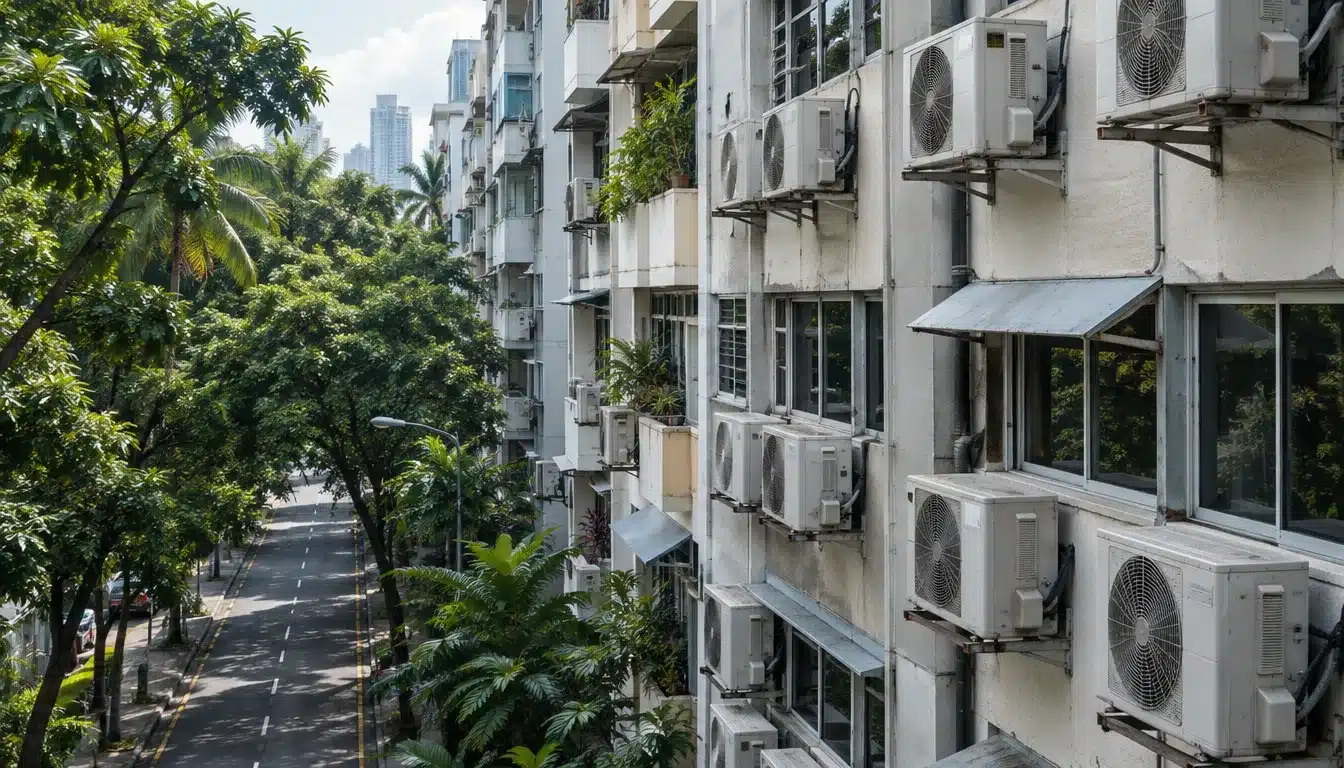
The numbers behind the push are stark. The world’s stock of air conditioners is set to reach 5.6 billion by 2050. That is close to three times today’s level. So the efficiency of those machines will shape both power demand and the gases they leak.
Cool Leaders awards name three winners
The assembly handed out the first Cool Leaders awards. Singapore won for its work on passive cooling and heat safety. The UAE won for district cooling and for writing cooling into climate policy. Dong Mingzhu, chairwoman of Gree Electric Appliances, won for low-carbon cooling tech.
Inger Andersen, head of the UN Environment Programme, said the pledge exists to meet rising cooling demand and growing heat risk. It does so through “passive cooling solutions, super-efficient technologies and climate-friendly refrigerants”. Three years on, that case is much harder to argue with.
A fund for cooling with trees
Brazil, Cambodia and Cote d’Ivoire joined the Nature for Cooling Challenge. The scheme looks for city projects that cool streets with trees, parks and green space. UNEP and Sustainable Energy for All run it together. A $3m grant from the Global Environment Facility and $33m in co-finance pay for it.
Winning projects are meant to cut peak summer heat by up to 5C. Trees and green roofs do that work without drawing power. For dense, low-income areas, that is often the only cooling on offer.
A roadmap for a hotter world
States also began work on a Global Roadmap on Heat Resilience for a Warming World. The roadmap is a flexible framework. It helps countries protect schools, clinics, workplaces and power grids as the heat climbs.
Three strands sit in one document, which is unusual. Heat policy has tended to split between health teams and energy teams. Putting them together makes the trade-offs plain.
Most states have no heat plan at all. A shared framework gives them a starting draft to work from. Cities tend to move first on heat, so the roadmap also gives mayors something to point at.
Makers get their own platform
A Manufacturing Platform also launched, run through UNEP’s United for Efficiency work. It brings states and industry together to widen the supply of efficient cooling kit. The group wants a faster shift to coolant gases with low warming potential.
Gree has signed up to both goals. Makers hold more sway here than rules do, because the unit sold today sets emissions for a decade. Standards only bite if factories can meet them.
Money and a scoreboard
Denmark, Italy, Switzerland and the UK put money behind national delivery. Foundations did the same. Backers include the Children’s Investment Fund Foundation, the ClimateWorks Foundation, the Hewlett Foundation and the Sequoia Climate Foundation. ClimateWorks is giving through its Clean Cooling Collaborative.
The Intergovernmental Committee on Cooling met for the first time alongside the news. It will track how states deliver on the pledge. That check is what turns a pledge into kit on roofs and cooler streets.
The gap that is left
Cooling load is rising faster than almost any other draw on the grid. Each hot year adds units, and each unit adds demand at the worst hour of the day. The Global Cooling Pledge now has a roadmap, money and a way to keep score.
What it still lacks is factory capacity for the efficient units it wants. Cheap, leaky machines remain the default in most hot markets. Until that changes, the roadmap will run ahead of the hardware.