The US Department of Defense has pledged up to $1.4 billion in conditional loans to Sila Nanotechnologies, funding silicon-carbon anode and battery cell plants in Washington state aimed at loosening China’s grip on supply.
Sila Nanotechnologies has secured a conditional US government loan commitment worth up to $1.4 billion. The money comes from the Department of Defense, and the Pentagon announced it on 7 August. It will fund battery manufacturing in Washington state.
Sila hasn’t received the cash yet. The commitment is conditional, so the company must satisfy further requirements before the financing closes. Still, the size of the pledge puts Sila among the larger federal bets on domestic battery supply.
What the money funds
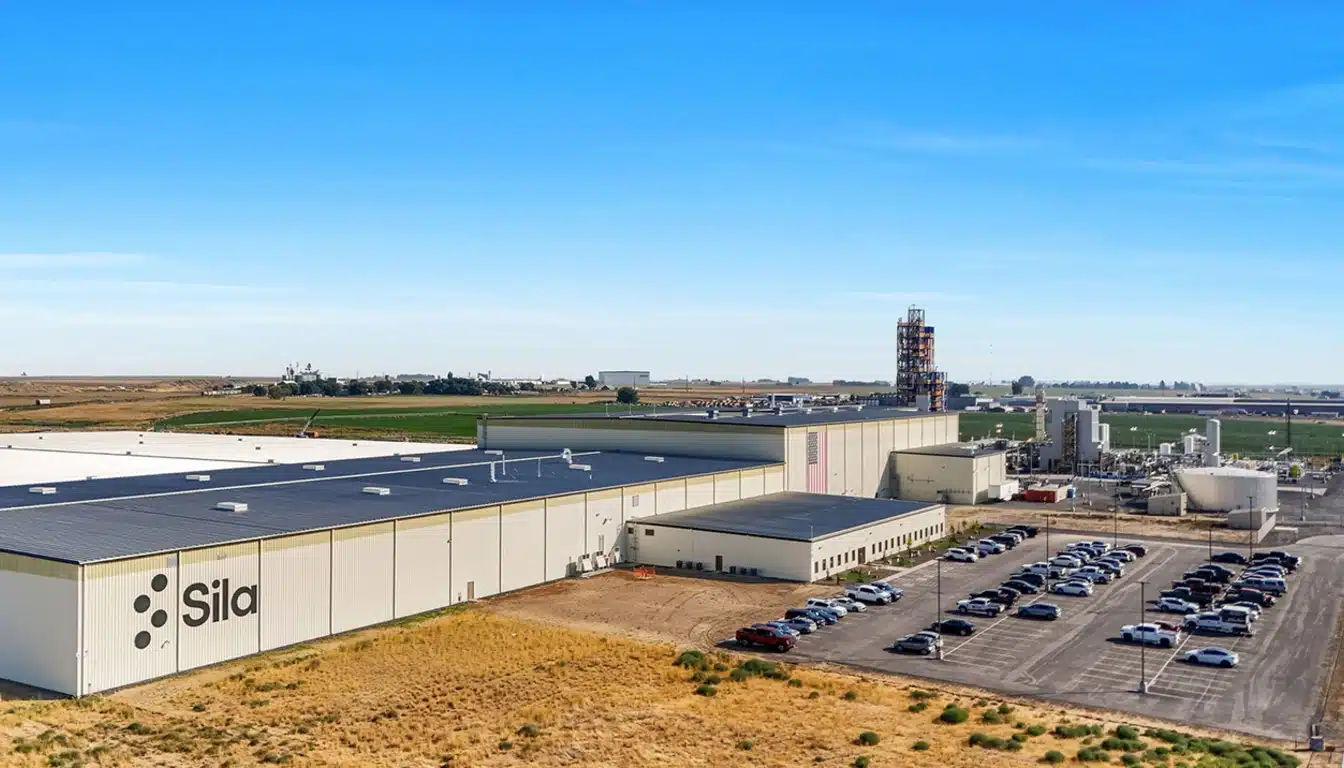
Two projects sit at the centre of the deal. Sila will expand its silicon-carbon anode plant at Moses Lake, and it will build a new lithium-ion cell facility. Both feed the same industrial base.
The cell operation targets specialty markets rather than mass-market cars. Those include industrial, agricultural and military drones, alongside energy storage and data centres. Defence demand runs through much of the plan, which explains the Pentagon’s interest, as CarbonCredits.com reported.
Private money arrived first. Sila announced a $300 million round in July, earmarked for its Phase 2 expansion and the Moses Lake ramp-up. Together, the two sources give the company enough capital to move from early commercial output towards larger-scale production.
The technology and its limits
Sila’s product is Titan Silicon, a silicon-carbon anode material. Silicon holds more lithium than graphite, so it can raise a cell’s energy density. The company claims a 20 per cent gain, plus support for rapid charging.
Weight matters here. Higher density lets an electric car travel further without a bigger pack, or it lets a manufacturer shrink the pack instead. Drones gain the most, because every gram affects flight time.
Silicon carries a well-known flaw, however. It swells as it absorbs lithium and shrinks when the lithium leaves. That movement damages the material and shortens battery life. Sila’s carbon design is meant to contain the swelling while keeping silicon’s storage advantage.
China’s grip on anode supply
The strategic case rests on concentration. China accounted for more than 80 per cent of global battery cell production in 2025, according to the International Energy Agency. Its share of several battery materials runs higher still, anodes included.
American producers can’t close that gap quickly. Under the IEA’s Stated Policies Scenario, US output of anode active material would meet only about a quarter of domestic demand by 2035. Imports from China, Southeast Asia and South Korea would cover the rest.
Sila’s approach differs from most of the domestic response. Instead of scaling conventional graphite, the company wants to take a slice of the anode market with silicon-carbon material. Therefore the technology risk sits alongside the commercial risk.
Demand and execution risk
Demand keeps climbing. Global battery demand grew by more than 35 per cent in 2025 and passed 1.5 terawatt hours, the IEA found. EV battery deployment alone reached 1.2 TWh, up almost 30 per cent on 2024. World Economic Forum figures point to a more than fourfold rise by 2030 under current policy.
Moses Lake opened in 2025 across roughly 160 acres and more than 600,000 square feet. It currently supports 2 to 5 GWh of capacity, although the design allows expansion to as much as 250 GWh within five years. That gap between the two numbers is the whole question.
Sila already has commercial ties with Mercedes-Benz and Panasonic. Scaling remains the harder task, because laboratory performance often falters at industrial volume. Meanwhile the plant runs on hydropower, which lowers the emissions attached to its output, though Sila publishes no corporate net-zero target.