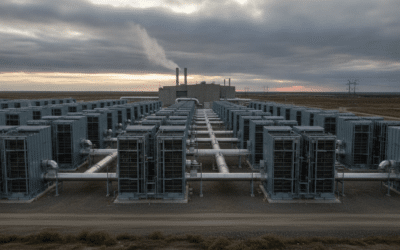
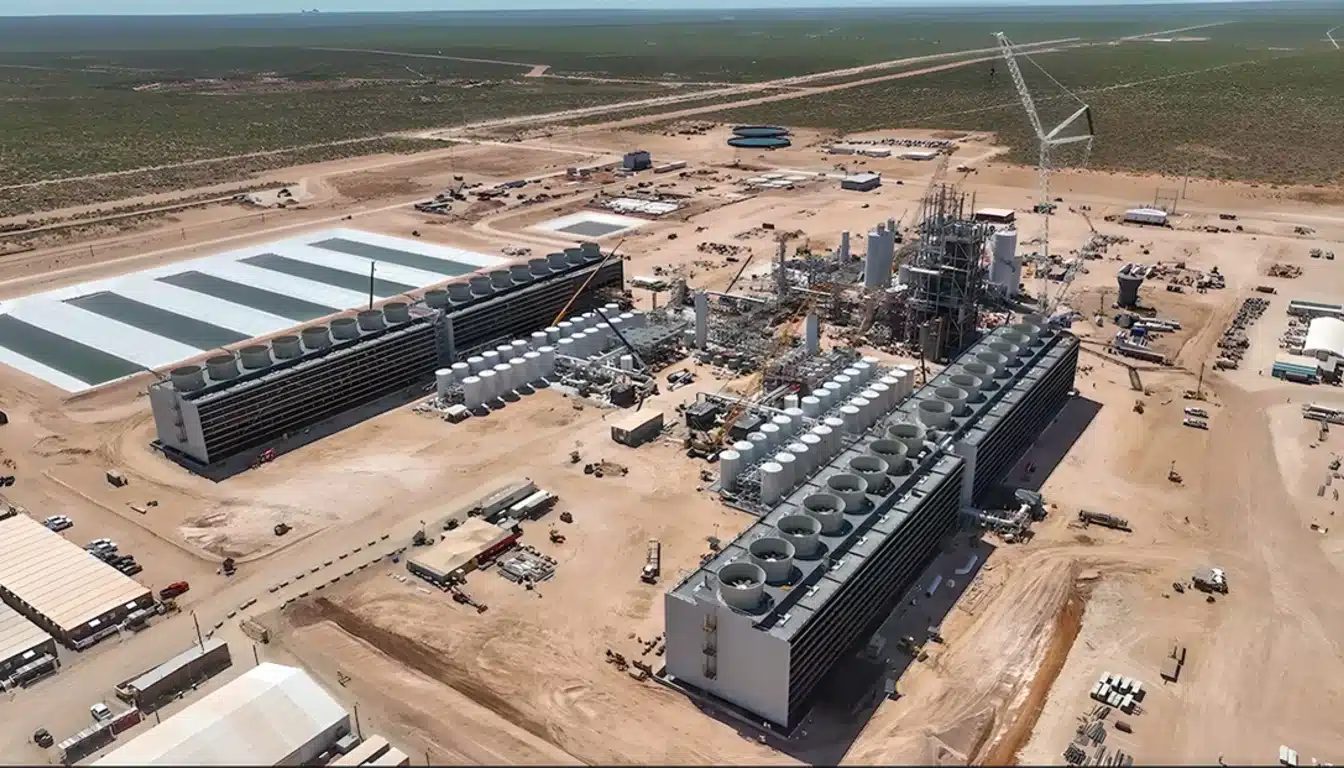
Occidental Petroleum says its Stratos plant in West Texas will finally start work at the end of 2026, two years late, removing up to 500,000 tonnes of carbon dioxide a year.
Occidental Petroleum has finally set a date for the world’s largest carbon removal plant. The oil producer says its Stratos facility in West Texas will start operating at the end of 2026. That ends months of uncertainty over when the plant would begin pulling carbon dioxide out of the sky.
Construction began in May 2023, and Occidental originally promised an opening at the end of 2024. The schedule has since slipped by two years. Still, nothing else in the sector comes close to Stratos on size. Occidental says it will strip up to 500,000 metric tonnes of carbon dioxide from the air each year, according to E&E News. That is a leap far beyond anything the technology has managed so far.
How the plant takes carbon out of the air
Direct air capture does roughly what the name suggests. Large fans draw ordinary air across materials that bind to carbon dioxide molecules and hold them. Operators then heat those materials to release the gas in concentrated form, ready for burial underground or for sale. Because carbon dioxide is thinly spread through the atmosphere, the process needs enormous volumes of air and a great deal of energy.
Occidental’s design combines power, heat, fans and carbon-absorbing materials. None of those elements is unusual on its own. However, running them together at industrial scale has proved slow and expensive, which is why so few plants exist. Cost remains the persistent obstacle, since every stage burns energy and energy costs money.
A step change in scale
The numbers explain the attention. Today’s largest operating direct air capture plant can remove 36,000 tonnes of carbon dioxide a year. Stratos should manage almost 14 times that figure. A single site would therefore handle far more than the entire sector manages at present.
That gap says a good deal about how young this industry is. Most existing plants are demonstration units, sized to prove a principle. Stratos is sized to matter. Scientists treat carbon removal as essential to slowing climate change, because some emissions are very hard to eliminate at source. Yet the technology has to work at this size before anyone commits to the next one.
Occidental looks to data centres for customers
Richard Jackson, chief executive of Occidental Petroleum, told investors on Thursday that the company wants to sell carbon capture services to data centres and power plant operators. Both use large amounts of electricity, and neither can easily cut its emissions to zero. Buying removals is one of the few options open to them. “We’re excited and have positioned ourselves, I think, to do that,” Jackson said on an earnings call.
He attached a condition almost immediately. Occidental can’t keep investing in low-carbon projects, he said, without backing from regulators or other companies. That is a direct admission from a firm that has staked much of its climate reputation on this technology.
The economics behind the delay
Carbon removal has an awkward commercial problem. Its output is a service, and the market for that service barely exists without help. Revenue depends on policy, on tax credits, or on companies choosing to pay to cancel out their own emissions. Because those markets are young and thin, the business case shifts whenever governments change course.
Occidental does have another outlet, since oil companies have long pumped captured carbon dioxide into oilfields to lift out more crude. Even so, the tone on Thursday was careful. Jackson’s remarks suggest that any plant after Stratos will depend on other parties sharing the risk.
For now, the date is what counts. If Stratos opens on schedule, it will be the first facility of its size in the world, and the first real evidence that direct air capture works beyond a demonstration. Miss the deadline again, and the doubts will only grow louder.