Frontier Infrastructure Holdings has agreed a multi-year deal with Carbonfuture to sell 750,000 durable carbon removal credits from its Project Sprint ethanol scheme, the largest ethanol BECCS agreement announced so far.
Demand for high-quality carbon removals is running ahead of supply, and a new deal in the United States shows how developers are trying to close that gap before their plants are even running. Frontier Infrastructure Holdings has signed a multi-year partnership with Carbonfuture to bring carbon removal credits from an ethanol plant to buyers across global carbon markets. The companies say it is the largest ethanol bioenergy with carbon capture and storage, or BECCS, removal deal announced to date.
The agreement covers 750,000 durable removal credits from Frontier’s project, known as Project Sprint. Carbonfuture, which facilitates durable carbon dioxide removal, will offer the credits to corporate and institutional buyers. The arrangement gives the credits a route to market ahead of operations, linking Frontier’s capture, transport and storage capacity with Carbonfuture’s buyer network.
How Project Sprint works
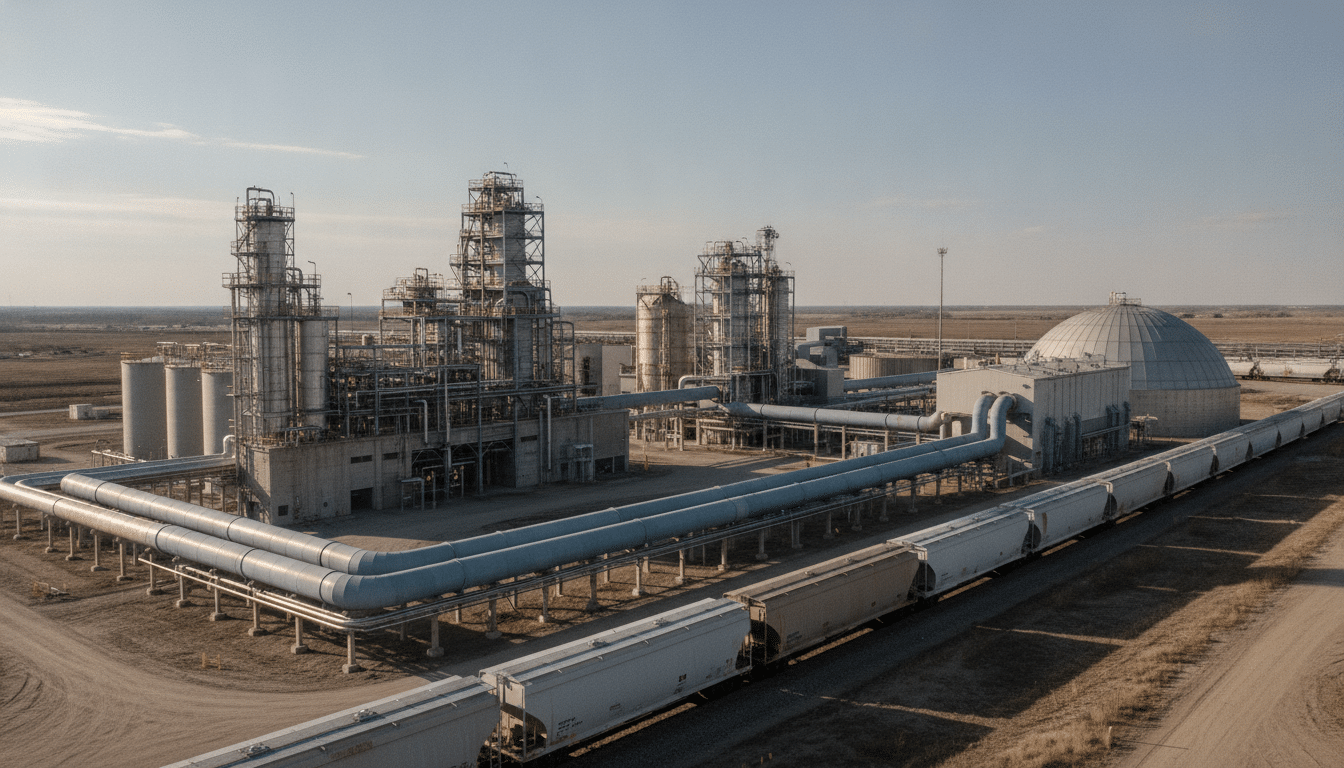
Ethanol production releases a stream of biogenic carbon dioxide, the CO2 that plants absorbed as they grew. Project Sprint captures that gas and sequesters it in dedicated geological storage. Because the carbon came from crops rather than fossil fuels, storing it permanently counts as a removal from the atmosphere.
The captured CO2 travels by rail. Frontier’s CO2-by-rail platform connects ethanol producers across the Midwest to its permitted storage sites in Wyoming, so producers can join carbon markets without waiting for a pipeline to be built. Sequestration is due to begin in the fourth quarter of 2027, when the first credit deliveries are also expected.
Verification and market signal
Removals under the project will be certified using Puro.earth’s Geologically Stored Carbon methodology, with monitoring, reporting and verification handled by Mangrove Systems. That certification matters to buyers who want assurance that a tonne sold is a tonne stored.
“By bringing Frontier’s ethanol BECCS supply to market, this partnership expands access to verifiable, durable removals while reinforcing the rigorous standards needed to scale the sector,” said Julie Mansfield, Head of Global Buyer Growth at Carbonfuture.
Steven Lowenthal, chief executive of Frontier, said the deal was an important step for the company’s CO2-by-rail initiative and the ethanol producers it serves. “Carbonfuture has built a trusted platform for durable carbon removal, and partnering with them gives our customers a practical, near-term pathway to achieving their net zero goals through a trustworthy infrastructure,” he said.
Where ethanol BECCS fits
Ethanol plants are among the cheapest sources of capturable CO2, because fermentation produces a nearly pure stream that needs little processing before storage. That has made the sector an early testing ground for engineered carbon removal in the United States.
The size of the Frontier deal signals growing confidence that durable removals can be sold years ahead of delivery. For buyers under pressure to meet net zero targets with credible carbon, long-dated agreements like this one lock in supply while the market is still thin.