
Climate finance dominated the week, as development banks, governments and investors argued over who should carry climate risk. Energy access and efficiency also moved up the agenda. Heat made the adaptation case harder to ignore.
France presses the World Bank on climate finance
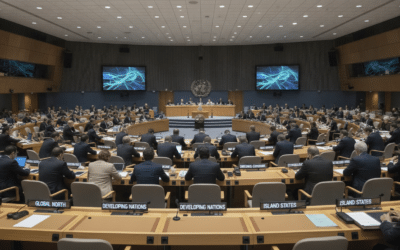
France urged the World Bank to keep its 45 per cent climate finance target, as the current plan nears expiry. Reuters reported the dispute as shareholders debate the Bank’s next climate plan.
The fight matters because multilateral banks shape capital flows in poorer economies. France’s development minister used a London Climate Action Week event to press the case, days before the target expires at the end of June. A weaker successor would signal retreat at a sensitive moment for climate finance.
Energy access is still far off track
About 655 million people still lacked electricity in 2024, according to the latest IEA-led SDG7 report. The report was published on 24 June.
The figure shows that clean energy policy still faces a basic development test. Sub-Saharan Africa carries most of the gap, with over 560 million people there living without power. Governments must expand access while avoiding new fossil fuel lock-in.
The IEA makes efficiency a policy priority
The IEA published its Energy Efficiency Policy Toolkit for policymakers. It covers buildings, appliances, industry and transport.
Efficiency remains one of the cheapest emissions tools. It also cuts bills, which matters as climate policy faces stronger political scrutiny. The toolkit lands ahead of the IEA’s global energy efficiency conference, which runs on 29 and 30 June.
Bonn talks expose a delivery gap
The June UN climate talks in Bonn ended with limited progress, according to Carbon Brief’s analysis. Negotiators struggled over finance, adaptation and emissions-cutting work.
Many diplomats lamented weakened trust in the process. Some progress came on a just transition mechanism, with texts agreed for COP31 in Antalya, Turkey. Still, the result raises the stakes. Countries agree on direction faster than they agree on money and delivery.
China’s provinces sharpen clean energy plans
China’s latest planning cycle puts clean power, storage and industrial decarbonisation at the centre. Carbon Brief tracked the policy shift on 25 June.
The plan targets nine heavy industries, including steel, cement and coal-fired power, for efficiency upgrades between 2026 and 2028. Provincial delivery now matters globally. China’s national trajectory depends heavily on local industry, grids and planning choices.
Europe links electrification and methane diplomacy
The European Commission used London Climate Action Week to back action on electrification and methane. Its 24 June announcement points to growing climate diplomacy outside formal COP talks.
The focus is practical. The week saw the launch of Electrify Now, a platform backed by the EU, Brazil, Australia, Turkey, Canada and others. Electrification cuts fossil demand, while methane reductions can slow warming quickly.
The EU moves to strengthen its carbon border levy
The EU advanced plans to widen its Carbon Border Adjustment Mechanism. On 12 June the Council agreed its position on extending CBAM to new products and closing loopholes, ahead of talks with Parliament.
CBAM became fully operational on 1 January 2026. It covers iron and steel, cement, fertilisers, aluminium, electricity and hydrogen. The new framework would broaden that scope and tighten anti-circumvention rules. CBAM remains central to Europe’s climate and trade strategy.
Heat becomes an economic policy issue
Extreme heat is now testing labour markets and infrastructure across Europe. New Climate Analytics research warns that combined heat and drought events already cut average European household incomes by almost 3 per cent.
France logged its hottest day on record on 24 June. Allianz analysts model cumulative heat-related GDP losses of 5 to 7 per cent by 2030 in the most exposed wealthy economies. This shifts adaptation from environmental policy to economic management. Employers, regulators and investors now face direct climate risk in daily operations.